Smart Thermostat Savings: What You Can Really Expect
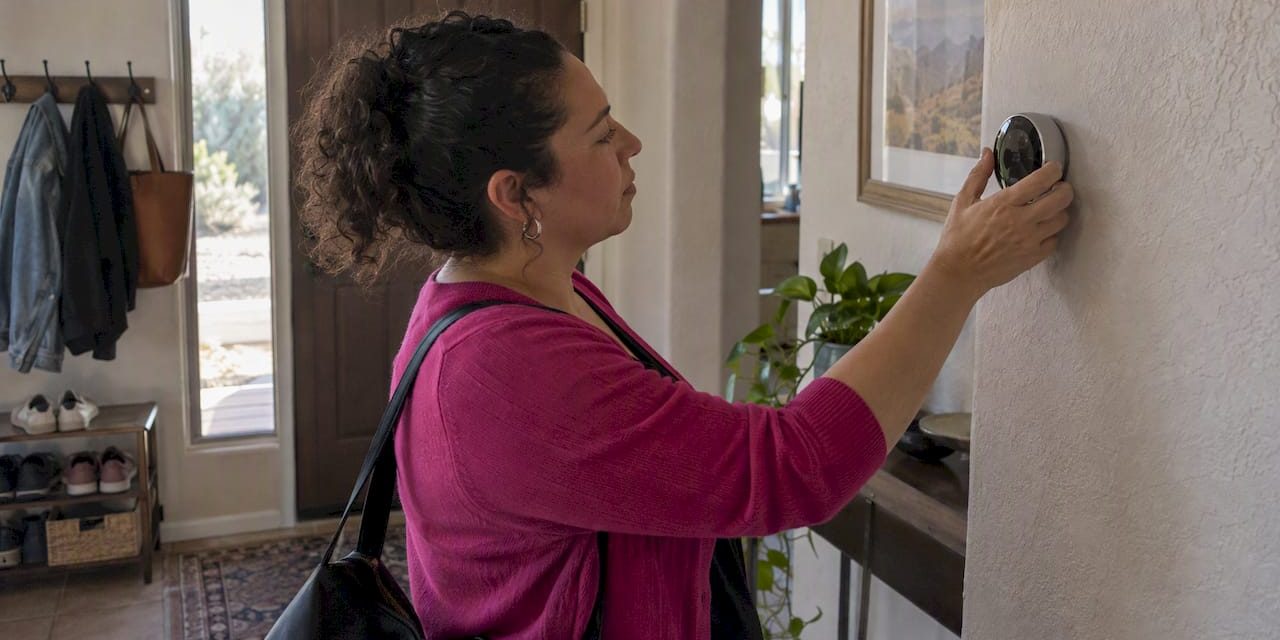
A smart thermostat typically trims heating and cooling costs by single or low double digits, not by half. ENERGY STAR reports that certified models cut heating and cooling energy use by more than 8% on average, about $50 a year. Homes that sit empty a lot can save closer to $100. Your own result depends on your climate, your habits, and the condition of your ducts and equipment. Here is how to estimate it, when a smart model beats a programmable one, and what we see in desert homes around New River.
- Expect roughly 8% off heating and cooling energy use, or about $50 a year, from an ENERGY STAR certified smart thermostat. Empty homes and extreme climates can do better.
- Most of the savings come from setbacks: letting the temperature drift while you are asleep or away. A well-programmed basic thermostat can capture a lot of the same benefit.
- A smart model earns its price through automation, occupancy sensing, remote control, and utility rebates, not through magic.
- A thermostat cannot fix leaky ducts, poor insulation, or a mis-sized system. Fix those first if your bills are high.
- Some high-efficiency, multi-speed systems do better with the manufacturer’s own control strategy than with a generic smart algorithm.
Table of Contents
- How much does a smart thermostat actually save?
- Where the savings come from
- Smart vs. programmable thermostat
- Rebates and demand response can matter as much as the bills
- Why Arizona homes are a special case
- When a smart thermostat will not save you much
- Getting the most from the one you buy
- Our perspective: a thermostat is a control, not a fix
- When to call a pro
- FAQ
- Sources
How much does a smart thermostat actually save?
The most defensible number comes from ENERGY STAR’s field-data program. Its smart thermostat FAQ puts the average at more than 8% of heating and cooling energy, roughly $50 per year, with about $100 possible in homes that are frequently unoccupied.
You will see bigger claims elsewhere, some as high as 20%. Treat those with care. There is a documented problem called self-selection bias: people who choose to buy a smart thermostat often use energy differently from those who don’t, which can inflate early marketing numbers. The California forward-looking smart thermostat study discusses this, and it also notes that savings often grow over time as the device learns your home and routines.
Here is a simple way to think about your own case:
| Your situation | What to expect |
|---|---|
| Home occupied all day, thermostat already set sensibly | Small savings; comfort and convenience are the main gain |
| Everyone out 8 or more hours on weekdays, thermostat held at one temperature | Solid savings, likely at or above the average |
| Second home or frequent travel | Highest savings, since remote control lets you set back hard and recover before you arrive |
| Leaky ducts, old or oversized equipment | Savings limited by the system, not by the thermostat |
None of these figures are guarantees. They are ranges drawn from averages, and your home can land on either side.
Where the savings come from
The hardware is not what saves energy. The U.S. Department of Energy says you can save as much as 10% a year on heating and cooling by setting the thermostat back 7 to 10 degrees F for 8 hours a day, for example while you are at work or asleep. A smart thermostat automates that habit so you don’t have to remember it.
DOE researchers who benchmarked thermostat strategies in simulation work looked at three simple algorithms: occupancy sensing, nighttime setback, and the two combined. The idea behind all of them is to cut the number of hours your equipment runs without costing you comfort.
In practice, four features do most of the work:
- Scheduling and learning. The thermostat builds a setback pattern around your routine.
- Occupancy detection. Phone location or built-in sensors tell it when nobody is home.
- Weather awareness. It can adjust for a hot afternoon or a cold snap rather than reacting late.
- Feedback. Runtime reports show you what your settings cost, which tends to change behavior.
That last point is built into the standard. ENERGY STAR’s key product criteria require certified models to work as a basic thermostat if the connection drops and to give residents feedback about the energy consequences of their settings.
One more detail matters. ENERGY STAR certification applies to the thermostat together with its service, because the behind-the-scenes optimization is central to the savings. If you install the unit and never turn on scheduling, learning, or remote access, you leave most of the benefit on the table.
Smart vs. programmable thermostat
This is the question most people are really asking. A programmable thermostat can deliver the same setback savings if you actually program it and keep it current. The DOE’s own guidance covers both smart and programmable models under the same 10% setback advice.
Where they differ:
| Programmable | Smart (Wi-Fi) | |
|---|---|---|
| Schedule | You set it by hand | Set by app, or learned automatically |
| Changes when plans change | Manual override at the wall | From your phone, anywhere |
| Occupancy response | None | Often yes |
| Runtime data | Rarely | Usually |
| Utility rebates and programs | Rarely eligible | Often eligible |
| Upfront cost | Lower | Higher |
A programmable model is enough if your schedule is steady, you are disciplined about the program, and nobody in the house fights it.
A smart model pays off if your schedule changes, you travel, you have a home that is empty for long stretches, or you want to enroll in a utility program that requires a connected device. Many people find that the real difference is behavioral: a programmable thermostat gets overridden and forgotten, while a phone app gets used.
Rebates and demand response can matter as much as the bills
Savings on your monthly bill are only part of the picture. Smart thermostats can join utility demand response programs, where the utility nudges your cooling setpoint up during peak-load days. A Massachusetts study of Wi-Fi thermostat demand response describes setpoint adjustments often as large as 4 degrees F during such events, in exchange for financial incentives. Programs vary by utility.
Utility evaluators say the market is shifting in this direction. A PG&E smart thermostat pilot evaluation.pdf) looked at both demand response events and daily automated time-of-use control, and shows why utilities want these devices in homes.
What this looks like in Arizona
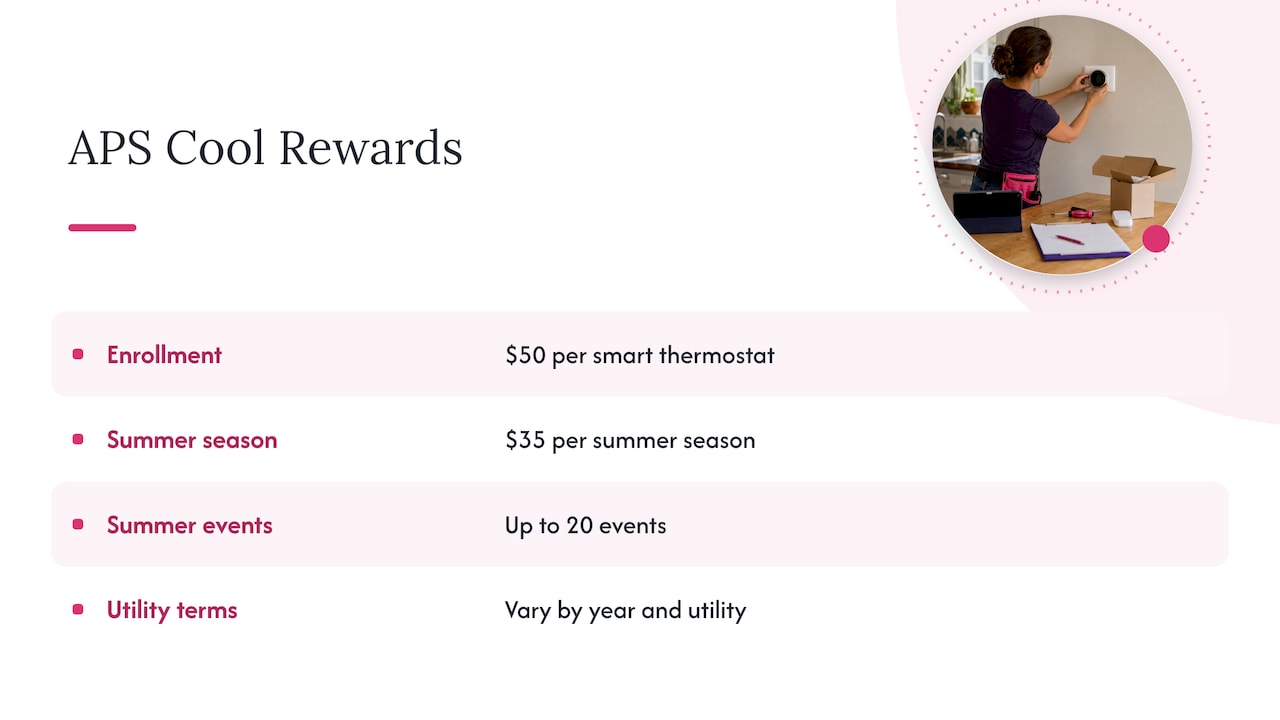
In APS territory, one rebate summary lists Cool Rewards at $50 per smart thermostat for enrolling and $35 per summer season, in return for letting APS adjust your thermostat during up to 20 summer events. Incentives change from year to year and differ between APS and SRP, so confirm the current amount and your thermostat’s eligibility with your utility before you buy. If you live in New River, check which utility serves your address first.
A rebate that covers a meaningful share of the device cost can shorten the payback period considerably. That is often the strongest financial case for a smart thermostat in the Phoenix area.
Why Arizona homes are a special case
The $50 national average hides a lot of variation. ENERGY STAR itself notes that savings may be greater depending on climate and personal comfort preferences. In our part of the Valley foothills, air conditioning runs for months, and a 7 to 10 degree setback on a 110 degree afternoon is a real decision, not a casual one.
Two things to keep in mind:
- Recovery time. If the house drifts too far, your system has to work hard to catch up at 5 p.m. A smart thermostat that starts cooling early, based on your arrival time, makes a deeper setback practical. A manual setback often doesn’t.
- Rooms that never cool. If the upstairs or one corner room is always hot, no thermostat will fix that. That is usually a duct, airflow, or balancing problem. See our notes on why one room is hotter than the rest in New River and three free fixes for uneven cooling upstairs.
When a smart thermostat will not save you much
Be honest with yourself about these cases.
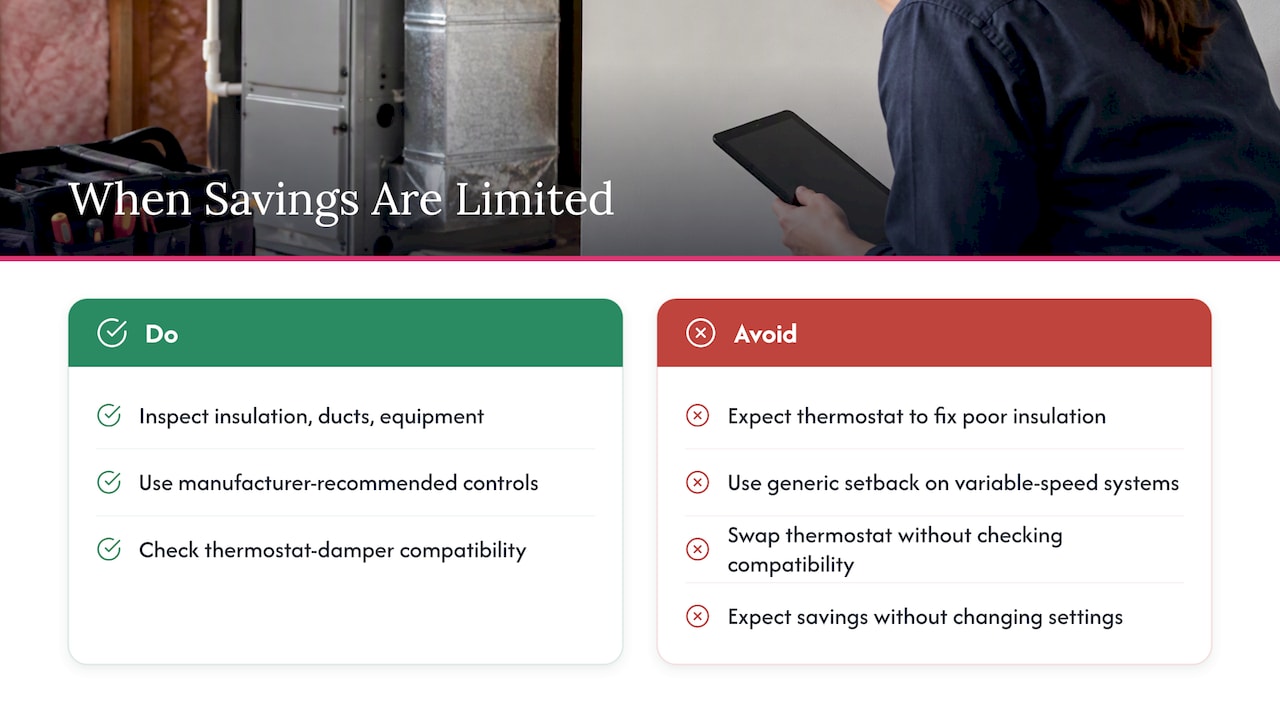
Your system is the problem. ENERGY STAR and DOE experts caution that a thermostat cannot overcome poor insulation, duct leaks, or improperly sized equipment. If your bills are high, look at the whole house. Duct leakage is a common culprit, and our guide to duct sealing cost and rebate tips shows what that work involves.
You have high-efficiency, multi-speed equipment. DOE’s benchmarking work points out that ordinary setback logic can trigger a high-capacity, low-efficiency mode to recover the temperature, which can cancel out the savings compared with holding a steady setpoint. For these systems it is often better to use the manufacturer-recommended control strategy than a generic smart algorithm. Ask before you swap the thermostat on a variable-speed system.
You never change the settings. If you already hold a comfortable, moderate temperature and rarely leave the house, a smart thermostat has little to optimize.
You use a zoned system. Zoning adds complexity, and a thermostat that doesn’t play well with your dampers causes trouble. If your zones already misbehave, start with our five homeowner checks for zoned HVAC.
Getting the most from the one you buy
- Check compatibility first. Not every thermostat works with every system. Heat pumps, multi-stage equipment, and systems without a common wire (C-wire) need attention before you buy.
- Choose an ENERGY STAR certified model. Certification is based on field data, which is why the savings figures are credible.
- Turn on every energy feature. Scheduling, away mode, and runtime reports are the whole point.
- Set a realistic setback. Aim toward the 7 to 10 degree range for the hours you are away or asleep, then adjust for comfort. In an Arizona summer, test how long your house takes to recover before you go deeper.
- Join your utility’s program if the incentive and the setpoint adjustments suit you.
- Review the data after a month. If runtime didn’t drop, something else is going on.
If you want to compare models, we keep a ranked list in our best smart thermostats roundup. For what a professional install involves and what it costs, see smart thermostat installation cost.
Our perspective: a thermostat is a control, not a fix
We get asked about smart thermostats every season, usually from homeowners hoping a $200 device will solve a $400 summer bill. Sometimes it helps. More often the thermostat is the last thing to optimize.
Our technicians are NATE-certified and non-commissioned, so we have no reason to sell you anything you don’t need. That shapes how we answer. If your system is healthy and your schedule is irregular, we’ll tell you a smart thermostat is a sensible, inexpensive upgrade. If your ducts leak, your airflow is off, or your equipment is the wrong size, we’ll tell you to deal with that first, because a thermostat can only control a system that is working properly.
Our honest rule of thumb: buy a smart thermostat for convenience and utility incentives, and treat the energy savings as a bonus. Then make sure the equipment behind it is in good shape. A tune-up often does more for your bill than any control upgrade, which is why we pair advice like this with regular maintenance.
When to call a pro
You can swap many thermostats yourself, but call a technician if any of these apply:
- You don’t have a C-wire and aren’t comfortable with wiring.
- You have a heat pump, a multi-stage or variable-speed system, or a zoned system.
- The thermostat is acting up and you aren’t sure whether the thermostat or the equipment is at fault.
- Your bills are high and you want to know why before you spend money on controls.
We install and service air conditioning and furnaces in New River and the surrounding area. If you want a second opinion on whether a smart thermostat makes sense for your home, or you want your system checked first, take a look at our air conditioner installation, repair and maintenance services. The Tru Comfort Advantage maintenance plans keep the equipment behind your thermostat running as it should. If your system fails, we also offer emergency HVAC service.
FAQ
Do smart thermostats really save money?
Yes, modestly. ENERGY STAR reports average savings of more than 8% of heating and cooling use, about $50 a year. Savings are larger in homes that are often empty or in climates with extreme weather, and smaller in homes that are always occupied.
Is a smart thermostat better than a programmable one?
Not always. A programmable thermostat that you actually use captures much of the same setback savings. A smart model is better if your schedule changes, you want remote control or runtime data, or your utility offers a rebate that requires a connected device.
Will a smart thermostat lower my electric bill in Arizona?
It can, because cooling runs so many months here and setbacks add up. The size of the saving depends on your home, your setpoints, and your equipment. Fix duct leaks and airflow problems too, or the thermostat has less to work with.
Can a smart thermostat hurt efficiency?
In some cases. On high-efficiency, multi-speed equipment, aggressive setbacks can push the system into a less efficient recovery mode, according to DOE benchmarking. Ask a technician about the manufacturer’s recommended controls before replacing a thermostat on that kind of system.
Are there rebates for smart thermostats?
Often. Many utilities offer incentives for enrolling, and some pay again each season for demand response participation. Amounts differ by utility and change over time, so verify with your provider before you buy.
Sources
- ENERGY STAR Smart Thermostats FAQs
- ENERGY STAR Smart Thermostats Key Product Criteria
- U.S. Department of Energy, Energy Saver guide
- U.S. Department of Energy, Simulation-Driven Smart Thermostat Benchmarking
- Forward-looking Smart Thermostat Study (California)
- PG&E Smart Thermostat Control Pilot evaluation.pdf)
- Massachusetts Wi-Fi thermostat demand response study
- APS energy savings programs summary