How Often to Clean AC Coils: A Schedule for Arizona Homes
Clean your AC coils at least once a year, ideally in early spring before the cooling season starts. That is the baseline in ENERGY STAR’s maintenance checklist, which lists cleaning the evaporator and condenser coils as a cooling-season task. In a dusty desert area like New River, some homes need a second look mid-season. This guide shows how to tell which category your home falls into, what you can do yourself, and what belongs to a technician.
TL;DR
- Once a year is the standard: a professional coil cleaning and inspection before cooling season.
- Dust, nearby construction, pets, cottonwood or pollen, and heavy daily run time can justify a mid-season check of the outdoor unit.
- You can rinse loose debris off the outside of the condenser. The inside faces of the coils and the indoor evaporator coil are a technician’s job.
- Warning signs: long run times, weak airflow, higher bills, ice on the indoor coil, or a loud, hot outdoor unit.
- Coil cleaning is not duct cleaning. Do the coils every year, and treat the ducts as an occasional decision.
Table of Contents
- What the coils do and why dirt matters
- The standard schedule: once a year, before summer
- When once a year is not enough
- Signs your coils need cleaning now
- What you can do yourself, and what you should not
- Coil cleaning is not duct cleaning
- Is professional coil cleaning worth it?
- Our perspective: what we see in New River homes
- Make it automatic with a maintenance plan
- FAQ
- Sources
What the coils do and why dirt matters
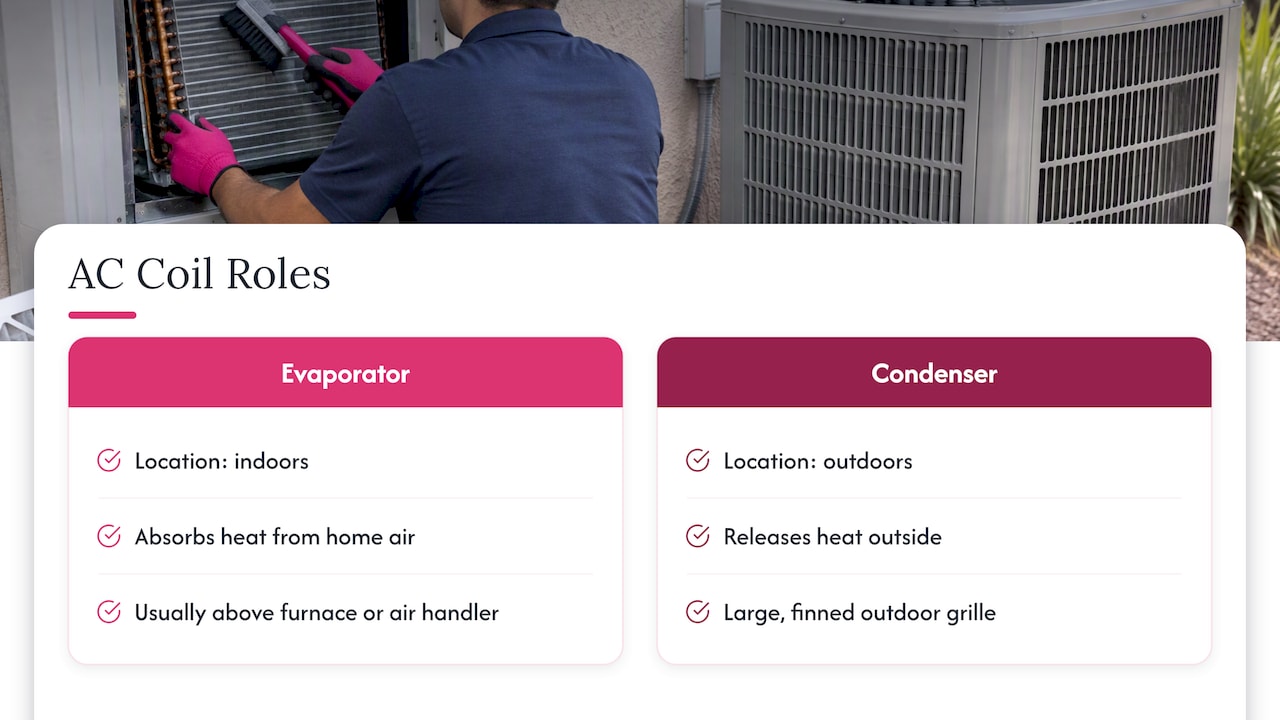
Your air conditioner has two coils. The evaporator coil sits indoors, usually above the furnace or air handler. It absorbs heat from your home’s air. The condenser coil is the large, finned grille in the outdoor unit. It releases that heat outside.
Both jobs depend on air moving freely across clean metal fins. A film of dust or a mat of debris acts like a blanket. ENERGY STAR says dirty coils reduce the system’s ability to cool your home, make it run longer, raise energy costs and shorten equipment life.
The numbers in federal training material are larger than most homeowners expect. A Department of Energy FEMP presentation on HVAC maintenance lists dirty evaporator and condenser coils among the common HVAC faults. It cites efficiency losses from fouled coils that can reach well into double digits. Treat the exact figures as extreme cases, since they come from commercial-scale studies. The direction is the same in a house: the dirtier the coil, the harder the compressor works.
The standard schedule: once a year, before summer
For most homes, one professional cleaning per year is the right answer. Timing matters as much as frequency. Do it in spring, before the first run of triple-digit days, so the system enters its hardest months clean and inspected.
In the Phoenix area that usually means booking in February through April. Technicians get busy once the first heat wave hits, and a coil you discover is clogged in July is a coil you clean while the house is already hot.
A yearly visit is also when a technician can catch what you cannot see: a refrigerant issue, a worn capacitor, a drain line starting to clog. We cover that fuller routine in our guide to how often to do regular maintenance on a house AC unit and in a printable-style AC maintenance checklist.
When once a year is not enough
The annual rule is a floor. Several conditions shorten the interval, and a few apply directly to homes around New River and Anthem.
| Situation | Why it loads the coils | Suggested approach |
|---|---|---|
| Dusty desert lot, unpaved road or washes nearby | Fine dust settles on the condenser fins and packs in | Annual pro cleaning plus a visual check of the outdoor unit at midsummer |
| Construction or grading nearby | Heavy airborne dust for months | Check the outdoor unit monthly while work continues; consider a second cleaning |
| Pets that shed | Hair is pulled into the outdoor unit and can reach the indoor coil if filters are neglected | Annual cleaning, filters changed on schedule, rinse the outside of the condenser as needed |
| Trees, shrubs or grass near the unit | Leaves, cottonwood fluff and clippings stick to the fins | Trim back, check after storms and landscaping |
| Near-constant cooling, such as a home worked from daily | More hours of airflow means more dirt carried in | Annual pro cleaning, with a second inspection in the middle of summer |
| Commercial or rental property | Many occupants, uneven filter care | Scheduled maintenance twice a year is worth considering |
The DOE material above notes that a coil can look fine from the surface while being obstructed deeper inside the fins. A quick glance is therefore a screening step, not proof that the coil is clean.
Clearance matters too. A unit crowded by walls, fencing or plants pulls in more debris and rejects heat poorly. Our page on AC condenser clearance explains how much room to leave, and the guide on sun exposure around the AC unit covers the shade question.
Signs your coils need cleaning now
Do not wait for the calendar if you see any of these. They are the symptoms the federal maintenance guidance associates with fouled coils:
- The system runs constantly and struggles to reach the thermostat setting.
- Airflow from the registers is weaker than it used to be.
- Your cooling bills climb without a change in habits or rates.
- Ice forms on the indoor coil or the refrigerant line.
- The outdoor unit feels excessively hot or runs louder than normal.
- Supply air is warmer than it should be. The DOE presentation puts the rise from dirty coils at a few degrees Fahrenheit, which is enough to notice.
Before you call, check the basics. A clogged filter produces several of the same symptoms, and it is the cheapest fix. Our HVAC maintenance schedule gives filter intervals, and ten signs your home AC may need maintenance is a broader symptom list. If the air is simply not cold, start with our AC not blowing cold air guide.
Ice on the indoor coil deserves special care. Turn the system off and let it thaw before you run it again, then have a technician find the cause. Running an iced coil can send liquid refrigerant toward the compressor, and a failed compressor is the costly repair. Our article on AC compressor failure signs shows what that looks like.
What you can do yourself, and what you should not
Homeowners can reasonably handle the outside of the condenser between professional visits.
- Switch off power to the outdoor unit at the disconnect and the breaker.
- Clear leaves, weeds and debris from around the unit and from the top grille.
- Rinse the outer fins gently from the outside with a garden hose, using low pressure and a spray that follows the direction of the fins. Never use a pressure washer, which bends the fins and restricts airflow.
- Let the unit dry before restoring power.
We lay out the full routine in 8 steps to clean condenser coils.
What stays with a technician is everything a hose cannot reach. EPA research material on HVAC maintenance points to the limits of surface cleaning. Restoring heat transfer means reaching the inner faces of the coil, treating biological growth, and checking the refrigerant side at the same visit. The evaporator coil is inside the air handler behind sheet metal, and opening it incorrectly can damage the coil or leave refrigerant leaks unnoticed. If you suspect a leak, see our list of evaporator coil leak symptoms to describe to your technician.
Also skip household-store foam sprays on the indoor coil unless a technician advises it. Residue and runoff into the drain pan can cause problems of their own.
Coil cleaning is not duct cleaning
This is the most common place people spend money they do not need to. The EPA’s guidance on whether to have your air ducts cleaned notes that research suggests cleaning heating and cooling components such as cooling coils, fans and heat exchangers may improve system efficiency. Duct cleaning is a separate question with different triggers, such as visible mold, vermin, or heavy debris after a renovation.
So the order of priority is simple: coils and the rest of the system every year, ducts only when there is a reason. Our local article on how often air ducts should be cleaned in New River and Anthem walks through those triggers.
If your real concern is dust in the air you breathe, filtration helps more than a duct cleaning sold as a routine. A guide to choosing an air purifier can help you size one for a room, alongside regular filter changes at the air handler.
Is professional coil cleaning worth it?
For most homes, yes, with a caveat about how it is sold. The cost of a cleaning is small next to the cost of a system that runs longer every summer. ENERGY STAR’s own guide to energy-efficient heating and cooling describes dirt and neglect as the number one cause of system failure, which is why it stresses proper maintenance.
The caveat is honesty. A coil that is genuinely clean does not need to be cleaned again just because a calendar says so. A good technician shows you the coil, explains what they found, and recommends only what the system needs. That is why we keep our technicians non-commissioned.
The so-called “$5,000 rule” comes up in this context too. It is not an official HVAC or tax rule. It is a rough rule of thumb about when repair costs start to approach the cost of replacement. If a major repair is on the table for an older unit, our guides on when to replace heating and air conditioning and the best time to replace an AC help you weigh it.
Our perspective: what we see in New River homes
We are a family-owned HVAC company in New River, and coil problems are among the most preventable we see. The pattern repeats: a unit that was fine in April is struggling in July, and the outdoor coil is matted with dust. Homeowners rarely did anything wrong. Desert dust is relentless.
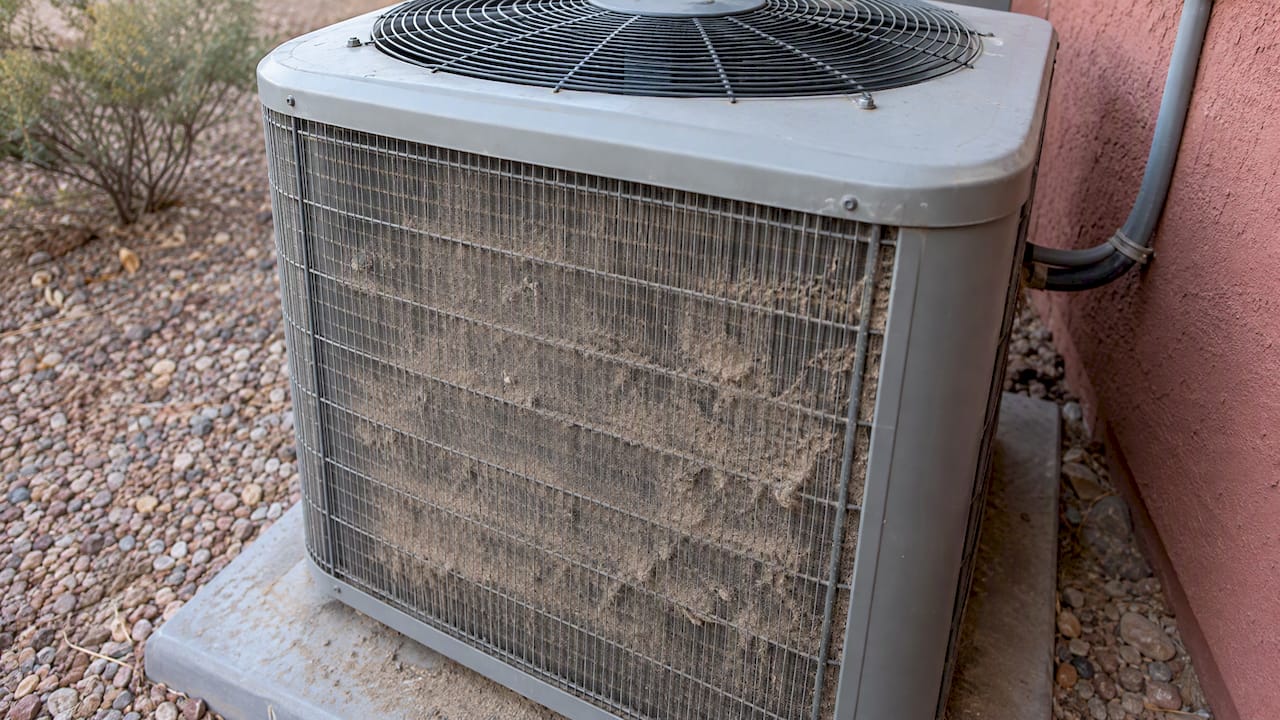
Our advice is plain. Book the annual cleaning before the heat arrives, glance at the outdoor unit every month in summer, and keep plants and clutter back from it. Change filters on time, because a dirty filter sends more dirt to the indoor coil. If something sounds, smells or feels different, call early. A small problem caught in spring is cheaper than an emergency call on a 110-degree day, though we do take those calls when they happen.
Every technician on our team is NATE-certified and none works on commission. When one of us tells you a coil needs cleaning, or that it does not, the recommendation is built around your system and not around a sales target. We would rather build a long relationship with you than win one big invoice.
Make it automatic with a maintenance plan
The easiest way to keep the schedule is to hand it off. Our Tru Comfort Advantage maintenance plans are built around regular visits that cover cleaning and inspection, with added savings for members. If you would rather book a single visit, see our air conditioner maintenance services. For property managers, a plan keeps every unit on the same calendar. If something fails between visits, we also offer emergency HVAC service through our main site.
FAQ
Should I clean AC coils every year?
Yes, for most homes. ENERGY STAR lists cleaning both the evaporator and condenser coils as a regular cooling-season task. Do it in spring so the system starts summer clean. Dusty locations or heavy use may call for an extra check mid-season.
How do I know if my AC coils are dirty?
Look for long run times, weak airflow, rising bills, ice on the indoor coil, or an outdoor unit that is hot and loud. A visual check helps, but coils can be blocked deep within the fins while looking clean from outside. If the filter is new and symptoms persist, have a technician inspect the coils.
What happens if I never clean my AC coils?
The system works harder to move heat, runs longer and costs more to operate. Over time that strain shortens equipment life, according to ENERGY STAR, and can contribute to compressor failure, the most expensive repair in the system. Neglected coils can also hide refrigerant problems that only an inspection will find.
Can I clean the coils myself?
You can clear debris and gently rinse the outside of the outdoor unit with the power off. Leave the inner faces of the condenser coil and the indoor evaporator coil to a technician. Never use a pressure washer, because it can bend the fins.
Sources
- ENERGY STAR: Maintenance Checklist
- ENERGY STAR: A Guide to Energy-Efficient Heating and Cooling
- DOE FEMP: HVAC Maintenance and Technologies
- US EPA: Should You Have the Air Ducts in Your Home Cleaned?