Homeowners: 5 Negative Pressure Checks, Starting With Safety
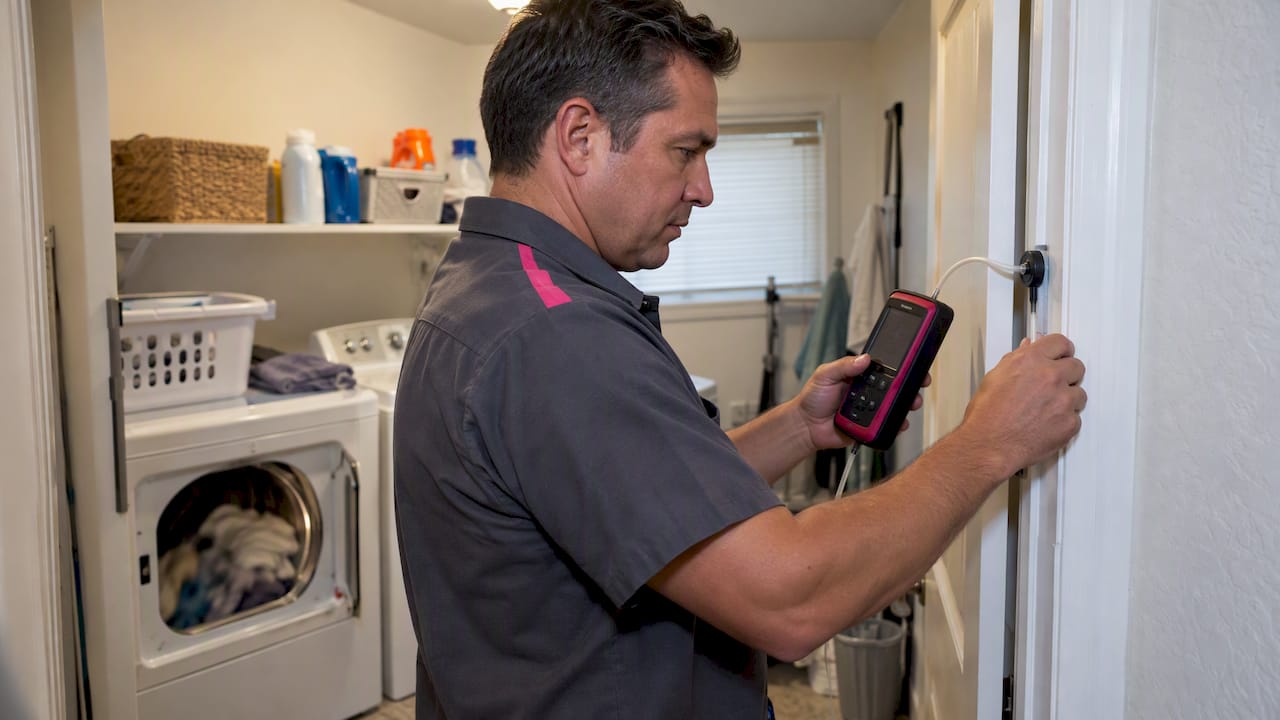
Negative pressure in a house means the indoor pressure is lower than outdoors because more air is leaving than is coming in, and that imbalance can pull moisture and combustion gases into living spaces. If you burn gas, oil, or wood at home, put combustion-safety testing first. Otherwise, run simple airflow checks, note when symptoms appear, and fix the imbalance at its source.
TL;DR:
- A home with a fuel burning appliance and soot or vent spillage needs immediate professional testing under worst operating conditions; carbon monoxide has no odor.
- Record fan use, weather, and symptoms, then compare closed rooms with the main space; readings above 3 Pa flag pressure problems.
- A blower door test uses 50 Pa to measure leakage, not normal indoor pressure; request numeric results and a written baseline before repairs.
- Stagger dryer, range hood, and bathroom fan use, and restore room return paths with roughly 1 inch door undercuts or transfer grilles.
- Guidance for new low rise homes calls for makeup air when kitchen or dryer exhaust depressurizes conditioned space by more than 5 Pa.
Table of Contents
- What causes negative pressure in a house?
- How can you tell your house is under negative pressure?
- Why does negative pressure matter for moisture, mold, and safety?
- Which tests find negative pressure, and what do the numbers mean?
- How do you fix negative pressure and keep it from coming back?
- When should you call a professional for negative pressure?
- Why we measure first and guess never
- How we diagnose and fix negative pressure for you
- FAQ
- Sources
What causes negative pressure in a house?
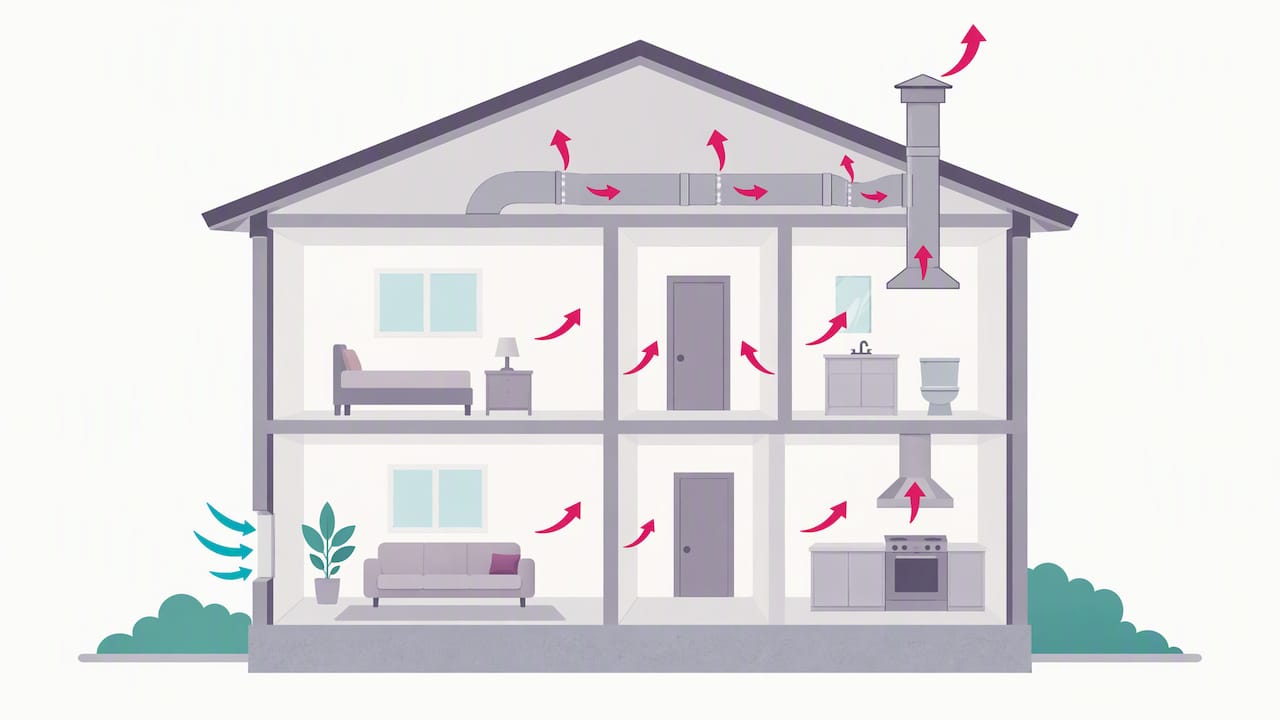
A home goes negative when air is exhausted faster than it can be replaced. The usual drivers are large exhaust appliances such as clothes dryers, range hoods, and bathroom fans, plus leaky ductwork. Here is how those causes tend to show up:
- Exhaust-only ventilation: Every fan that blows air out needs a path for air to come back in. A powerful range hood running next to a dryer can outpace any leaks the house has.
- Leaky return ducts: Returns that pull air from attics, crawlspaces, or wall cavities draw outdoor air in and unbalance the house. Ducts running outside the pressure boundary make this worse.
- Unbalanced supply and return airflow: Rooms with a supply register but no return pressurize when the door is closed, which pulls the rest of the house negative.
- A tighter envelope: Air sealing without engineered makeup air leaves exhaust fans nowhere to draw from. ASHRAE 62.2-2010 limits the capacity of a home’s two largest exhaust fans before compensating outdoor air is required.
- Wind and stack effect: Warm air rising out of a house and wind on one side of the building add to whatever your fans are already doing, so symptoms often change with the weather.
Forced-air systems do not usually create negative pressure by themselves. Expert discussions note that a properly installed system mostly recirculates air, and trouble starts when ducts or returns are faulty or sit outside the pressure boundary.
Pro Tip: Before you blame the furnace, run only the dryer and watch what changes. If problems appear with the dryer alone, the exhaust is your lead suspect.
How can you tell your house is under negative pressure?
Most homeowners notice the effects before they ever hear the term. These checks cost nothing and give a technician useful clues:
- Watch the doors. Interior doors that slam or push shut when a fan starts, or exterior doors that are hard to open, point to a pressure difference.
- Feel for drafts. Cold or hot air whistling under doors and around windows while exhaust fans run suggests air is being pulled in.
- Run the tissue or smoke test. Hold a tissue or an incense stick near a door crack or window edge. If the smoke leans inward, air is entering there.
- Check for smells. Garage, crawlspace, or even smoky odors that appear when the range hood or dryer runs mean the house is drawing air from places it should not.
- Log your triggers. Write down whether symptoms coincide with the dryer, range hood, or several fans at once. Uneven room temperatures also fit this pattern.
Closed doors deserve special attention. A bedroom with a supply register and no return can swell with air when its door shuts, and the rest of the house pays for it. If you are unsure which registers supply and which return, our quick vent-identification checks can help you identify them.
Doors matter in another way too. An interior door that seals tight to the floor blocks return air, and better interior doors can improve efficiency when the airflow path is planned for them.
Pro Tip: Record the time, the weather, and which fans were running each time you notice a symptom. Patterns beat guesses.
Why does negative pressure matter for moisture, mold, and safety?
Pressure problems are not only a comfort annoyance. The effects fall into three groups:
- Moisture and mold: Humid outdoor air drawn through wall and roof cavities can condense on cool surfaces, which sets up interstitial condensation and mold growth. In cold weather, infiltration through voids in insulation can chill surfaces below the dew point.
- Pulled-in pollutants: Depressurized homes draw air from garages, crawlspaces, and wall cavities instead of from a filtered intake. Soil gas and garage fumes can follow the same path.
- Backdrafting and carbon monoxide: Backdrafting happens when combustion gases are pulled down the vent and into the house. Atmospheric-vent appliances, nearby exhaust fans, leaky ducts, return registers near appliances, and closed interior doors that limit return flow all raise the risk. Carbon monoxide is odorless, so you cannot rely on your nose.
Pressure differences in houses are small. Normal operating differentials are only a few Pascals, which is why a house can feel fine while an appliance vent is quietly failing.
Field data on how often this goes wrong: About 10% of tested existing homes may fail worst-case depressurization tests, with exhaust appliances and leaky ducts among the common causes. That is one in ten, and the homeowners involved usually had no idea.
Which tests find negative pressure, and what do the numbers mean?
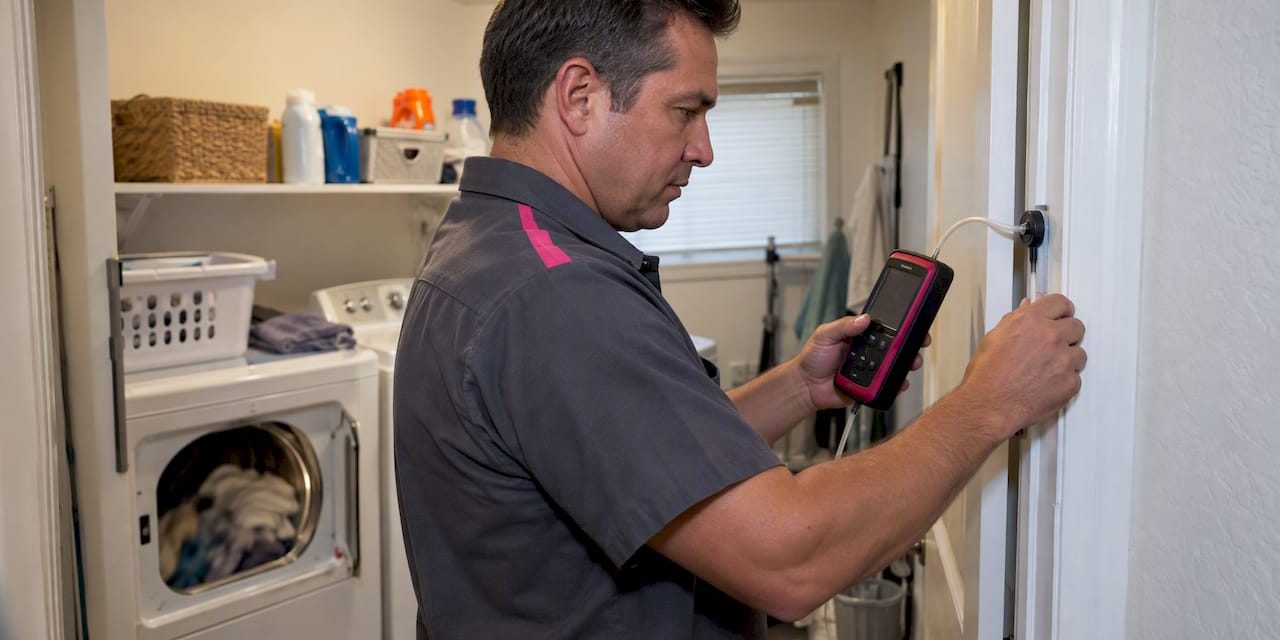
Diagnostics run from simple homeowner checks to instrument-based testing. Pressure is measured in Pascals (Pa) with a digital manometer. A typical house runs at only a few Pascals of difference during normal operation, while blower-door and duct-blaster tests deliberately depressurize to 50 Pa so leakage can be characterized.
Here is the usual order of work:
- Homeowner checks: Smoke or tissue tests, plus a log of when symptoms occur.
- Attic hatch pressure check: Measuring the pressure difference across an attic hatch with the house depressurized shows whether the attic acts as inside or outside the pressure boundary.
- Closed-room test: Compare each closed room to the main space. Building America practice uses 3 Pa as a threshold for closed-room pressure problems.
- Worst-case draft test: A technician runs all major exhausts and manipulates interior doors to create the most negative pressure in the combustion appliance zone (CAZ), then watches for spillage. Where results are unsafe, the fixes include vent repairs, duct sealing, balancing airflows, or makeup air.
- Duct and static pressure tests: Duct leakage testing and total external static pressure (TESP) readings show where airflow is being lost or restricted. Static pressure procedures help diagnose blocked coils, dirty filters, or excessive system resistance.
The first two limits come from the Building America appliance-zone isolation guideline. Common patterns include dryer-driven depressurization, return leaks, and single-return layouts. If your results look like any of these, our explainer on what duct leakage test results mean walks through the numbers.
How do you fix negative pressure and keep it from coming back?
Work from the cheapest, fastest changes toward contractor-level fixes. Many homes improve at the first step.
- Stagger your exhaust use. Do not run the dryer, range hood, and bath fans together. Clean the lint trap and dryer vent so the dryer moves air efficiently instead of laboring.
- Open the return path. Door undercuts of about 1 inch or transfer grilles let rooms return air to the main return. Our guide to free fixes for uneven cooling upstairs covers these low-cost moves.
- Seal the ducts. Leaky ductwork in attics or crawlspaces can account for 20% or more of heating and cooling energy losses. If you are weighing a DIY approach, start with our leaky duct sealing guide and know when a professional test is warranted.
- Move ducts inside. Ducts brought into conditioned space stop pulling air from attics and crawlspaces.
- Add makeup air. Guidance for new low-rise homes calls for an exhaust makeup air system when kitchen exhaust or dryer operation would depressurize conditioned space by more than 5 Pa.
- Consider balanced ventilation. Building America guidance notes that tight homes need controlled ventilation and that exhaust-only strategies can depressurize a home, so balanced systems such as an ERV or HRV are worth considering.
- Fix the air distribution. Fixing ducts and balancing flows reduces uncontrolled air change and the moisture and comfort trouble that comes with it. One or two returns serving a whole house is a recipe for depressurized main areas.
- Isolate combustion appliances. Appliance-zone isolation, vent upgrades, and retesting afterward close the loop on safety.
Documented before-and-after numbers are the proof that a repair worked. Without them you are guessing, which is the habit this article is meant to break.
Pro Tip: Ask for the first test results in writing before any repair starts. A written baseline makes it easy to confirm the fix actually lowered the depressurization.
When should you call a professional for negative pressure?
Call right away if you have a gas furnace, water heater, or other fuel-burning appliance and you notice soot, a burning smell, or any sign of spillage. Experts recommend a professional duct evaluation as the first step with suspected imbalances, because many comfort problems come from distribution rather than the furnace or thermostat.
Request these deliverables:
- A blower-door test to quantify envelope leakage.
- A CAZ worst-case draft test on every combustion appliance.
- A duct leakage test, such as a duct blaster test, with results in numbers.
- TESP and static pressure readings to check airflow resistance.
- A written report with measured pressures, leakage figures, and prioritized fixes. Consider hiring a technician who records measurements rather than relying on impressions.
Typical remedies include duct sealing, makeup air, return or transfer grille installation, and vent repairs. When a pro finishes airflow work, air balancing by measured CFM confirms every room gets what it should.
Why we measure first and guess never
A thermostat or furnace may not be the real problem; a return duct pulling from the attic can also cause issues. Measuring first saves money, and with fuel-burning appliances in the house it also protects your family. Many fixes are straightforward, like a door undercut or a staggered laundry schedule. Combustion safety is different, because spillage can look like nothing until it matters, and only trained testing confirms the vents are safe.

— Brett
How we diagnose and fix negative pressure for you
We offer duct installation, duct repair, and emergency HVAC service, and our NATE-certified, non-commissioned technicians recommend only what your numbers justify. Contact us to discuss your HVAC needs and possible next steps. Our Tru Comfort Advantage maintenance plans help keep duct and vent problems from creeping back. Ready for answers? Contact us through our air duct installation page to book an inspection.
FAQ
Is negative pressure in a house dangerous?
It can be, mainly when fuel-burning appliances are present. Negative pressure can pull combustion gases down a vent and into the home, and it can also draw humid air into wall cavities where mold forms. A worst-case draft test tells you whether your house is at risk.
What causes negative pressure in a house?
Exhaust appliances like dryers, range hoods, and bath fans are common culprits, along with leaky return ducts and rooms without return paths. A tighter envelope without makeup air makes each of these worse.
How do I fix negative pressure in my house?
Start by staggering exhaust use, cleaning the dryer vent, and adding door undercuts or transfer grilles. If the problem persists, seal leaking ducts and add makeup air. Have a professional retest afterward, especially with combustion appliances.
What is a normal pressure difference inside a house?
Normal operating differences are only a few Pascals, which you cannot feel. Technicians use 50 Pa during blower-door and duct tests to measure leakage, so that number is a test condition, not your everyday pressure.