Homeowners: Storm Damage to AC? Restart Safely, Protect Your Claim
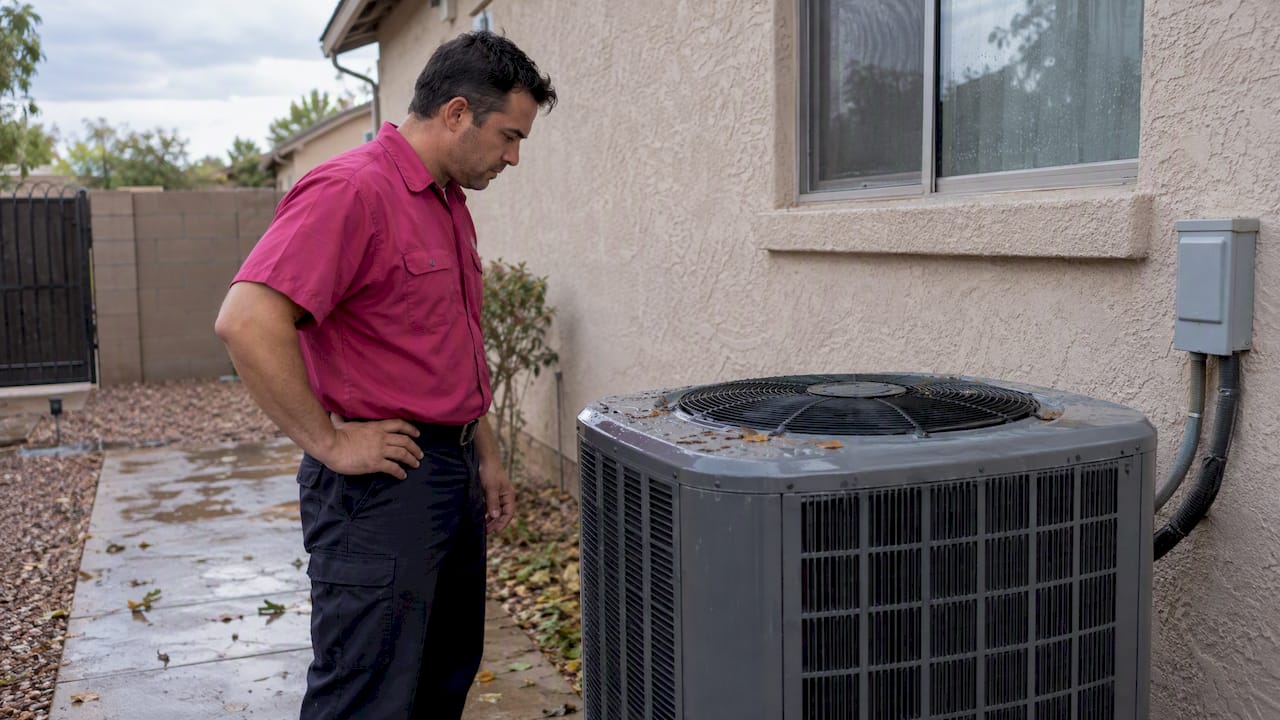
Turn your air conditioner off at the thermostat and the outdoor disconnect, but only if you can reach them without standing in water or near downed lines. Don’t touch wet equipment. If the unit won’t restart, or you see bent coils, a shifted pad or signs of a refrigerant leak, call a licensed HVAC technician before you try again.
TL;DR:
- If the unit or ground is wet, or downed lines are nearby, stay back; contact the utility or a licensed electrician before inspecting.
- After power stabilizes, turn the main breaker on, then the outdoor disconnect and thermostat; reset any tripping breaker only once.
- Policies typically cover lightning, wind, and hail damage, but exclude flooding and neglect; photograph damage before cleanup and check for a separate wind deductible.
- Ask contractors for NATE certification, a license number, a written estimate, and a clear scope; submerged wiring may require electrician clearance before power returns.
- A qualifying replacement central air conditioner may earn a federal tax credit of 30%, capped at $600, if it meets required efficiency tiers.
Table of Contents
- How can you tell if a storm damaged your AC unit?
- What should you do before touching or inspecting the unit?
- How do you restart your AC after the power comes back?
- When should you call an HVAC technician or an electrician?
- What does insurance cover, and how do you document a claim?
- What can you do now to limit further damage?
- Why trustworthy post-storm service matters more than speed
- What happens when you call us after a storm?
- FAQ
- Sources
How can you tell if a storm damaged your AC unit?
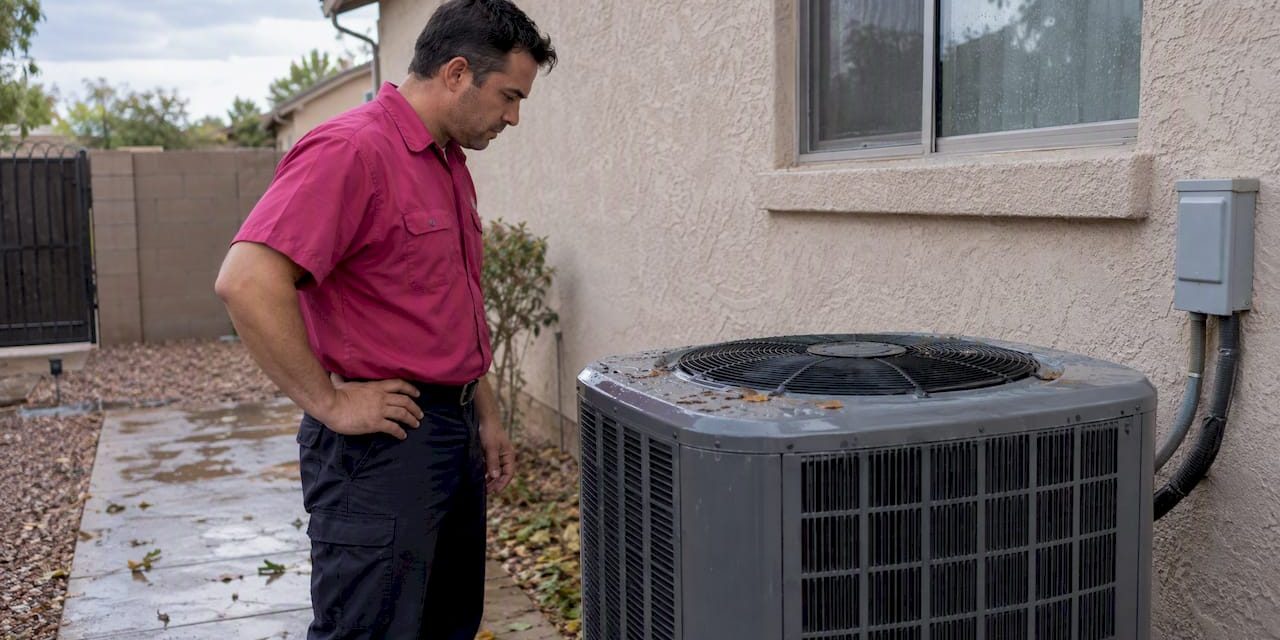
Start with the outdoor condenser, and look without touching anything until the power is confirmed off. Wind, hail and flying debris leave marks you can spot from a few feet away:
- Bent or flattened coil fins, or dents in the cabinet
- Detached or loose panels and a fan guard pushed in
- A concrete pad that has shifted, tilted or sunk
- Branches, leaves or other debris lodged in the coils
- Oily residue near the lines, which can point to a refrigerant leak
Water leaves different clues. Pooling around the unit, a line of silt on the cabinet and early corrosion on the base or wiring all suggest flood exposure. Flooding changes the repair approach because electrical parts that sat in water are not safe to energize, even if they look dry.
Operational signs matter just as much. Listen for grinding, rattling or a loud hum. Notice whether the house cools poorly, whether the system turns on and off in short bursts, or whether a breaker trips or refuses to reset. Any of these after a storm can mean a power surge hit the system.
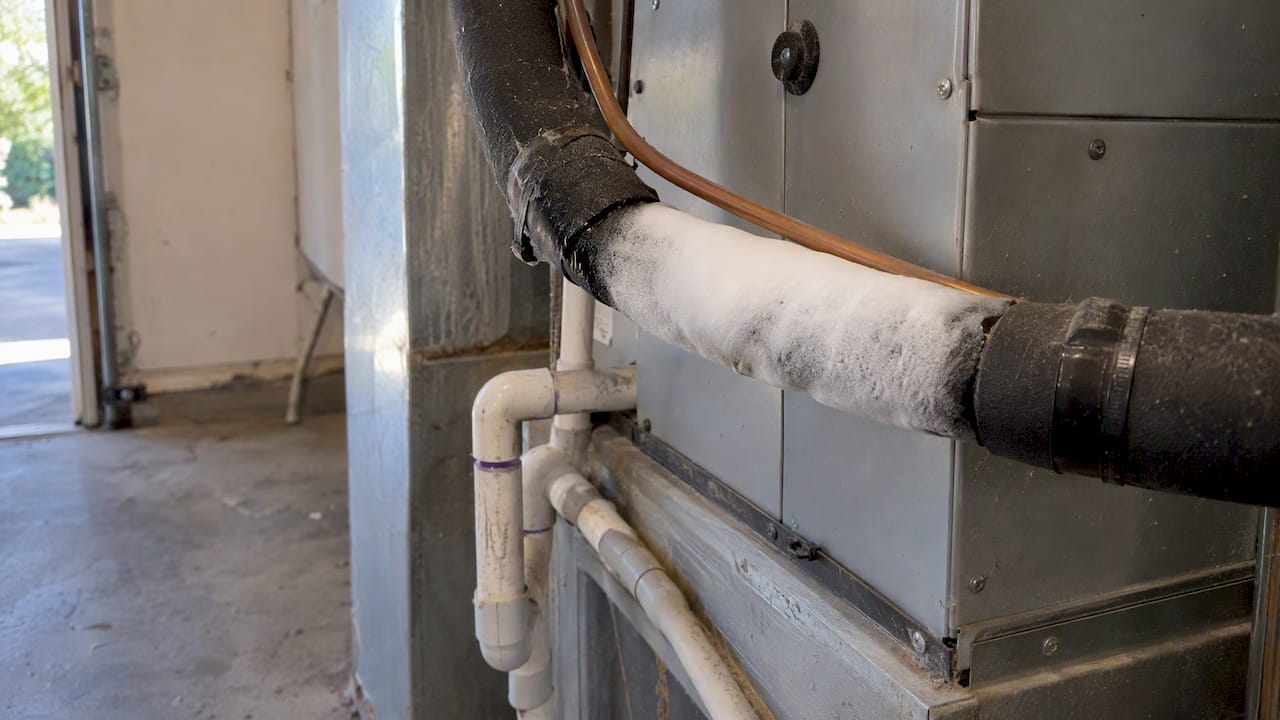
Some symptoms point inside the unit. Ice on the lines, hissing, weak cooling with the fan running, or a compressor that hums but never starts can all signal refrigerant or compressor trouble. Improper refrigerant charge or restricted airflow can shorten compressor life, according to Department of Energy diagnostic guidance, and that kind of fault needs a technician’s gauges, not a guess.
What should you do before touching or inspecting the unit?
Work through this checklist in order. It keeps you away from the two biggest hazards after a storm: electricity and water.
- Set the thermostat to off, then switch off the outdoor disconnect.
- Use the main breaker only if you can reach the panel while standing on dry ground.
- If the unit or the ground around it is wet, or you see downed lines, stay back and call the utility or a licensed electrician.
- Use battery flashlights, not candles, and never run a generator indoors, as emergency preparedness guidance advises.
- Photograph everything before you move a single branch or panel.
Pro Tip: Take wide shots of the whole yard and unit first, then close-ups of each damaged part. Adjusters can place the damage that way, and your photos are date-stamped for the claim.
How do you restart your AC after the power comes back?
Give the grid a few minutes. Wait until power has stabilized before restarting, so your compressor isn’t hit by a surge. Then restart in this sequence:
- Thermostat OFF.
- Outdoor disconnect OFF.
- Main breaker OFF.
- Main breaker ON.
- Outdoor disconnect ON.
- Thermostat to a cooling setting.
If a breaker trips, reset it once at most. Check any GFCI outlets nearby too. Never force a breaker that won’t hold, because a breaker that keeps tripping is telling you something is shorted or damaged.
Stop and call a pro if you hear grinding, clanking, or a persistent hum with no compressor start, or if you find a blown fuse. Running a damaged system can turn a repairable problem into a failed compressor. Our air conditioner repair team can help with AC problems after surges, and we also keep a longer emergency HVAC checklist for homeowners.
When should you call an HVAC technician or an electrician?
Match the problem to the right professional, and don’t try to bridge the gap yourself.
- Call an electrician if meter boxes, conduits or wiring were submerged, bent or exposed. Licensed electricians and inspections are often required before power can be restored after flooding, and local codes can mandate an inspection.
- Call an HVAC technician for refrigerant leaks, damaged coils, signs of compressor failure, cooling that stays weak, or breaker trips tied to the AC.
- Verify credentials. Ask for NATE certification, a license number, a written estimate and a clear scope of work. The Department of Energy notes that disaster victims are frequent targets for unqualified crews and recommends verifying contractor qualifications and checking local code requirements before you authorize repairs.
- Expect more people involved after flooding. An inspector or electrician may need to clear the unit before full restoration.
What does insurance cover, and how do you document a claim?
Standard homeowners policies typically cover damage to air conditioning from lightning, windstorms and hail, but usually exclude flood damage and neglect, according to The Hartford. We break the topic down further in our guide on whether homeowners insurance covers AC.
- Take date-stamped photos before any cleanup, and keep every receipt.
- Check your deductible. Some policies use a separate wind or hurricane deductible, as the NAIC post-disaster claims guide points out.
- Contact your insurer promptly, and save contractor estimates and records of emergency repairs.
- If the damage looks flood-related, call your flood insurer or the National Flood Insurance Program. Official flood guidance stresses that standard homeowners policies do not cover flood.
What can you do now to limit further damage?
Once the power is off and the area is dry, a few limited fixes are reasonable. Clear loose debris from around the cabinet. Carefully straighten minor bent fins with a fin comb, never with power on. Secure loose panels or cover openings so rain stays out until a technician arrives.
- If the unit is old or badly damaged, compare repair against replacement. A qualifying central air conditioner may earn a 30% credit capped at $600 under the Energy Efficient Home Improvement Credit, and the IRS FAQ explains that equipment must meet CEE efficiency tiers.
- Book a professional diagnostic, then consider a maintenance plan to lower your risk of repeat storm repairs.
Why trustworthy post-storm service matters more than speed
After a big storm, the loudest offer is rarely the best one. Good technicians put safety first, bring in an electrician when the wiring calls for it, and document repairs clearly enough for your insurer. We are a family-owned HVAC company with NATE-certified technicians, emergency availability and maintenance plans, and our advice is simple: get written, itemized estimates, and don’t approve work on the spot under pressure.
— Brett
What happens when you call us after a storm?

When a storm hits your AC, you shouldn’t have to sort out safety, estimates and insurance paperwork alone. Our NATE-certified, non-commissioned technicians put your needs ahead of upsells, and you can reach us for emergency HVAC services when waiting isn’t an option.
- Emergency inspections and repairs
- Tru Comfort Advantage maintenance plans for ongoing protection
- An estimate for the work
Call us for a safety check, and ask how we help with insurance documentation.
FAQ
Can a storm mess up your AC?
Yes. Wind, hail, flying debris and power surges can bend coils, crack components and damage the compressor or control board. Flooding adds electrical hazards, so keep the unit off until it has been checked.
Does homeowners insurance cover lightning damage to an air conditioner?
Usually yes. Standard policies typically cover damage from lightning, windstorms and hail, but they usually exclude flood and neglect, according to The Hartford. Check your own policy for deductibles and exclusions.
Should I repair or replace a storm-damaged AC?
It depends on the unit’s age and the extent of the damage. A technician can compare repair costs against replacement, and a qualifying new central air conditioner may earn a federal credit, as the IRS explains.
How soon should I call after a storm?
Call as soon as it is safe, especially if the unit won’t restart or you see physical damage. Prompt contact with both your technician and your insurer keeps documentation fresh and limits further harm.
Sources
- Thehartford
- Energystar
- Hiring Qualified Contractors | Department of Energy
- Power Restoration:
- Post-Disaster Claims Guide