

R-22 Replacement: 3 Choices Homeowners Should Weigh Before Retrofitting
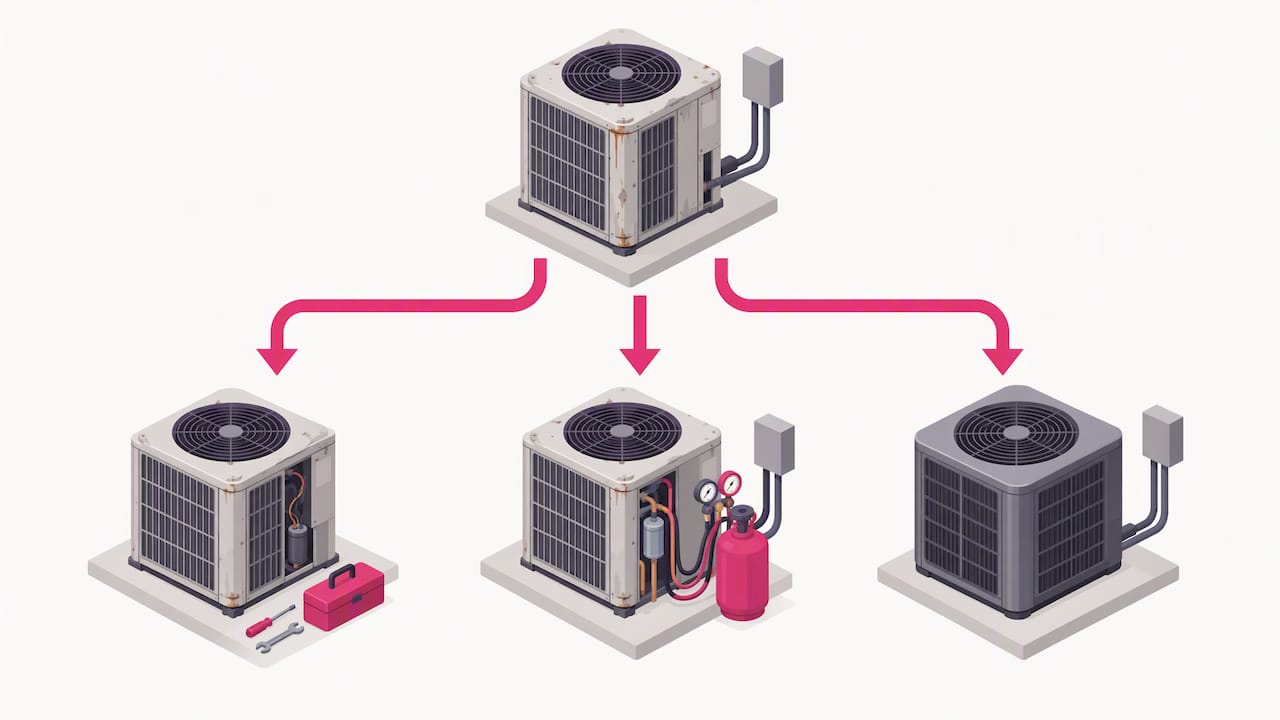
You have three practical paths for an R-22 system today: service with reclaimed R-22, retrofit to an EPA-acceptable alternative, or replace the system with modern refrigerant equipment. Blends like R-407C, R-422B (NU-22B), and R-438A (MO99) get proposed most often, but they usually need system changes. For older, inefficient, or frequently repaired systems, replacement is often the best long-term choice.
TL;DR:
- EPA does not require replacement; reclaimed R 22 remains an option, but production and imports ended in 2020, leaving supply uncertain and prices rising.
- A retrofit with R 407C typically requires synthetic POE oil and component checks; requirements vary by system and manufacturer, so get guidance first.
- R 410A cannot simply go into an existing unit; it is commonly used in new equipment and generally requires new components or full replacement.
- Get retrofit and replacement quotes on the same day, then compare system age, leak history, major repairs, efficiency, and available rebates or tax credits.
Table of Contents
- Which R-22 replacement option fits your situation?
- Which retrofit refrigerants will a technician suggest?
- What does a retrofit actually involve?
- How do cost and availability change the math?
- How do you decide between service, retrofit, and replacement?
- An honest take on R-22 decisions
- Get a straight answer on your R-22 system
- FAQ
- Sources
Which R-22 replacement option fits your situation?
Pick the path that matches your system’s age, repair history, and your plans for the home. EPA guidance says owners of existing equipment can keep servicing it with reclaimed or recycled R-22, retrofit to an acceptable alternative, or replace the equipment.
- Service with reclaimed R-22: This makes sense for a short-term fix on a system that otherwise runs well. You pay for the refrigerant that exists in stock today, and nothing in the system changes.
- Retrofit to an alternative: A refrigerant-only conversion fits a system that is mechanically sound, matches the blend’s requirements, and has years of life left. It still involves more than swapping what is in the cylinder.
- Full replacement: This is the better call when the system is old, keeps breaking down, or wastes energy. A new matched system may offer warranty coverage and improved efficiency.
EPA’s residential guidance adds that you are not required to stop using an R-22 system. You should, however, weigh supply declines and rising prices when you decide.
Which retrofit refrigerants will a technician suggest?
Expect to hear a short list of EPA SNAP-acceptable blends. Practitioners evaluating R-22 retrofit options name R-407C, R-427A, and R-438A (MO99) among the approved alternatives. EPA’s own summary of substitute refrigerants also lists R-422B and R-410A with their safety and global warming figures.
- R-407C: A common choice for R-22 air conditioner retrofits. It typically requires synthetic POE oil, plus checks of certain components.
- R-422B (NU-22B): Marketed for mineral oil compatibility and widely used on direct-expansion R-22 systems, according to an industry perspective. Conversion requirements still vary, so the equipment maker’s guidance matters.
- R-438A (MO99): Designed for better compatibility with existing mineral oil, though conversion steps vary by system and manufacturer.
- R-427A: A SNAP-acceptable substitute that EPA highlights as a retrofit option. Ask your technician about its trade-offs on your specific equipment.
- R-410A: Not a drop-in. EPA materials note it is commonly used in new equipment rather than retrofits, so switching to it generally means new components or a new system.
If a contractor says R-410A will simply go into your old unit, ask for the manufacturer’s written approval first.
What does a retrofit actually involve?
Retrofitting is a procedure, not a top-off. EPA’s retrofit guidance states that no alternative matches R-22 exactly. Most require oil changes and component work, and each refrigerant has its own checklist.
- Remove the R-22. The technician should follow the applicable refrigerant-handling requirements and the retrofit checklist.
- Address the oil. Blends that need POE oil call for draining and flushing the old mineral oil, which adds labor.
- Replace key parts. Expect a new filter-drier and seals, and possibly a new expansion device (TXV), depending on the refrigerant and the equipment.
- Evacuate the system. The technician should follow the refrigerant-specific retrofit checklist before charging the system. Our guide to finding refrigerant leaks explains why leak history matters here.
- Charge the system. The technician should follow the refrigerant-specific charging instructions.
Be skeptical of the phrase “drop-in.” Practitioners point out it is a marketing term, and improper conversion can reduce compressor life and cooling capacity.
Pro Tip: Ask for the exact refrigerant, the exact oil, and the list of parts being replaced in writing before you approve a retrofit.
How do cost and availability change the math?
R-22 production and import ended in 2020, so service now depends on reclaimed and stockpiled supply. Industry reporting on availability says stock should remain obtainable in the near term, but supply and quality are uncertain, and prices have climbed as allocations shrank. Our freon recharge cost breakdown shows how per-pound refrigerant pricing adds up.
A retrofit quote usually combines these pieces:
- Refrigerant, priced per pound
- New oil and a filter-drier
- A TXV and other parts, where needed
- Labor for recovery, flushing, evacuation, and charging
Set that total against the price of a new system and its energy savings over the years. Energy-efficiency rebates and tax credits can shift the numbers toward replacement, and a partner article on home energy-efficiency upgrades is a useful read on how efficiency improvements pay back.
Homeowners are not required to replace an R-22 system right away, but EPA says supply and price should factor into your decision. Rising refrigerant costs hit older systems hardest, because they tend to leak and need repeated service.
How do you decide between service, retrofit, and replacement?
Walk through this checklist during the on-site visit:
- System age and remaining life: The older the unit, the weaker the case for investing in it.
- Repair history: Repeated repairs point toward replacement.
- Leak history: A system that keeps losing refrigerant will keep costing you refrigerant.
- Compressor condition: A tired compressor is a poor candidate for any conversion.
- Efficiency gap: Compare your unit’s SEER rating with a new system’s.
ACCA contractor guidance tells technicians to weigh system age, refrigerant availability and cost, and energy savings, and to document what they recommend. Put these questions to your contractor:
- Can you provide manufacturer compatibility guidance or a letter?
- Will you change the oil and flush the lines?
- Which exact refrigerant and oil will you use?
- What warranty or leak guarantee comes with the work?
As a rule of thumb, replacement tends to win when a system is old, has a leak, or needs a major component. Our guide on when to replace your AC walks through the timing.
Pro Tip: Get the retrofit quote and the replacement quote on the same day, so you compare them side by side.
An honest take on R-22 decisions
The cheapest quote is rarely the cheapest outcome. A low-priced retrofit on a tired system can leave you paying for repairs and wasted energy for years. I would rather see you follow documented manufacturer guidance and choose the long-term fix when the numbers support it. Whoever works on your system should follow manufacturer guidance and handle refrigerant properly, because shortcuts can harm your equipment and the environment. If you want a straight answer on your own unit, an on-site evaluation is the simplest next step.
Get a straight answer on your R-22 system
Our technicians provide recommendations based on what your system needs. We handle:
- Air conditioner installation, repair, and maintenance
- Emergency HVAC service when a breakdown cannot wait
- Annual Tru Comfort Advantage maintenance plans for equipment you plan to keep
During an inspection, we check for leaks, review compatibility, and give you a written recommendation on whether to service, retrofit, or replace. Schedule an inspection or request a quote and we will walk you through your options.

FAQ
What can you replace R-22 refrigerant with?
EPA’s SNAP program lists acceptable substitutes, and common retrofit choices include R-407C, R-422B (NU-22B), R-438A (MO99), and R-427A. None matches R-22 exactly, so most retrofits need oil and component changes.
Can I replace my R-22 with R-410A?
Not as a drop-in. R-410A is typically used in new equipment, so using it generally means replacing components or the whole system.
What is the cheapest R-22 replacement option?
Servicing with reclaimed R-22 usually costs least upfront, but supply is shrinking and prices have risen. Over time, a retrofit or new system can cost less than repeated repairs on an aging unit.
Can I replace R-22 with MO99?
Yes, R-438A (MO99) is a SNAP-acceptable alternative, designed for better compatibility with existing mineral oil. Conversion steps still vary by system and manufacturer, so confirm them first.
Sources
- Docs
- The Ozone-Depleting Substances Phaseout: 2020-2030, The 2020 HCFC Allocation and Other Updates
- Epa