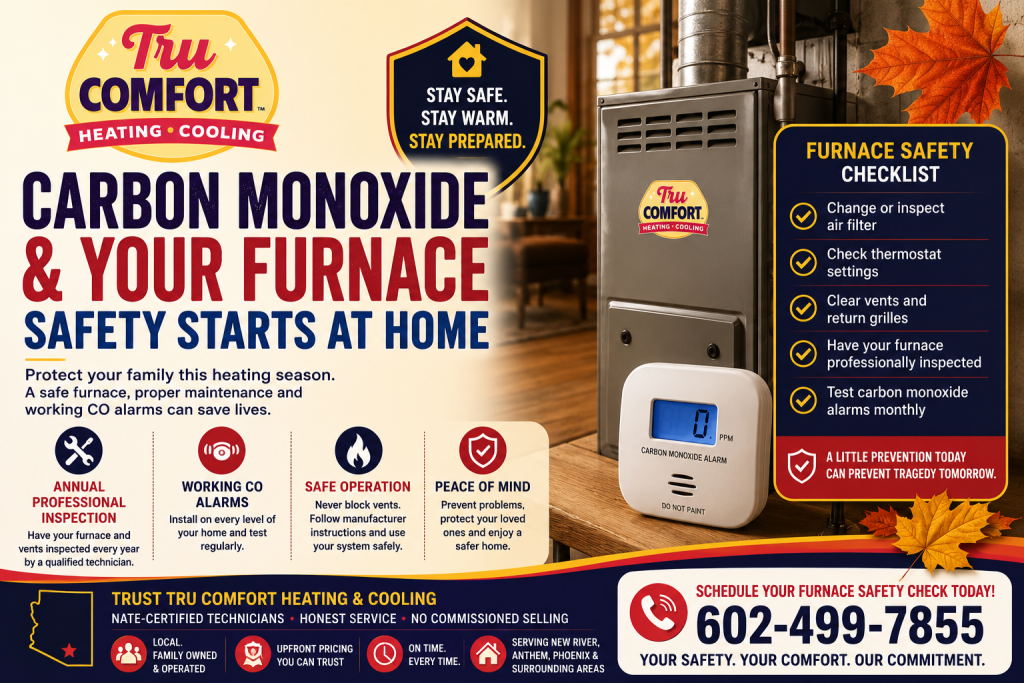
Carbon Monoxide and Your Gas Furnace: What Arizona Homeowners Should Know
Arizona may have a short heating season, but a gas furnace still needs to operate safely every time it runs. Long periods without use are not a reason to ignore the system. They are a reason to check it before the first cold spell.
Carbon monoxide deserves particular attention because it cannot be identified reliably by sight or smell. A furnace can appear to be operating while a combustion or venting problem creates a serious hazard.
Understand Where Carbon Monoxide Comes From
Carbon monoxide is produced when fuels do not burn completely. Fuel burning furnaces, water heaters, fireplaces and other appliances therefore require correct combustion and proper venting.
The U.S. Consumer Product Safety Commission recommends yearly professional inspection of fuel burning home heating systems, including furnaces, boilers, fireplaces, chimneys, flues and vents.
The purpose is not simply to make sure the house gets warm. The inspection should also verify that combustion products are leaving the home safely.
A Furnace Inspection Includes More Than Cleaning
A professional furnace check can include the electrical and mechanical components, thermostat controls and automatic safety devices.
For fuel burning systems, venting deserves particular attention. The CPSC recommends checking chimneys, flues and vents for leakage, blockage and other conditions that could interfere with safe operation.
Tru Comfort’s own maintenance process includes checks of the flame sensor, pressure switch, hot surface ignitor, temperature rise and shutdown cycle on gas furnaces.
Those measurements and operational checks are different from simply turning the thermostat up and confirming that warm air comes from the vent.
Install and Maintain Carbon Monoxide Alarms
A carbon monoxide alarm provides another layer of protection. The CPSC recommends installing CO alarms in homes and keeping them in working condition according to the manufacturer’s instructions.
Follow the alarm manufacturer’s directions for placement, replacement age and battery testing. Do not place an alarm somewhere simply because it is convenient if the manufacturer specifies otherwise.
A CO alarm does not replace furnace maintenance. Likewise, a recently serviced furnace does not eliminate the need for alarms.
Never Ignore an Alarm
If a carbon monoxide alarm sounds, treat it as a safety warning rather than assuming the device is faulty.
Move to fresh air and follow the alarm manufacturer’s emergency instructions and guidance from local emergency authorities. Do not reset the alarm repeatedly and continue operating fuel burning appliances without determining why it activated.
Symptoms of carbon monoxide exposure can resemble ordinary illness, which is another reason not to diagnose the situation yourself.
Watch for Furnace Operating Problems
Some furnace faults will not trigger a CO alarm but still deserve attention.
Schedule service if the furnace repeatedly stops during a heating call, produces unusual odors, has trouble igniting, makes new noises or fails to provide normal heat.
Tru Comfort identifies yellow or flickering burner flames, unusual odors, short cycling and cold air among signs that a furnace should be inspected.
Do not attempt to modify burners, vent pipes or furnace safety controls without the correct training.
Test the Heat Before Winter Arrives
The first furnace test should happen while temperatures are still mild enough that you can leave the system off if something is wrong.
Set the thermostat to heat, observe the startup and listen through a complete cycle. Confirm that the home warms normally. Check that CO alarms are powered and within their service life.
This simple preparation gives you time to schedule maintenance without discovering a furnace fault during the first genuinely cold night of the year.
Make Furnace Safety Part of Fall Maintenance
Tru Comfort Heating and Cooling provides furnace inspection, maintenance and repair throughout New River, Anthem, Phoenix and surrounding North Valley communities. If your gas furnace has not been professionally checked this year or is showing unusual operating symptoms, call 602 499 7855. Tru Comfort’s NATE certified technicians can inspect the heating system and help make sure it is ready for safe, dependable operation.
Live References
Tru Comfort Advantage Maintenance Plan
CPSC Home Heating Equipment and Carbon Monoxide