
High AC Bills: Why They Spike and How to Cut Them

If your air conditioner is driving your electric bill through the roof, the cause is usually one of a few fixable things: a clogged filter, leaking ducts, a system that has gone too long without a tune-up, thermostat habits, or a rate plan that punishes you for running the AC at the wrong hour. Start with the free checks below. If the bill stays high, have a technician measure the system instead of guessing.
TL;DR
- The national average summer bill is $178 a month, but a desert home running AC for months will land well above it. Compare against your own bills from last year, not the average.
- Leaky ducts are a top suspect: a typical house loses 20 to 30 percent of the air moving through its ducts.
- Filters and yearly tune-ups are the cheapest fixes. Both are covered in the checklist below.
- Thermostat habits and your utility’s rate plan can change the bill without touching the equipment.
- If the unit runs constantly but the house will not cool, or the bill jumped with no change in habits, call a pro.
Table of Contents
- Why the bill is high: start with what changed
- The usual suspects, in the order we check them
- Habits that quietly raise the bill
- Your rate plan may matter as much as your AC
- When the equipment is the problem
- A weekend plan to find the cause
- Perspective: what we see in New River homes
- Get a technician to find the cause
- FAQ
- Sources
Why the bill is high: start with what changed
Before you blame the air conditioner, ask one question: what is different from last year? Pull up the last 12 months of bills from your utility’s online account and compare the same month year over year. Then look at usage in kilowatt-hours, not just dollars, because rates change too.
Three patterns tell you where to look:
| What you see | Likely cause |
|---|---|
| kWh usage is flat, dollars are up | Rate increase or a change in rate plan |
| kWh usage climbed gradually over several summers | Aging equipment, duct leaks, missed maintenance |
| kWh usage jumped suddenly in one month | A failing part, low refrigerant, a frozen coil, a new habit or a new appliance |
The federal government’s figures give useful context. The Department of Energy says space cooling accounts for about 6 percent of an average household’s energy use, while heating and cooling systems combined are roughly 32 percent. In a hot climate like ours the cooling share is far larger, because the system runs for months, not weeks.
The usual suspects, in the order we check them
1. A dirty or wrong filter
A clogged filter chokes airflow. The blower works harder, the coil can ice up, and the system runs longer to reach the same temperature. The Department of Energy puts the savings from replacing or cleaning filters at 5 to 15 percent of energy use.
Two cautions from the field:
- Do not wait for a calendar date. In dusty desert conditions a filter can load up faster than the old 90-day rule suggests. Our guide to checking and logging your AC filter shows how to judge it by sight, and the HVAC maintenance schedule covers the 1 to 3 month range.
- Do not jump to the thickest, highest-rated filter. An overly restrictive filter can starve a system that was not designed for it, strain the motor and even freeze the evaporator coil. Check your equipment manual for the filter type it calls for.
2. Leaking or poorly insulated ducts
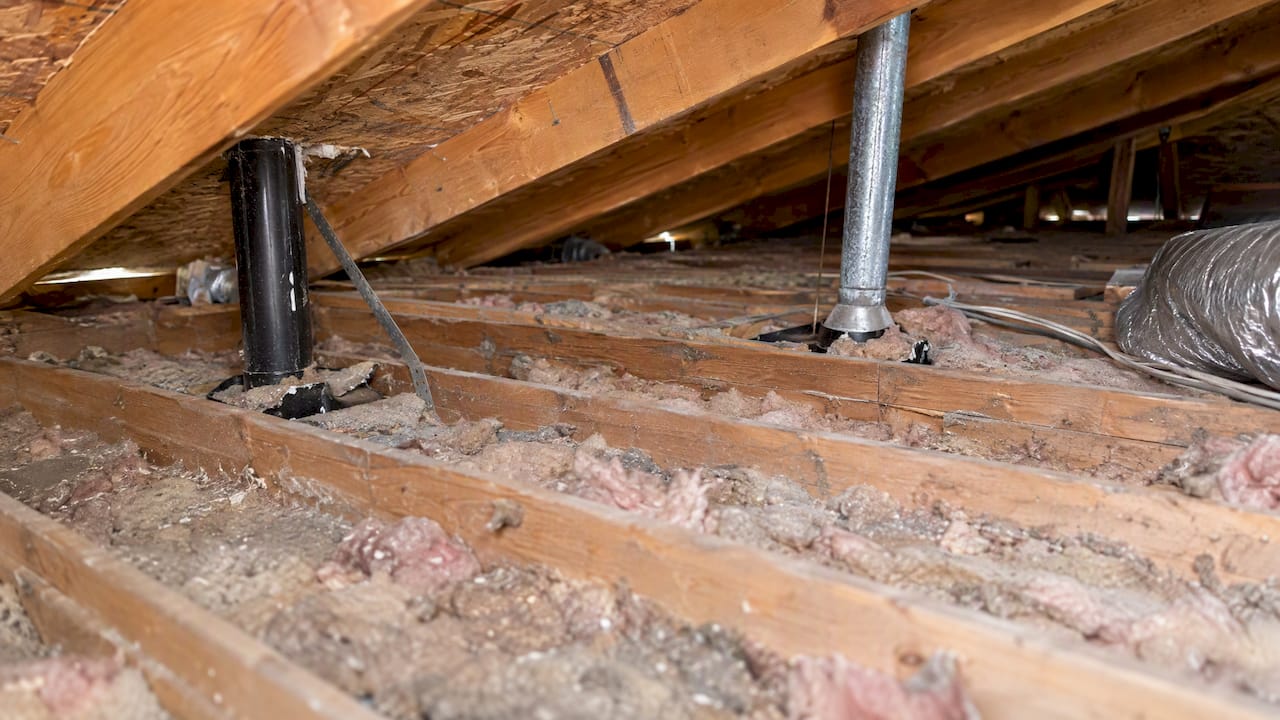
This is the one most homeowners never see. ENERGY STAR reports that in a typical house about 20 to 30 percent of the air moving through the duct system is lost to leaks, holes and poor connections. Ducts that run through a hot attic, which is common in Arizona homes, are the most important to fix first. Sealing and insulating can improve system efficiency by 20 percent or more.
A few practical points:
- Standard cloth duct tape is not a lasting repair. It dries out and lets go under temperature swings. Long-term seals use mastic sealant or metal-backed foil tape.
- Signs of duct trouble include rooms that never get cool, dusty air, and an attic that feels like an oven right around the vents.
- If one floor is always warmer, see our free fixes for uneven cooling upstairs before you pay for anything.
- For the full picture, including how a technician proves a leak with a pressure test, read how to fix leaky air ducts.
If the ducts are old, undersized or badly routed, sealing may not be enough. That is when duct installation or redesign makes sense, and our page on customized air duct installation explains what that involves. If you are budgeting, see ductwork cost per linear foot.
3. Skipped maintenance
A system that has not been serviced loses efficiency quietly. Dirty coils, weak capacitors, low refrigerant and a blocked condensate drain all make the compressor run longer. The Department of Energy says spring AC tune-ups and fall heating tune-ups can trim heating and cooling costs by 5 to 10 percent and extend equipment life. Skipping them risks early failure, poor performance and excess energy use.
Your utility says much the same. APS recommends servicing your AC at least once a year and changing filters monthly.
How often is right for a Valley or North Valley home? We answer that in how often to maintain your AC in Anthem and New River. For a do-it-yourself pass between visits, use our AC maintenance checklist. If you want to know what a professional visit costs and includes, we wrote that up in what an HVAC tune-up really costs.
4. Warning signs of a failing system
Some bill spikes are the first symptom of a repair. Watch for:
- The AC runs nearly nonstop and the house still will not reach the set temperature.
- Air from the vents is weak or only lukewarm. Our AC not blowing cold air guide walks through the checks.
- Ice on the refrigerant line or the indoor coil.
- Short cycling: the unit starts, stops and starts again every few minutes.
- Strange sounds, burning smells or a tripped breaker.
There are more in ten signs your home AC unit may need maintenance. Low refrigerant is never fixed by topping up and forgetting it, since the charge does not get used up. It leaks, and a good technician finds the leak.
5. The outdoor unit is baking
The condenser has to dump heat outside. If shrubs, fences or debris crowd it, or it sits in blazing afternoon sun with no airflow, it works harder. Give it room: our guide to AC condenser clearance gives the numbers, and why you should shade your house before the AC unit explains where shading pays off most.
6. The house itself leaks heat
Thin attic insulation, gaps around doors and unsealed penetrations let heat pour in. Energy experts recommend a systems-based approach: fix the envelope (insulation, air sealing, duct performance) before buying new equipment. The Department of Energy’s guide says those measures together can cut heating and cooling bills by about 30 percent. A new, efficient AC in a leaky house simply cools the outdoors more efficiently.
Habits that quietly raise the bill
You can change these today at no cost.
- Do not crank the thermostat to an extreme. Setting it to 60°F on a 95°F day does not cool the house faster. The system works at the same rate and just runs longer, as the Department of Energy explains.
- Raise the setpoint when you are away. The same guide suggests setting the thermostat 7° to 10°F higher while the house is empty, and about 3 degrees warmer while you work at home.
- Keep heat sources away from the thermostat. A lamp or TV near the thermostat can make it sense heat and run the AC longer than needed.
- Cook smart. Using the oven heats the house and makes the AC work harder. APS suggests a microwave, air fryer, slow cooker or outdoor grill in summer.
- Use the fan setting properly. The right continuous-fan choice depends on your blower motor type, which we cover in thermostat fan setting for PSC vs ECM motors.
- Consider a smart thermostat. ENERGY STAR says homes with high heating and cooling bills, or ones empty for long stretches, can save about $100 a year with a certified model.
Your rate plan may matter as much as your AC
Two identical homes can pay very different bills depending on the plan. Many Arizona utilities offer time-of-use plans where electricity costs more during late-afternoon peak hours. For example, APS has a time-of-use plan with on-peak hours of 4 pm to 7 pm on weekdays, and that plan also adds a demand charge based on your highest hour of use in that window.
If you are on a plan like that, the fix can be behavioral: pre-cool the house before the peak window, stagger the dryer and dishwasher, and avoid running everything at once. Check which plan you are on and which utility serves your address, then compare plans on your utility’s website using your own usage history. We cannot tell you which plan wins for your home, but your hourly usage data can.
When the equipment is the problem
If the system is old, repairs are piling up and the bill keeps climbing, replacement may pay for itself. Variable-speed and inverter designs adjust output instead of switching fully on and off, which is why they come up in efficiency talk. For a plain-language explainer, see this guide to inverter air conditioners (in Greek, from a European appliance retailer).
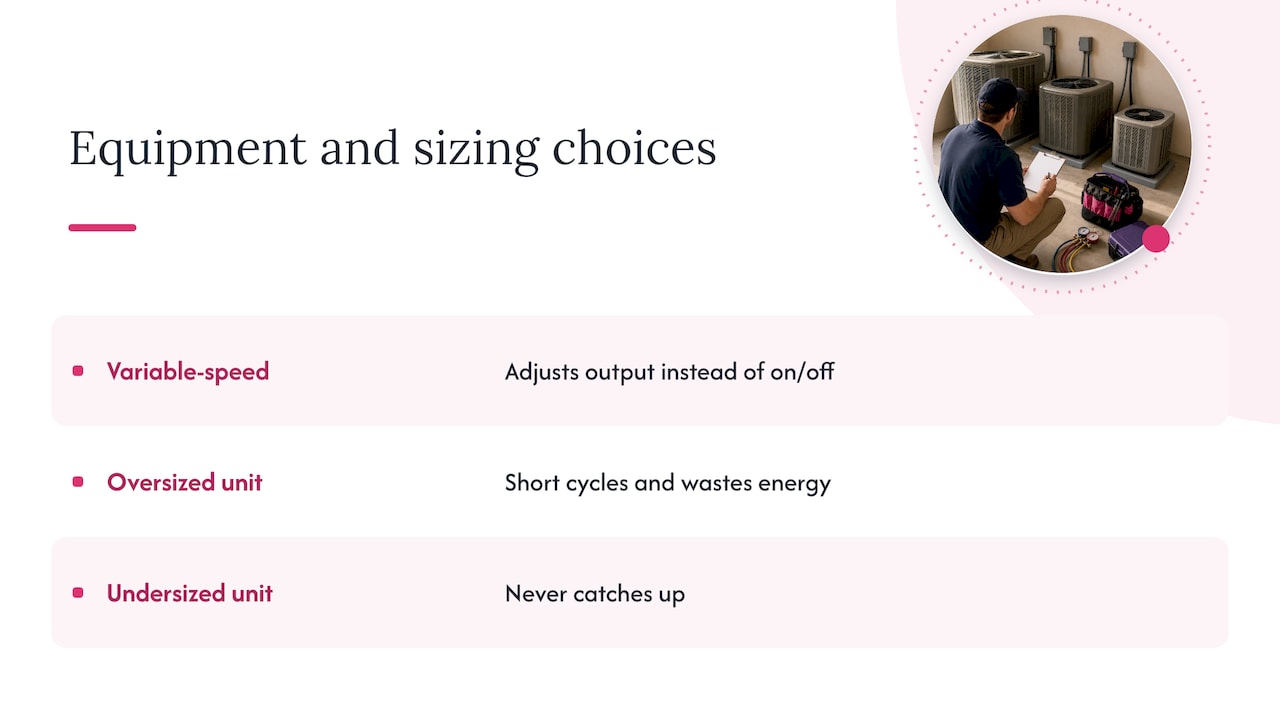
Before you approve any replacement, insist on a proper sizing calculation. An oversized unit short cycles and wastes energy, and an undersized one never catches up. Our guide explains why you should not approve AC work without Manual J, AHRI matching and a test out. If you already have ducts, how long it takes to install central air with existing ductwork sets expectations. Zoned systems that act up can also waste energy, so see zoned HVAC not working, and if airflow is uneven room to room, air balancing starts with measurement.
A weekend plan to find the cause
- Saturday morning: Pull 12 months of bills. Note kWh, rate plan and any rate changes.
- Check the filter. Replace it if it is gray and clogged, using the type your manual specifies.
- Walk the outdoor unit. Clear leaves and debris, and trim back plants.
- Look at the thermostat. Set a schedule and move any lamp or electronics away from it.
- Inspect what you can see in the attic or garage. Look for disconnected, crushed or uninsulated ducts. Do not crawl around a 140°F attic in July; wait for cooler hours or send a pro.
- Time a cycle. If the system runs for hours on a moderate day and the house will not cool, book a diagnostic.
Perspective: what we see in New River homes
Most high-bill calls we get are not a dead AC. They are a working AC that has been fighting a problem for years: a filter that was never checked, a duct that came loose in the attic, a coil nobody has cleaned. Homeowners often assume the answer is a new system, and that is the most expensive guess.
Our technicians are NATE-certified and non-commissioned, so nobody on our team earns more by selling you equipment. That matters in this conversation. When the bill is the complaint, the honest first step is to measure what the system is doing and fix the cheapest real cause first. Sometimes that is a filter. Sometimes it is sealing ducts. Sometimes, yes, the unit has reached the end of its life, and we will tell you that too, with the reasons.
If you do one thing this season, make it a pre-summer tune-up and a habit of checking the filter. Those two steps catch most of what drives bills up.
— Brett
Get a technician to find the cause
If the free checks do not bring your bill down, we can inspect the system, test airflow and tell you what is wasting energy. See our air conditioner repair, maintenance and installation services, or look at the Tru Comfort Advantage maintenance plans if you would rather have regular service built into the year. If the AC quits in the middle of a heat wave, our emergency HVAC service is there for that.
FAQ
Why is my electric bill so high in summer?
Air conditioning runs far more in summer, and in Arizona that means months of long cycles. Rates can also rise, and some plans charge more in late afternoon. Compare kWh usage with last year to tell whether the cause is your system or the price.
How much is an average AC bill?
There is no single figure, since it depends on home size, climate and rates. The EIA expects U.S. residential customers to average $178 a month for electricity from June through September 2025, all uses included. Hot-climate homes often run higher.
Is my AC using too much electricity because it is old?
Age can be part of it, but filters, ducts, refrigerant charge and dirty coils often matter more. Have the system tested before you decide to replace it. If repairs and bills keep climbing together, replacement is worth pricing.
What is the cheapest way to reduce AC costs?
Change or check the filter, set a schedule on your thermostat and keep the outdoor unit clear. Then have a tune-up done once a year. Together these cost little and address the most common causes.
Can sealing ducts really lower my bill?
It can. ENERGY STAR says a typical house loses 20 to 30 percent of duct air to leaks, and sealing and insulating can improve efficiency by 20 percent or more. Ducts in hot attics benefit most.
Sources
- EIA: Residential electricity bills could increase slightly this summer
- ENERGY STAR: Duct Sealing
- ENERGY STAR: Heat & Cool Efficiently
- U.S. Department of Energy: Tips for Lowering Your Cooling Costs
- U.S. Department of Energy: Energy Saver guide
- U.S. Department of Energy: Top 11 things you didn’t know about saving energy at home
- APS: Energy saving tips
- APS: Time-of-Use 4pm-7pm Weekdays with Demand Charge