

Freon Recharge Cost: Car vs. Home AC Prices in 2026
A car AC recharge runs $150–$300 at a shop, or $40–$130 if you use a DIY kit from AutoZone. A home AC refrigerant recharge is a different story: expect $200–$600 or more depending on the refrigerant type, how many pounds the system needs, and whether a leak repair is included. The most important legal constraint: EPA Section 608 prohibits homeowners from purchasing or handling refrigerant for stationary systems without EPA certification. Only a certified technician can legally recharge your home AC.
Two decisions to make before you spend a dollar:
- Refrigerant type: R-134a (most cars pre-2021), R-1234yf (newer vehicles), R-410A (most modern home systems), or R-22 (older home systems, now very expensive due to production restrictions). The type determines both cost and who can legally handle it.
- Leak diagnostic included? A recharge without a leak repair is a temporary fix. If your system lost refrigerant, it has a leak. Topping it off without finding and fixing the source means you’ll pay again in months.
Key Takeaways
A refrigerant recharge without a leak repair is a temporary fix, not a solution. The refrigerant type, leak status, and whether you’re dealing with a car or home system determine almost everything about the final cost.
| Point | Details |
|---|---|
| Car vs. home cost gap | Car DIY kits run $40–$130; professional home recharges with leak repair commonly reach $200–$600 or more. |
| R-22 costs far more | Reclaimed R-22 runs $100–$150/lb or more; R-410A typically costs $50–$80/lb. |
| EPA Section 608 applies | Only EPA-certified technicians may legally purchase or handle refrigerant for stationary home AC systems. |
| Leak repair changes the math | Add $75–$1,500 for leak detection and repair on top of refrigerant and labor costs. |
| Trucomfortaz for home AC | Tru Comfort provides diagnostic-first service with NATE-certified, EPA-compliant technicians in New River, AZ. |
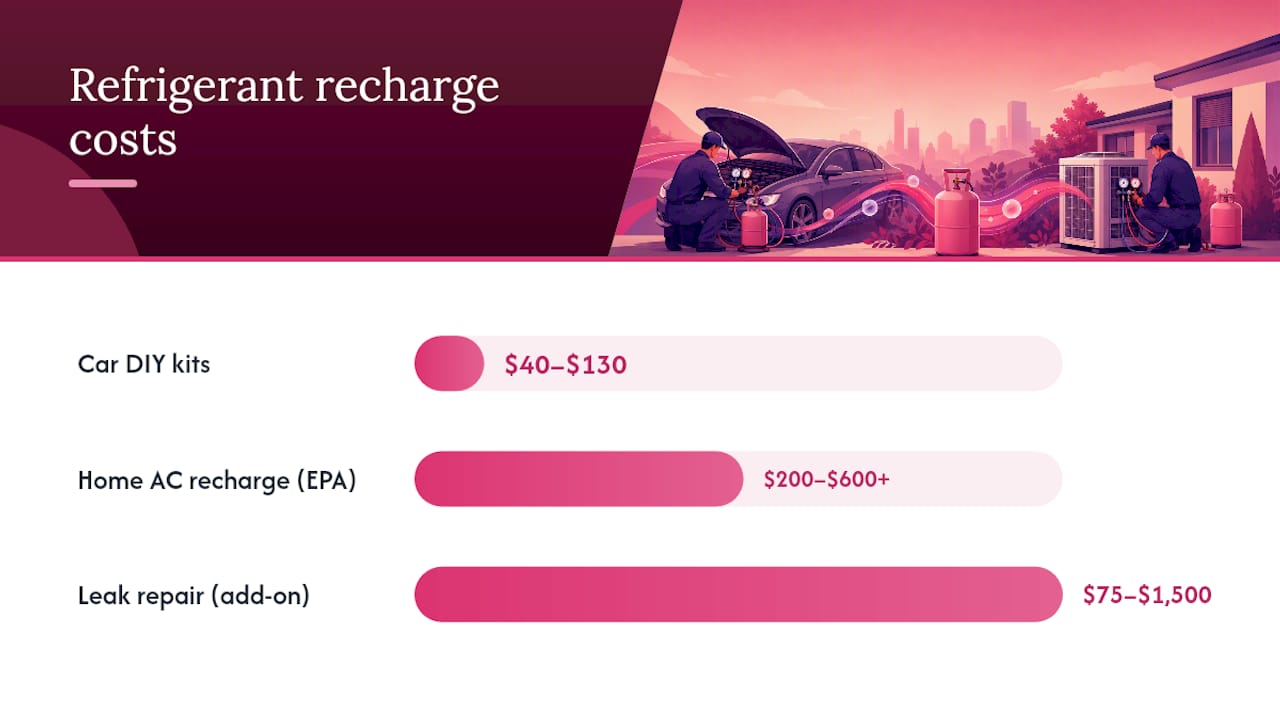
Table of Contents
- How much does a car AC recharge cost?
- What does a home AC refrigerant recharge actually cost?
- How can you tell if your AC is low on refrigerant?
- What drives the final price of a refrigerant recharge?
- What are the U.S. legal rules for buying and handling refrigerant?
- How do you choose a qualified technician and what should a service visit include?
- Sample cost calculations for common scenarios
- Why Tru Comfort recommends diagnosing before topping off
- Tru Comfort can handle your AC diagnostic and recharge
- Sources
How much does a car AC recharge cost?
Most drivers pay $150–$300 for a professional vehicle AC recharge at a shop or quick-lube center. That price covers the refrigerant, labor, and typically a basic pressure check. RepairPal’s estimator puts the average professional recharge in the $282–$366 range when you factor in regional labor rates.
The refrigerant type matters a lot here. Cars built before 2021 typically use R-134a, a common and relatively low-cost refrigerant. Newer vehicles increasingly use R-1234yf, a lower global warming potential refrigerant that is more expensive and requires specialized equipment, making professional recharges more costly.
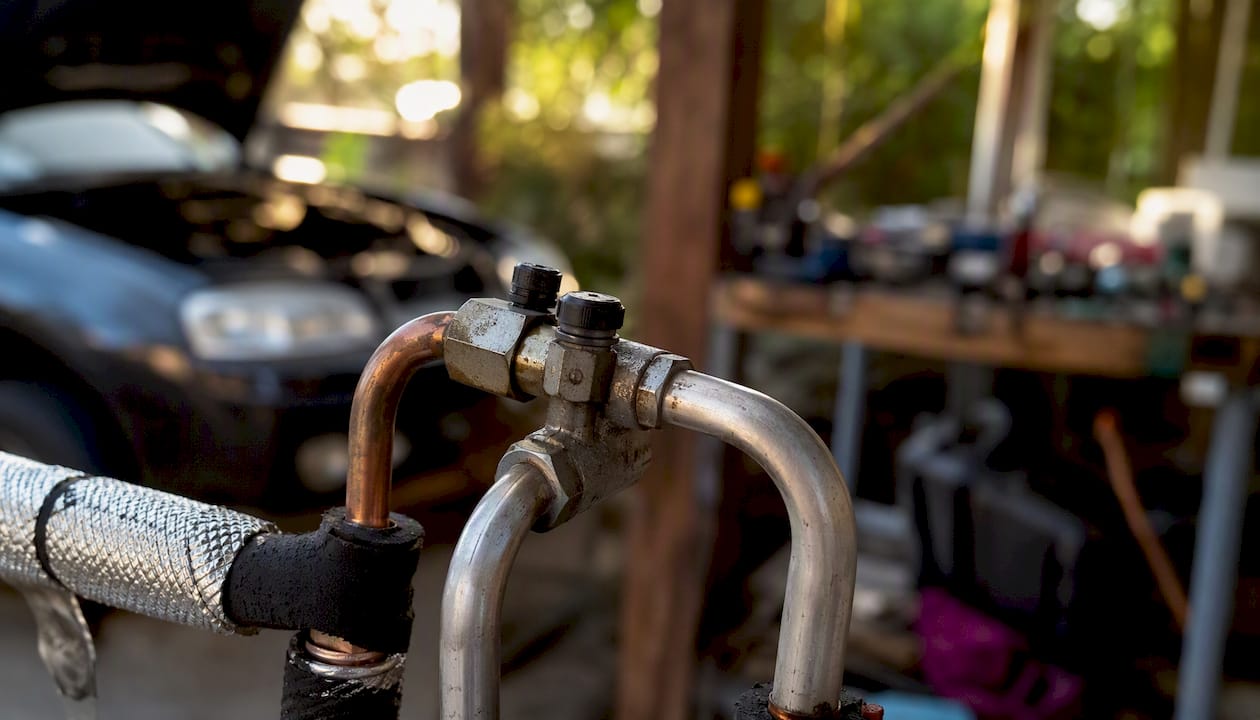
DIY kits for car AC are legal and widely sold. AutoZone reports that consumer kits typically cost $40–$130 depending on the refrigerant and what the kit includes. Most kits come with a can of refrigerant, a gauge hose, and sometimes a sealant. The sealant is worth noting: it can clog professional recovery equipment, which means a shop may charge extra to flush it out if you bring the car in later. Use sealant-free kits if there’s any chance you’ll need professional service soon.
Under EPA Section 608 regulatory updates, small self-sealing cans of refrigerant (2 lbs or less) for motor vehicle AC systems are exempt from the technician certification requirement. That’s why you can legally buy a DIY car kit at a parts store. That exemption does not extend to home or commercial systems.
When DIY is reasonable for a car:
- Your AC was blowing cold last season and gradually got warmer (slow, minor loss)
- You’ve confirmed the low-side port is accessible and the system isn’t completely empty
- You’re using a sealant-free kit with a gauge to avoid overcharging
When to skip the kit and go straight to a pro:
- You hear hissing near AC fittings or see oily residue around lines
- The system went from cold to warm quickly (fast leak)
- You already recharged it once this season and it’s warm again
- Your car uses R-1234yf (professional equipment required for accurate charging)
Pro Tip: Before buying a kit, check the low-side pressure with the engine running and AC on. A reading near zero means a significant leak that a can of refrigerant won’t fix. Document the pressure reading and any symptoms (outlet temp, visible oil) before calling a shop — it saves diagnostic time.
What does a home AC refrigerant recharge actually cost?
Home AC refrigerant pricing works on a per-pound basis, and the type of refrigerant in your system is the single biggest cost variable.
R-410A, the most common refrigerant in systems installed in the past decade or so, has a moderate per-pound cost for the refrigerant component. A standard 3-ton residential system holds about 6–12 lbs depending on the unit and line set length. A partial recharge of 2–4 lbs, plus a service call and labor, usually totals $200–$400.
R-22, the refrigerant in systems installed before 2010, is a different situation. Production and import restrictions have sharply reduced supply, and reclaimed R-22 now costs considerably more per pound than modern refrigerants. Expect $100–$150 per pound or more, meaning a partial recharge on an older R-22 system can easily run $400–$800 before any repair work. At that price, replacement often makes more financial sense.
Leak repair multiplies the total. A properly functioning HVAC system operates in a closed refrigerant loop and should not need routine top-offs. If your system is low, it has a leak. Repair costs stack on top of the recharge:
- Leak detection (electronic or dye): $75–$200
- Line or valve repair: $100–$600
- Evaporator or condenser coil replacement: $600–$1,500
- Full system replacement (when repair cost approaches replacement value): $3,000–$7,000+
Typical leak repair cost ranges vary widely by leak location and severity. A pinhole in a service valve costs far less to fix than a cracked evaporator coil.
When replacement beats repeated recharges:
- The system uses R-22 and needs more than 2 lbs
- The coil or compressor needs replacement on a system over 12–15 years old
- You’ve paid for a recharge twice in the past two years
- Arizona AC units typically last 12–15 years in the desert heat; a system near that threshold is a replacement candidate
Statistic callout: Professional AC recharges for vehicles typically cost several hundred dollars on average. Home system recharges including leak repairs often cost from several hundred to over a thousand dollars depending on refrigerant and repair extent.
How can you tell if your AC is low on refrigerant?
The symptoms overlap with other AC problems, so ruling out simpler causes first saves money.
Common signs for both car and home AC:
- Air blowing noticeably warmer than usual, even after the system has run for 10–15 minutes
- Ice forming on the evaporator coil or refrigerant lines (paradoxically, low refrigerant causes freezing)
- Longer run times to reach the set temperature
- Hissing or bubbling sounds near AC fittings or the indoor unit
- Oily residue on or near refrigerant line connections
Simple checks before calling anyone:
For a home system, start with the basics: check the air filter (a clogged filter causes poor cooling and ice buildup), confirm the blower is running, and look at the outdoor unit for ice on the copper lines. If the filter is clean and the blower is working but the lines are iced over, low refrigerant is a likely cause. For a car, turn the AC to max and hold a thermometer at the center vent after 10 minutes. Readings above 50°F on a hot day suggest low refrigerant or a compressor issue.
When symptoms point to a leak vs. something else:
- Dirty filter or blower problem: poor airflow, warm air, but no ice on lines
- Low refrigerant or leak: ice on lines, hissing sounds, oily residue, warm air despite good airflow
- Compressor failure: system runs but produces no cooling at all, even briefly
Pro Tip: Take a photo of any ice buildup, oily spots, or visible damage before the technician arrives. Note the outdoor temperature and what the vent temperature was. That 60-second documentation can cut 20–30 minutes off a diagnostic visit and reduce your bill.
For a detailed symptom checklist, Tru Comfort’s AC maintenance guide covers the ten most common signs your system needs attention.
What drives the final price of a refrigerant recharge?
The refrigerant itself is only one piece. Here’s what actually determines the total on your invoice:
Primary cost drivers:
- Refrigerant type and per-pound price: R-22 costs far more than R-410A; R-1234yf costs more than R-134a
- Amount required: A full recharge on a large system costs more than a 1-lb top-off
- Diagnostic and leak detection fees: Electronic leak detection, UV dye, and pressure testing add $75–$200
- Labor: Varies by region and provider; typically $75–$150/hour for HVAC work
- Recovery and recycling fees: Technicians must recover existing refrigerant before recharging; this adds time and cost
- Parts: Valve replacements, coil repairs, or compressor work can dwarf the refrigerant cost
- Seasonality: Prices spike in summer when demand is highest; scheduling in spring saves money
Questions to ask when comparing quotes:
- What refrigerant type and how many pounds does my system require?
- Is leak detection included, or is it a separate charge?
- Does the quote include refrigerant recovery and recycling?
- What warranty do you offer on the repair and the recharge?
- If a leak is found, will you provide a written estimate for repair before proceeding?
- Are you EPA Section 608 certified, and is your technician NATE certified?
EPA’s technology transitions rules are pushing the industry toward lower-GWP refrigerants, which will affect both availability and pricing for older refrigerants over the next several years. The Federal Register’s HFC phasedown notice documents the regulatory timeline. If your system uses a refrigerant being phased out, that’s another reason to weigh replacement seriously.
What are the U.S. legal rules for buying and handling refrigerant?
This is where car and home AC diverge sharply, and where a lot of homeowners get surprised.
The motor vehicle exemption is narrow. EPA Section 608 regulations allow small, self-sealing cans (2 lbs or less) of certain refrigerants to be sold to uncertified consumers for motor vehicle AC systems only. That’s the legal basis for DIY car AC kits at parts stores. The moment you’re dealing with a home system, a commercial unit, or any stationary equipment, that exemption disappears.
Safety and environmental risks of improper handling:
- Refrigerant exposure can cause frostbite, respiratory irritation, and asphyxiation in enclosed spaces
- Pressurized cans and fittings can rupture if mishandled
- Venting refrigerant to atmosphere is illegal and carries civil penalties under the Clean Air Act
- Topping off without repairing a leak means the refrigerant eventually escapes anyway, contributing to greenhouse gas emissions and compressor damage
The HFC phasedown is actively reshaping the market. Regulatory transitions to lower-GWP substitutes are reducing supply of older refrigerants and pushing adoption of newer alternatives. The EPA estimates emission reductions up to 876 million metric tons CO2e through 2050 from these transitions. For consumers, the practical effect is that refrigerants being phased out will become harder to find and more expensive over time.
How do you choose a qualified technician and what should a service visit include?
Credential checklist:
- EPA Section 608 certification (required by law for stationary system work)
- NATE certification (voluntary but meaningful for HVAC quality)
- Written estimate before work begins
- Documented refrigerant type and volume on the invoice
- Proper recovery equipment (they should never vent refrigerant)
What a professional home AC service visit typically includes:
- Visual inspection of lines, coils, and fittings for oily residue or damage
- Pressure check with manifold gauges to confirm low charge
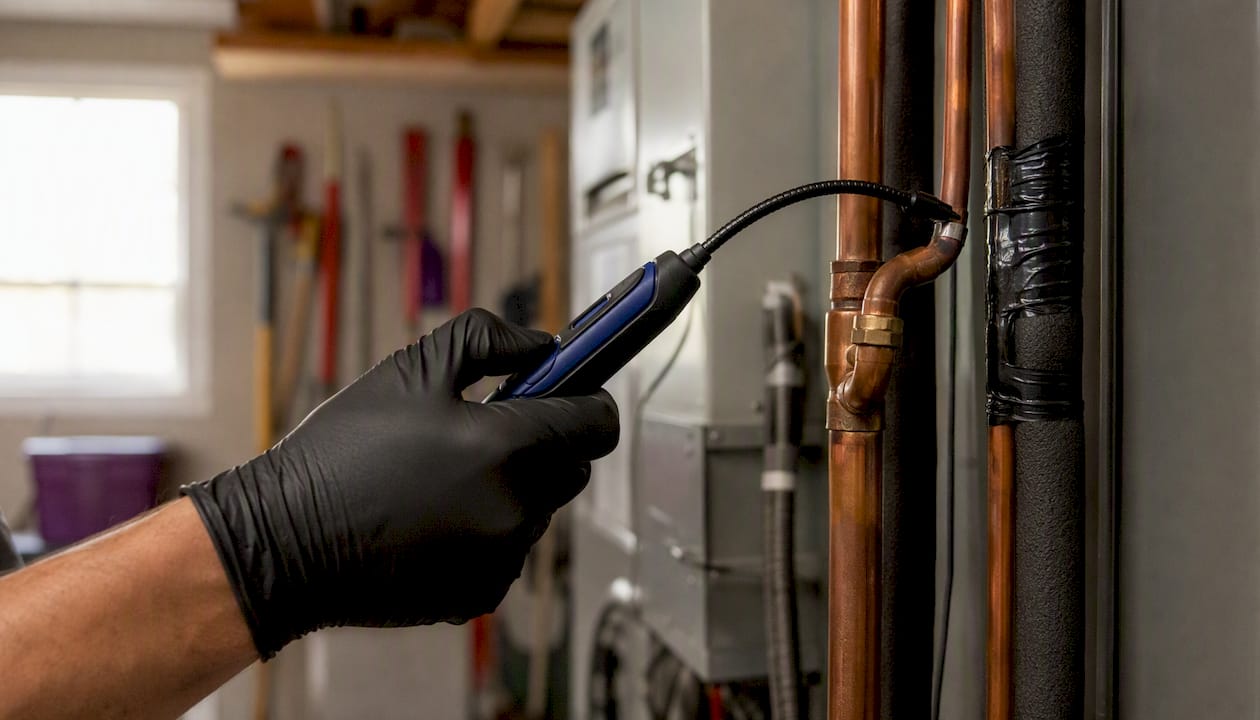
- Electronic leak detection or UV dye injection to locate the leak
- Leak repair (valve, line, or coil depending on location)
- System evacuation and vacuum to remove moisture and non-condensables
- Recharge to factory-specified weight (not pressure alone)
- Performance verification: check supply air temperature, pressures, and airflow
For a car, the professional process is shorter: connect recovery machine, recover existing refrigerant, check for leaks, recharge to manufacturer spec by weight, and verify vent temperature. A professional car recharge typically takes 45–90 minutes. A home system service visit, especially with leak detection and repair, can take 2–4 hours.
Trane’s guidance on AC refrigerant leaks reinforces the professional standard: technicians use electronic leak detectors and dye tests to locate leaks before recharging, not after. Recharging first and hoping the leak is small is not a professional practice.
Ask for the refrigerant type and volume in writing on your invoice. That documentation matters if you sell the home, need warranty service, or have a dispute about the work.
Sample cost calculations for common scenarios
These worked examples use the cost ranges discussed above. Your actual total depends on your system size, refrigerant type, leak severity, and local labor rates.
The calculator formula is straightforward:
(Price per lb × lbs needed) + diagnostic fee + labor + parts = total job cost
For a 3-ton home system needing 4 lbs of R-410A at $60/lb: (4 × $60) + $150 diagnostic + $100 labor = $490 before any repair parts. Add a $300 valve repair and you’re at $790. That math is why getting a written estimate before authorizing work matters.
For an R-22 system needing 3 lbs at $120/lb: (3 × $120) + $150 + $100 = $610 just for the recharge, before any repair. At that cost, replacement vs. repair is worth a serious conversation.
Why Tru Comfort recommends diagnosing before topping off
Recharging without diagnosing is the HVAC equivalent of refilling a leaking gas tank and calling it fixed. The refrigerant goes somewhere, and “somewhere” is usually the atmosphere, your compressor, or both.
At Trucomfortaz, the approach is diagnostic-first: confirm the charge is actually low, find the leak, repair it, then recharge to factory spec. That sequence costs more upfront than a quick top-off, but it avoids the repeat service call three months later when the system is warm again and the compressor is under stress.
The NATE-certified technicians at Tru Comfort work on a non-commissioned basis, which means they’re not incentivized to recommend a recharge when a replacement makes more sense, or vice versa. For homeowners in New River, AZ and surrounding areas, that matters in a climate where the AC runs hard from April through October.
Preventive AC maintenance plans catch refrigerant issues before they become emergency calls. A technician checking pressures annually can spot a slow leak before it empties the system and damages the compressor.
Tru Comfort can handle your AC diagnostic and recharge
Paying for a recharge that doesn’t last is the most common HVAC frustration we hear about. Trucomfortaz offers certified diagnostics, leak detection, refrigerant recharging, and full repair service for residential AC systems in New River, AZ and the surrounding area. Every visit includes a written estimate before work begins, documented refrigerant type and volume on the invoice, and a technician who will tell you honestly whether a repair or replacement makes more financial sense for your system.

NATE-certified, EPA Section 608 compliant, and family-owned. No commissions, no upsells, no guessing. If your AC is blowing warm air, request a service visit or explore the Tru Comfort Advantage maintenance plan to keep your system running efficiently all season.
Sources
These are the primary sources used in this article. Each one serves a different purpose depending on what you need to verify.
- Refrigerant Sales Restriction | US EPA
- Phasedown of hydrofluorocarbons — Federal Register
- AC Recharge Cost Estimate | RepairPal
- How Much Does an AC Recharge Cost? | AutoZone DIY
This article is general information, not a substitute for advice from a qualified lawyer. Consult a qualified legal professional about your own circumstances before acting on anything here.