For Homeowners: High Efficiency HVAC, Manual J, Ducts, $8,000–$12,200
Upgrading to a high-efficiency HVAC system usually pays off when your current equipment is more than 12 to 15 years old, poorly sized, or paired with leaky ductwork. Homeowners who pair new equipment with proper sizing and sealed ducts, can see meaningful savings and better comfort, but the numbers hinge on installation quality, not the equipment label. Before signing anything, get a professional Manual J load calculation and collect three itemized bids so you can compare real numbers instead of sales pitches.
TL;DR:
- Proper sizing and sealed ductwork are essential for achieving the energy savings and comfort benefits promised by high-efficiency systems.
- Heat pumps can reduce annual energy costs by hundreds of dollars, but only if installed and configured correctly with whole-house improvements.
- The choice of system depends on climate, existing ductwork, and how long you plan to stay in the home; upgrading without proper assessment can underperform.
- A thorough diagnosis including Manual J calculations, duct testing, and electrical checks is necessary before accepting bids to avoid oversizing and inefficiency.
- Incentives like federal tax credits and utility rebates can offset a significant portion of installation costs, shortening the payback period.
Table of Contents
- Why upgrading pays off: real savings and comfort gains
- Which system fits your home: heat pumps, furnaces, mini-splits, or geothermal
- How to evaluate your home and vet contractor bids
- What it costs and how incentives change the payback math
- Installation checklist and red flags to avoid
- A NATE-certified look at what a real estimate includes
- When we tell homeowners to upgrade now, and when to wait
- Let us help you plan your upgrade the right way
- FAQ
- Sources
Why upgrading pays off: real savings and comfort gains
Replacing an aging system with a properly sized heat pump or high-efficiency furnace changes more than your utility bill. Modern air-source heat pumps can cut electricity use by roughly 30% to 60% compared with resistance heating, and many households save more than $500 per year on average, though the exact figure depends on house size, climate, and how tight your building envelope is.
Heat pump upgrades can reduce annual energy costs by hundreds of dollars, but that outcome assumes the system was sized and installed correctly, not just that it carries a high-efficiency rating.
Beyond the bill, homeowners typically notice:
- Steadier indoor temperatures with fewer hot or cold spots across rooms
- Better humidity control, especially with variable-speed compressors
- Quieter operation compared to older single-stage equipment
- Lower emissions when electric heat pumps replace fossil-fuel furnaces
The savings promised on an equipment brochure only show up when the system is treated as part of a whole-house plan. A high-efficiency unit connected to leaky ducts or an undersized return can underperform a cheaper system installed correctly. That is why the Department of Energy frames efficiency as a system property, not just a spec on a box, and recommends pairing new equipment with duct sealing and envelope improvements whenever the budget allows.
Which system fits your home: heat pumps, furnaces, mini-splits, or geothermal
Not every home benefits from the same upgrade path. The right choice depends on your climate, existing ductwork, and how long you plan to stay in the house.
- Ducted air-source heat pumps work well for most moderate climates and can both heat and cool through existing ducts; cold-climate variants maintain output in freezing temperatures but cost more upfront.
- Dual-fuel systems pair a heat pump with a high-efficiency condensing furnace as backup, a sensible choice where winters are harsh enough that electric-only heating becomes expensive.
- Ductless mini-splits suit additions, converted garages, or homes without existing ductwork, and they let you condition individual rooms instead of the whole house.
- Geothermal systems carry the highest installation cost but the lowest operating cost over time, and they make sense mainly for homeowners staying put for a decade or more on a suitable lot.
Existing ductwork often decides the outcome before equipment selection even enters the conversation. A home with undersized or leaky ducts will not reach rated efficiency no matter which brand goes on the quote, so an assessment of your distribution system has to happen before you pick a unit. Climate matters too: a cold-climate heat pump in a mild region is often overkill, while a standard heat pump in a harsh winter zone can struggle without backup heat. If your ducts run through an unconditioned attic or crawlspace, ask your contractor whether sealing or insulating them should happen alongside the equipment swap rather than afterward.
How to evaluate your home and vet contractor bids
A quote is only as good as the homework behind it. Before you commit to any contractor, insist on the following:
- A Manual J load calculation, not a rule-of-thumb estimate based on square footage; oversizing is the single most common cause of short cycling and uneven comfort.
- Duct leakage testing and a distribution assessment, since a correctly sized unit still underperforms if 20% or more of conditioned air leaks into the attic.
- An electrical panel check, especially for heat pump conversions, since many homes need panel upgrades to support the new equipment.
- Three itemized bids, compared not just on sticker price but on 15-year total cost including maintenance and expected energy use.
- Direct questions about refrigerant type, commissioning procedures, and workmanship warranty length, since vague answers here often predict a vague installation.
FEMP and ENERGY STAR guidance is explicit that following ANSI/ACCA Quality Installation standards is what separates a system that hits its rated efficiency from one that quietly underperforms for 15 years. A Manual J calculation and QI adherence are not optional extras; they are the difference between paying for efficiency and actually getting it.
Pro Tip: Ask each bidding contractor to show you the Manual J output on paper, not just quote a tonnage number from memory.
What it costs and how incentives change the payback math
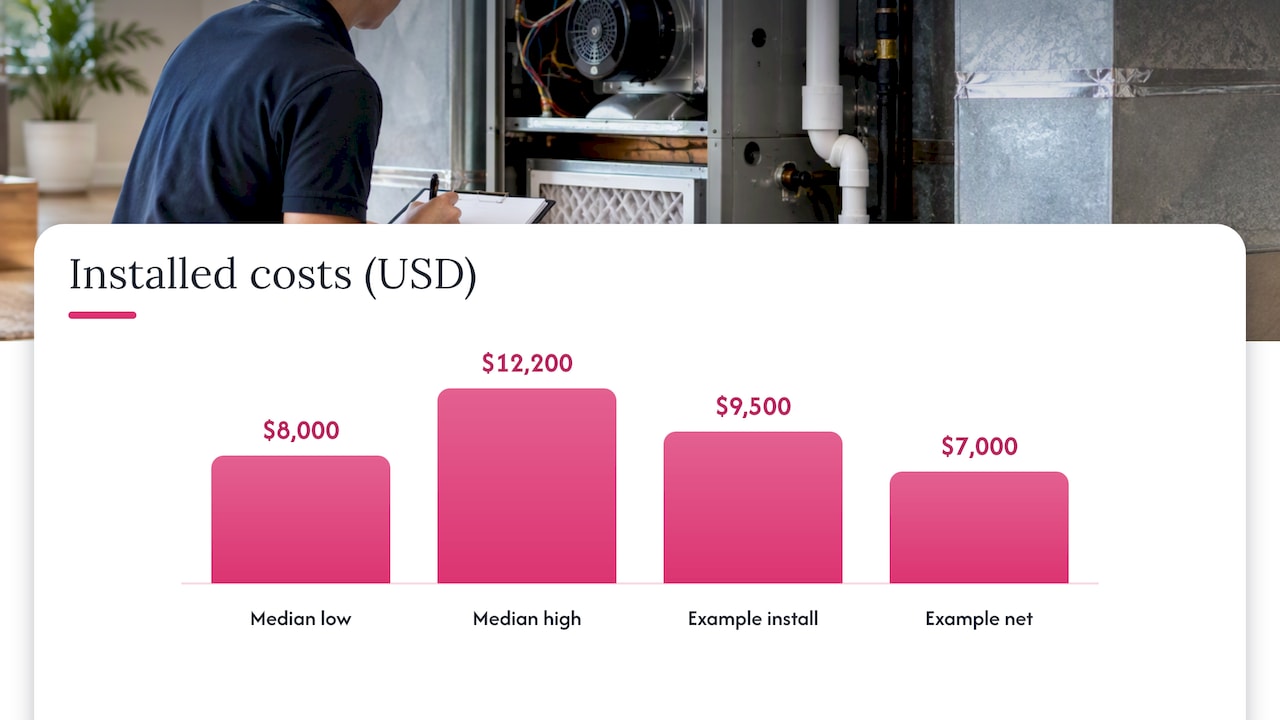
Installed costs vary widely depending on home size, climate zone, and how much enabling work your house needs. Across recent data, median installed costs for heat pump retrofits fall in the roughly $8,000 to $12,200 range, with the high end driven by larger homes, difficult access, or additional electrical work.
About 20% of heat pump retrofits required an electrical panel upgrade, which can add thousands to the project and should be flagged during your first site visit rather than discovered mid-installation.
Common enabling costs that show up on itemized bids include:
- Electrical panel or service upgrades when amperage is insufficient
- Duct sealing, resizing, or full replacement where ductwork is undersized or leaky
- Permitting fees that vary by jurisdiction
- Line-set or refrigerant piping changes for heat pump conversions
Federal incentives can meaningfully shift the payback timeline. The Energy Efficient Home Improvement Credit allows qualifying heat pumps to claim up to $2,000 per year in tax credits, while other improvements fall under a separate $1,200 annual cap, and starting in 2025 homeowners need a Qualified Manufacturer Identification Number (QMID) on their paperwork to claim the credit. Pair that with state and utility rebates searchable through DSIRE, and a $10,000 installation can see several thousand dollars offset before you calculate a single year of energy savings. As a simple illustration: say a heat pump installation costs $9,500 and qualifies for the full $2,000 federal credit plus a $500 utility rebate, bringing net cost to $7,000; at $500 in annual energy savings, that is a 14-year simple payback, shorter if your old system was especially inefficient or your utility rates climb.
Installation checklist and red flags to avoid
An oversized system is one of the fastest ways to waste the money you just spent upgrading. Oversized equipment short cycles, turning on and off rapidly instead of running longer, gentler cycles, which wastes energy and leaves humidity uncontrolled even as the thermostat reads the right temperature.
Watch for these red flags before you sign a contract:
- A contractor who quotes tonnage without performing or sharing a Manual J calculation
- A proposal with vague scope language instead of itemized equipment, labor, and material costs
- Pressure to install from a specific refrigerant inventory on hand rather than what your system actually needs
- No mention of commissioning, duct testing, or a written workmanship warranty
At handover, collect the equipment serial numbers, a written commissioning report showing airflow and refrigerant charge measurements, and the refrigerant label from the installed unit. The EPA’s technology-transition rules under the AIM Act are phasing down certain HFC refrigerants between 2025 and 2028, which can affect inventory and lead times for some equipment lines. That timing shift is a legitimate scheduling factor, but it is not a reason to skip Manual J or rush a decision under pressure.
A NATE-certified look at what a real estimate includes
On every site visit, our NATE-certified technicians run a Manual J calculation, test duct leakage, and check your electrical panel capacity before quoting equipment. Enabling costs we commonly see on Arizona quotes include duct sealing, panel upgrades for heat pump conversions, and permitting fees.
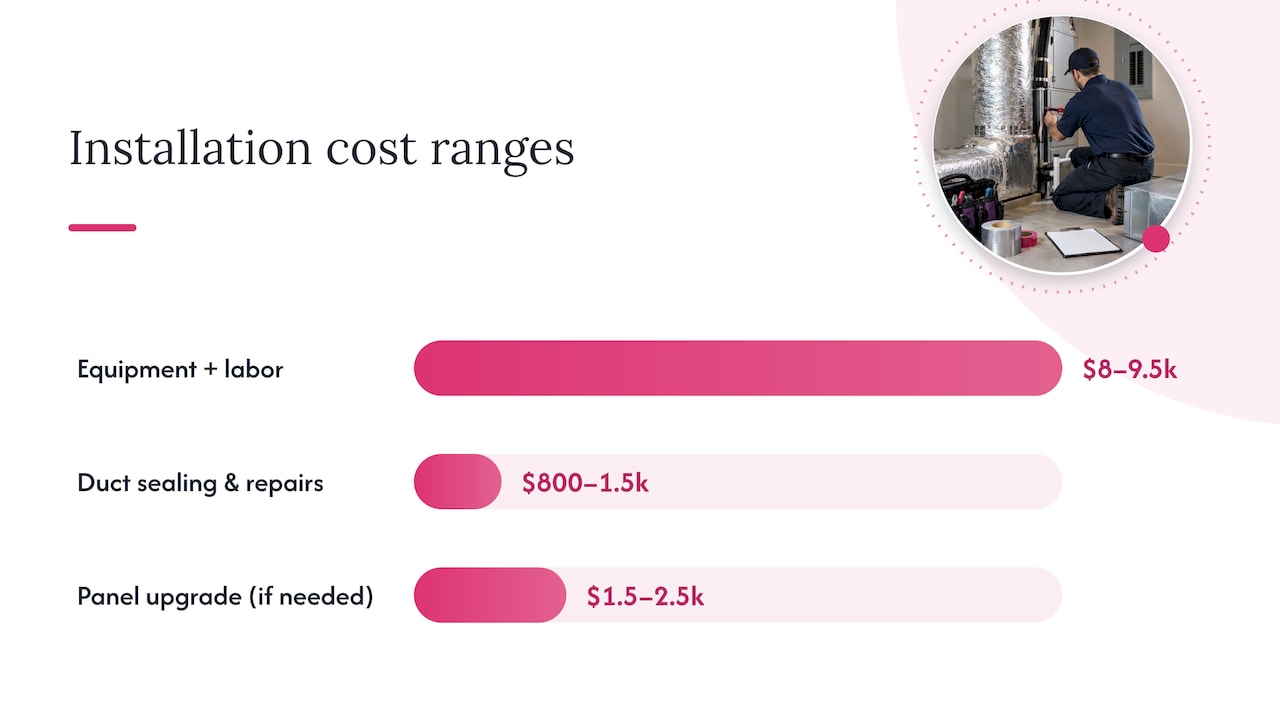
As an illustrative example for a 1,500 square foot home: equipment and labor might run $8,000 to $9,500, duct sealing and minor repairs another $800 to $1,500, and a panel upgrade, when needed, an additional $1,500 to $2,500. These figures are illustrative only, not a quote, since every home’s ductwork and electrical setup differs. You can see our own published breakdown of furnace installation costs for a more detailed local example.
When we tell homeowners to upgrade now, and when to wait
Upgrading now usually makes sense when your system is past 12 to 15 years old, your ducts are already sound, and tax credits can offset part of the cost. If your attic insulation is thin or your ducts leak badly, put envelope work first: a smaller, less expensive system will do the job once the house itself holds conditioned air better by following detailed guidance on how to weatherproof your home and reduce energy loss. Either way, the first move is the same: book a Manual J calculation and collect itemized bids before you decide on equipment. Once new equipment is in, a maintenance plan protects that investment by catching small problems before they become expensive ones.
Let us help you plan your upgrade the right way
We offer Manual J assessments, full system replacement, and ductwork evaluation as part of every estimate, because guessing at equipment size costs you money for the next 15 years. We provide itemized quotes with no pressure toward a particular brand or refrigerant inventory. When your new system is installed, our Tru Comfort Advantage maintenance plans help keep it running at its rated efficiency year after year.

If you are ready to see real numbers for your home, start with our air conditioner and heat pump installation services page to request an itemized estimate.
FAQ
What is the $5,000 rule for HVAC systems?
There is no official federal or industry rule setting a repair cost threshold for HVAC systems; the figure sometimes circulates informally as a rough point where repair cost approaches replacement cost. A more reliable approach is comparing your repair estimate against the remaining expected lifespan of your system and getting an itemized replacement quote, as outlined in our guide on when to replace heating and air conditioning.
Is it worth upgrading to a high-efficiency furnace?
A high-efficiency furnace is generally worth it if your current unit is old, inefficient, or undersized for your home, since proper installation following Manual J and quality installation standards is what delivers the rated savings. If your ductwork is already leaky or undersized, address that alongside the furnace swap rather than afterward.
Can you still install R410A systems in 2026?
Refrigerant availability is shifting under EPA’s AIM Act phasedown rules, which restrict certain high-GWP refrigerants on a schedule running through 2028, affecting new equipment availability over time. Ask your contractor directly about the refrigerant type and manufacture date of any system you are considering, since EPA rules permit continued service and sell-through of legacy equipment within specified windows.
How much does a high-efficiency HVAC unit cost?
Median installed costs for heat pump retrofits generally fall between $8,000 and $12,200, depending on home size, region, and whether electrical or ductwork upgrades are needed. Tru Comfort provides itemized, no-published-price estimates after an on-site Manual J assessment so you see the real cost for your specific home.
Sources
- Pump your savings: heat pumps | U.S. Department of Energy
- Energy Efficient Home Improvement Credit | Internal Revenue Service
- EPA technology transitions final rule fact sheet (updated May 2026)
- Heat pumps: Making a major home upgrade with confidence | Consumer Reports (Innovation)