Air Conditioner Freezing Up? Shut It Off, Call a Tech if Ice Returns
If your air conditioner is freezing up, turn the thermostat off or switch it to fan-only right away so warm air can melt the ice without the compressor running. Change or check your air filter and open any closed vents to restore airflow. If ice comes back after it thaws, or you notice a hissing sound or oily residue near the lines, that points to a refrigerant leak or mechanical fault, and it’s time to call an EPA Section 608 certified technician.
TL;DR:
- After switching cooling off, let ice melt naturally, run fan only for at least an hour after it looks clear, and catch runoff with towels.
- Wait until all visible ice melts, usually after a few hours, then confirm the vents blow colder air within 15 to 20 minutes of restarting.
- Check airflow before refrigerant charge, because low airflow can mimic a refrigerant problem; a technician can test airflow, charge, and metering components.
- Replace filters every 1 to 3 months based on use and MERV rating, more often in homes with pets or dusty conditions.
- A refrigerant top off without repairing the leak only delays recurring icing, so ask the technician to identify and fix the cause.
Table of Contents
- How to tell your air conditioner is actually frozen
- Step-by-step safe thawing and first-line troubleshooting
- Why ACs freeze: the root causes behind the ice
- Practical maintenance checklist to prevent freeze-ups
- When to stop troubleshooting and call a technician
- What years of freeze-up calls have taught our technicians
- Get a certified diagnostic instead of guessing
- FAQ
- Sources
How to tell your air conditioner is actually frozen
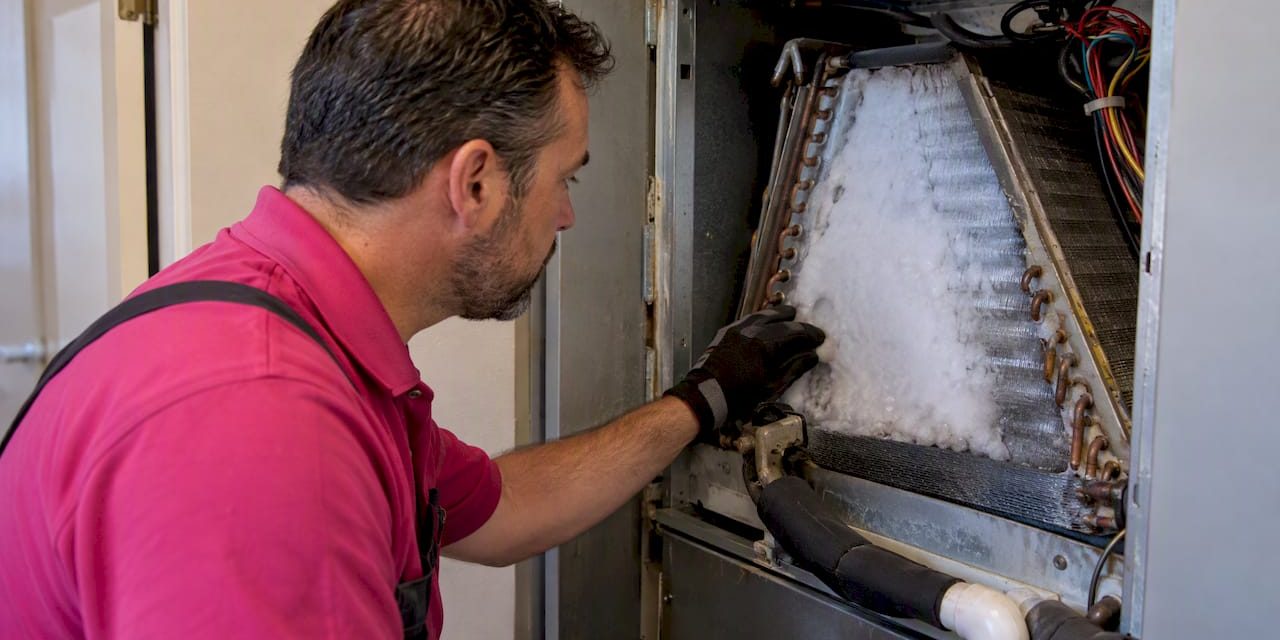
A frozen AC usually shows itself in a few clear ways. You might see ice or heavy frost on the indoor coil, the suction line, or the copper refrigerant piping near the outdoor unit. Airflow from the vents feels weak or warmer than usual, and the system seems to run for long stretches without cooling the house. Once the ice melts, you may also find water pooling around the indoor unit.
- Ice or frost visible on the coil, suction line, or refrigerant piping
- Warm or weak airflow from the supply vents
- Unusually long run cycles with little cooling effect
- Puddles of water near the indoor unit after the ice melts
Don’t chip at the ice or touch any electrical components while checking. Restricted airflow is one of the most common triggers: ENERGY STAR notes that reduced airflow from a clogged filter can push the evaporator coil to or below freezing, which lets condensation ice over instead of draining away.
Step-by-step safe thawing and first-line troubleshooting
Once you’ve confirmed the coil is iced, work through these steps in order.
- Set the thermostat to OFF, or switch the fan to ON without cooling, so warm air moves across the coil and speeds up melting.
- If you can see ice on the outdoor lines or the condenser itself, shut off power to the outdoor unit at the disconnect or breaker.
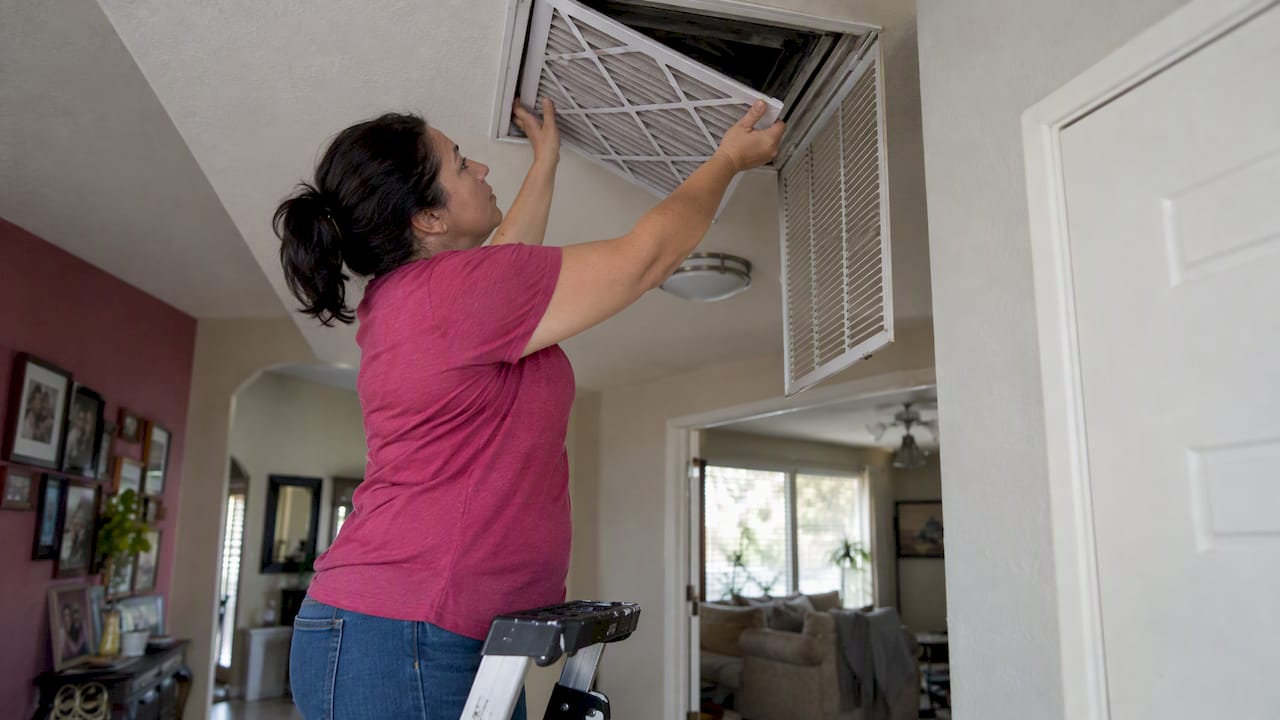
- Pull the air filter and replace it if it’s dirty, then open every supply and return vent in the house.
- Let the ice melt on its own. Never pry it off or aim a heat gun at the coil, and place towels or a pan to catch melt water.
- Check the condensate drain line for an obvious clog near the indoor unit; a simple shop-vac pass at the drain exit often clears minor blockages.
- Wait until all visible ice is gone, typically a few hours, before turning cooling back on.
Pro Tip: Run the fan-only setting for at least an hour after the ice looks gone; coils often hold hidden frost longer than they appear to.
After a full thaw, restart the system gradually: turn cooling back on, confirm the vents are blowing noticeably colder air within 15 to 20 minutes, and watch the coil over the next day for signs of refreezing. If you want a walkthrough with photos, our earlier guide on thawing steps covers the same sequence in more detail. Restarting too soon, while ice is still trapped around the coil, just restarts the freeze cycle and wastes the work you already did.
Why ACs freeze: the root causes behind the ice
Most freeze-ups trace back to one of a handful of problems, and the symptoms often hint at which one you’re dealing with.
- Restricted airflow: a dirty filter, closed vents, a blocked return, or leaky ducts starves the coil of warm air, and Building America’s diagnostic guidance notes that airflow below a certain threshold can trigger icing and added compressor stress.
- Low refrigerant charge or a leak: undercharged refrigerant lowers the evaporator’s saturation temperature, which chills the coil surface enough to freeze moisture out of the air.
- A dirty or fouled evaporator coil: dust and grime block normal heat transfer the same way restricted airflow does.
- A failing blower motor or fan: even with every vent open, a weak blower can’t move enough air across the coil.
- Metering device or line restrictions: a stuck thermostatic expansion valve, a kinked liquid line, or trapped non-condensable gases are harder faults that usually need a technician’s test equipment to confirm.
The pattern of symptoms matters. Ice paired with an oily residue near a fitting usually points to a leak, while ice that reappears within hours of a full thaw suggests a refrigerant or metering problem rather than a simple airflow fix. Energy recommends checking airflow first and refrigerant charge second, since low airflow can mimic a charge problem and lead to the wrong repair if tested out of order.
Practical maintenance checklist to prevent freeze-ups
Most freeze-ups are preventable with a handful of recurring habits.
- Replace the air filter every 1 to 3 months depending on usage and MERV rating; homes with pets or dusty conditions need more frequent changes.
- Schedule a pre-season checkup where a technician measures airflow, verifies refrigerant charge, cleans the coil, and clears the condensate drain.
- Keep the outdoor condenser clear of leaves, grass clippings, and overgrown shrubs, maintaining the clearance your manufacturer recommends.
- Keep a simple log of filter changes and service visits so patterns, like repeat icing, are easy to spot.
- Insist on leak repair rather than a repeated refrigerant top-off, since topping off without fixing the leak only delays the same freeze-up.
Pro Tip: Write the filter size and replacement date on a sticky note inside the air handler door, it turns a once-a-season guess into a two-minute task.
Our maintenance schedule guide breaks the filter cadence down by home type, and our Tru Comfort Advantage maintenance plans bundle these seasonal checks into a standing appointment if you’d rather not track it yourself.
When to stop troubleshooting and call a technician
Certain signs mean it’s time to hand the problem to a professional rather than keep working through it yourself.
- Ice returns within a day or two of a complete thaw
- You hear hissing near the lines or see an oily film on a fitting, both signs of a possible leak
- You notice an electrical or burning smell near the indoor or outdoor unit
- The compressor short-cycles or keeps tripping a breaker
A technician will measure airflow in cfm, check the temperature split between return and supply air, and test superheat and subcooling to isolate whether the fault is airflow, charge, or a metering device, following the diagnostic order described in Energy.gov’s guidance. Refrigerant handling itself is regulated: the EPA requires Section 608 certification for anyone who recovers, adds, or repairs refrigerant, which is exactly why this part of the job isn’t a homeowner task. Catching the fault early protects the compressor, since a coil that stays iced while the system keeps running risks sending liquid refrigerant back where only vapor belongs. For a deeper look at leak symptoms before your appointment, see our evaporator coil leak guide.
What years of freeze-up calls have taught our technicians
Our NATE-certified technicians see the same pattern on freeze-up calls again and again: a homeowner catches it early, shuts the system down, and the fix is a filter and an open vent. The ones that turn expensive are the systems that keep running iced for days before anyone calls. A single freeze-up you catch and thaw correctly rarely causes lasting damage. Recurring icing is different, and it almost always means a refrigerant or mechanical fault that needs a proper diagnostic visit rather than another round of waiting it out. Keeping a simple record of filter changes and service calls makes that visit faster and cheaper.
Get a certified diagnostic instead of guessing
A frozen coil that keeps coming back usually costs more the longer it runs, and that’s where a proper diagnostic visit pays for itself. Technicians measure airflow, verify refrigerant charge, and inspect the coil and blower before recommending any repair, so you get an honest answer instead of an upsell.

- Air conditioner repair, maintenance, and installation for freeze-ups, leaks, and blower issues
- Emergency HVAC service when a freeze-up happens outside normal hours
- Tru Comfort Advantage maintenance plans for seasonal checkups that catch airflow and refrigerant issues before they cause ice
Every refrigerant check follows EPA Section 608 handling rules, so leaks get repaired rather than masked with a quick top-off. If your AC has frozen more than once this season, schedule a diagnostic visit through our air conditioner services page and get a straight answer about what’s actually wrong.
FAQ
What do you do if your air conditioning unit freezes up?
Turn the thermostat off or set it to fan-only so warm air can melt the ice, and avoid running the compressor until the coil is completely clear. Change the air filter and open any closed vents while you wait, then restart cooling only after all visible ice is gone.
What is the $5,000 rule for AC?
This isn’t a standard industry or manufacturer rule, and definitions of it vary online. Some homeowners use it informally to decide whether an aging AC is worth repairing versus replacing, by multiplying the repair cost by the unit’s age and comparing that to a rough dollar threshold, but it isn’t a figure we can confirm as an official guideline.
How much does it cost to fix a frozen evaporator coil?
We don’t have a published price range we can confirm for evaporator coil repairs, since the cost depends heavily on whether the fix is a simple airflow correction or a refrigerant leak repair. A technician can give you an accurate quote after a diagnostic visit measures airflow and refrigerant charge.
Can I turn my AC back on after it thaws?
Yes, once every bit of visible ice on the coil and lines has melted, you can switch cooling back on. Watch the vents for noticeably cold air within 15 to 20 minutes, and if ice returns within a day or two, that points to a refrigerant or mechanical issue that needs a certified technician.
Sources
- ENERGY STAR — Heating & cooling maintenance checklist
- EPA — Section 608 technician certification requirements
- Measure Guideline: Air conditioner diagnostics, maintenance, and replacement (Building America)
- Energy