Save $500–$2,000 on AC Replacement: When Homeowners Should Replace
The best time to replace an AC unit is during the shoulder seasons, early spring (March through May) and early fall (September through November), with April and October standing out as the strongest single months. Buying in these windows typically saves money, shortens installation wait times, and improves your odds of catching a rebate. If your system is already failing, leaking R-22, or leaving you without cooling in dangerous heat, replace it now. Timing savings never outweigh the risk of going without air conditioning during a heat wave.
TL;DR:
- Replacing an AC during spring or fall can save homeowners between 10 to 30 percent, or $500 to $2,000, due to lower demand and available inventory.
- Most AC systems start deteriorating after 10 to 15 years, especially those using phased-out R-22 refrigerant, and should be considered for replacement if they show frequent breakdowns or inefficiency.
- Booking installation in March or September allows for quicker service, often within 2 to 3 days, and helps lock in better prices and installation slots before peak demand.
- The cost of a new 3-ton central AC in 2026 ranges from $4,400 to $9,400, with higher-end models offering better efficiency and potential rebates during shoulder seasons.
- Proper installation quality, including correct sizing and refrigerant charge, is as crucial as the brand for ensuring the system’s performance and longevity.
Table of Contents
- Why Spring and Fall Are the Cheapest Months to Replace an AC
- Signs Your AC Needs Replacing, Not Repairing
- How Timing Affects Price and How Long You’ll Wait
- What a New AC Actually Costs
- Your Replacement Planning Checklist
- Why the Installer Matters as Much as the Equipment
- Balancing the Calendar Against the Emergency
- Get a Free Estimate Before Your Next Cooling Season
- Sources
- FAQ
Why Spring and Fall Are the Cheapest Months to Replace an AC
Air conditioner demand behaves like any seasonal market. When July hits and compressors start dying across a whole region, every HVAC crew in town is booked solid, and installers know it. Prices firm up because they can. Spring and early fall flip that script: technicians have open calendars, distributors are sitting on full inventory, and manufacturers roll out promotions to move product before the next rush.
That combination of slack demand and available stock is why buying during the shoulder season can save homeowners 10 to 30 percent, often $500 to $2,000, compared with a peak-summer replacement.
- April tends to be the single best month: winter heating season has ended, summer panic hasn’t started, and spring promotions are live.
- October runs a close second, catching end-of-year rebate pushes before furnace season takes over contractor schedules.
- Signing a contract by mid-April or mid-October generally locks in the best combination of price and installation date before the next seasonal squeeze begins.
Signs Your AC Needs Replacing, Not Repairing
Age is the first flag. Most central air conditioners start showing real decline between 10 and 15 years old, and anything using R-22 refrigerant deserves extra scrutiny since that refrigerant has been phased out and a leak repair can cost more than the unit is worth.
Beyond age, watch for these patterns:
- Frequent breakdowns. Two or more service calls in a single cooling season is a strong signal the system is failing, not just aging.
- Rising energy bills with no other explanation. Efficiency loss often shows up on the utility bill before it shows up as visible discomfort.
- Inconsistent cooling between rooms, which points to a struggling compressor or a system that was undersized or oversized from the start.
- Repair estimates approaching replacement cost. The classic rule of thumb multiplies the repair estimate by the unit’s age; if that number tops $5,000, replacement usually wins.
Pro Tip: Don’t wait for a total shutdown to start shopping. A system on its last legs during a July heat wave leaves you with zero negotiating leverage and whatever contractor happens to answer the phone. If your unit is showing early warning signs, this breakdown of when to replace heating and air conditioning walks through the decision in more detail.
How Timing Affects Price and How Long You’ll Wait
Contractor lead time swings hard with the calendar. Book in the shoulder season and most installers can get to your home in 2 to 3 days. Wait until July and that same job might sit on a two-to-three-week backlog, longer if a heat wave hits and every AC in the neighborhood fails at once.
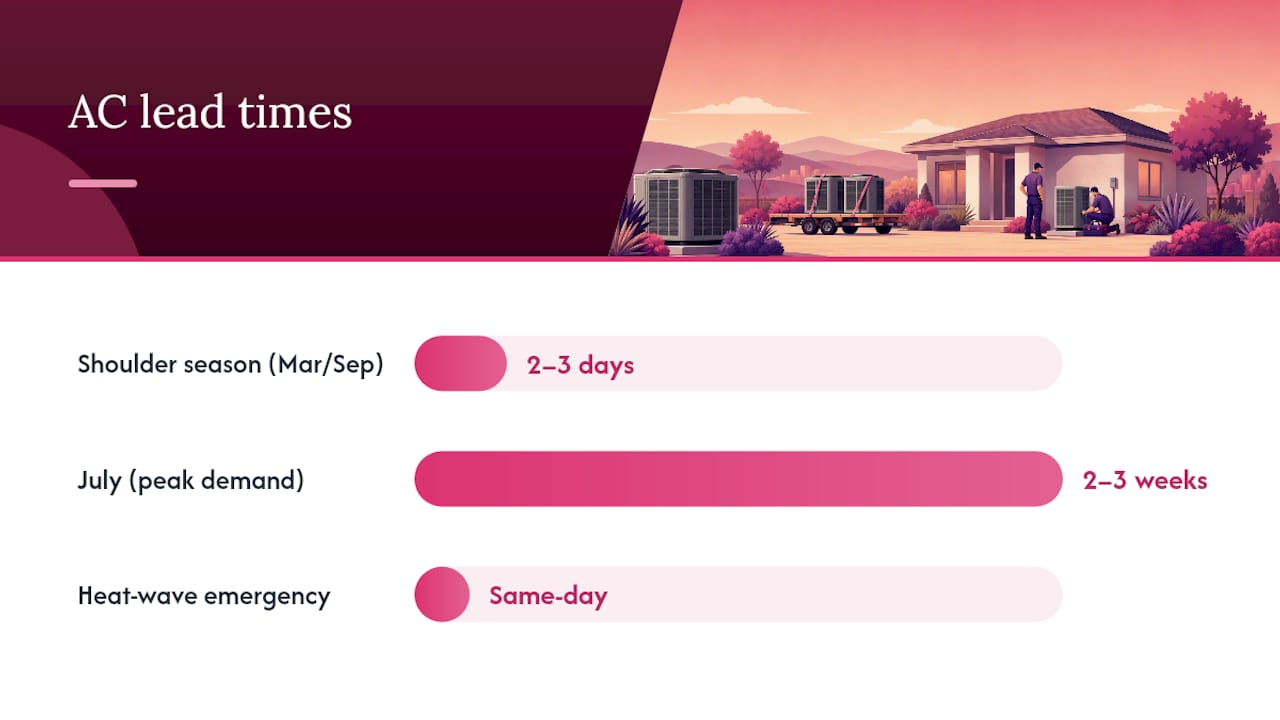
Emergency same-day service during a heat wave often carries its own surcharge, commonly in the $300 to $800 range on top of the job itself. That’s the cost of convenience when you have no cooling and no time to shop around.
A better approach:
- Start gathering quotes in March or September, before demand spikes.
- Compare at least three bids while contractors still have room on their calendars.
- Sign a contract by mid-April or mid-October to lock in shoulder-season pricing and a predictable install date.
What a New AC Actually Costs
A typical 3-ton central air conditioner installed in 2026 runs about $4,400 to $9,400, with most homeowners landing between $5,900 and $7,500. The spread comes down to equipment tier, ductwork condition, and local labor rates.
| Cost Factor | Typical Range |
|---|---|
| Standard SEER2 unit, straightforward install | $4,400 to $5,900 |
| Mid-tier SEER2 unit, minor duct work | $5,900 to $7,500 |
| High-efficiency SEER2 unit, complex install | $7,500 to $9,400 |
Stepping up to a higher SEER2 tier raises the sticker price, but it can pay back over time through lower monthly cooling costs, especially in a hot climate where the unit runs for months at a stretch. ENERGY STAR guidance also flags higher-efficiency models as the ones most likely to qualify for manufacturer or utility rebates, and those incentive windows tend to open widest in spring and fall, right alongside the seasonal pricing dip.
Your Replacement Planning Checklist
Start the process well in advance before you expect your current system to fail, not the week it actually dies. That gives you room to land quotes and a signed contract inside a shoulder season instead of scrambling in August.
- Get three quotes minimum, all based on a Manual J load calculation rather than a rough guess at tonnage.
- Have your ductwork inspected. Leaky or undersized ducts can undercut even a high-efficiency unit’s performance.
- Check the lineset and electrical connections, especially if you’re changing brands or refrigerant type.
- Clarify who pulls the permit and confirm it’s included in the quoted price.
- Get warranty terms in writing, covering both parts and labor.
Pro Tip: Ask every contractor the same five questions: Are you licensed and insured? Do you have NATE-certified technicians on staff? What refrigerant does this unit use? What financing options do you offer? What’s your realistic install window this month? Comparing identical answers side by side makes the bids far easier to judge. A basic AC maintenance checklist is also worth reviewing before you decide, since some issues that look like replacement triggers are actually maintenance fixes.
Why the Installer Matters as Much as the Equipment
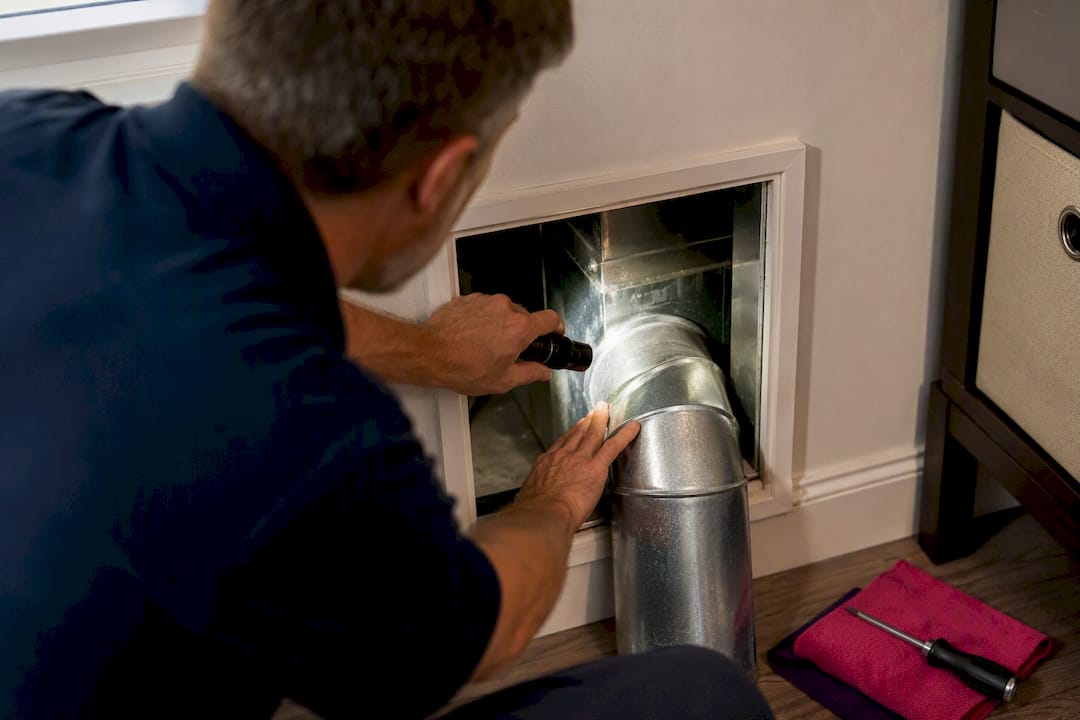
A premium AC with a sloppy install underperforms a mid-tier unit put in correctly. Sizing errors, an incorrect refrigerant charge, or ductwork nobody bothered to check will quietly erase whatever efficiency gain you paid for. Installation quality, not brand name, tends to decide how the system actually performs for the next 15 years.
NATE-certified technicians run a Manual J sizing calculation and a duct inspection on every estimate, not as an upsell but as standard practice. Some family-owned companies also offer emergency service and maintenance plans, so a poorly timed breakdown doesn’t automatically mean a poorly timed decision.
Balancing the Calendar Against the Emergency
Shoulder-season planning is the right default. Aim for it whenever your system gives you the luxury of time. But timing advice is worthless to a homeowner standing in a 95-degree living room with a dead compressor, and no rebate is worth waiting through that.
If you miss the ideal window, don’t panic into the first bid you get. Pull two or three quotes even under time pressure, and weight your decision toward installation quality over a marginal discount. A correctly sized system installed in August still beats a mis-sized one installed in April.
Get a Free Estimate Before Your Next Cooling Season
A local HVAC provider offers homeowners a straightforward path to a properly sized, properly installed system, without the sales pressure some larger outfits lean on.

A free estimate from Trucomfortaz includes a Manual J load calculation, a ductwork check, and a walk-through of rebate options that might apply to your home, so the quote you get reflects what your house actually needs rather than a generic tonnage guess. If you’re weighing repair against replacement, the team’s guide to when to replace heating and air conditioning is a solid starting point, and their air conditioner services page covers what installation day actually looks like. Whether your system is 12 years old and slowing down or you’re just planning ahead for next summer, book an estimate now while the shoulder-season calendar still has open slots.
Sources
- ENERGY STAR — Replace your heating and cooling equipment
- Best Time to Buy an AC: Save $1,000+ with Off-Season Timing
- Best Time to Replace HVAC
- AC unit replacement cost calculator (2026) — CostCandor
FAQ
What Is the $5,000 Rule for AC Units?
Multiply the repair estimate by the unit’s age in years; if the result tops $5,000, most technicians recommend replacement over repair.
Which AC Brand Lasts the Longest?
Brand matters less than installation quality. A correctly sized system with proper refrigerant charge and sound ductwork consistently outperforms a premium brand installed poorly.
Should I Replace a 20-Year-Old AC Unit?
Yes. Most systems show real performance decline between 10 and 15 years, and units using R-22 refrigerant deserve extra scrutiny since that refrigerant has been phased out.
What Is the Average Cost of Replacing an AC Unit?
A typical 3-ton central air conditioner installed in 2026 costs $4,400 to $9,400, with most homeowners paying between $5,900 and $7,500 depending on equipment tier and local labor.