Commercial HVAC Maintenance Checklist: What to Inspect and When
A good commercial HVAC maintenance checklist does three things: it lists the physical tasks (filters, coils, belts, drains, electrical), it sets how often each happens, and it leaves a written record. Skip any of the three and you are mostly paying for hope. Below is a checklist you can hand to a facility manager or a service contractor, organized by frequency, with notes on what changes in a hot, dusty climate like central Arizona.
TL;DR
- Work the checklist by frequency: monthly visual checks and filters, quarterly mechanical inspection, twice-yearly coil and electrical work (before cooling and heating seasons), and an annual controls and performance review.
- Maintenance is not only cleaning parts. ENERGY STAR points out that schedules, set points and control settings need periodic review too.
- Document everything. ASHRAE Standard 180 expects an equipment inventory, a written plan and evidence that performance is tracked.
- Frequency is not fixed. Dust, run hours, and the type of business should move your schedule up or down.
- A maintenance plan with a contractor is simply this checklist, scheduled and recorded for you.
Table of Contents
- What commercial HVAC maintenance actually covers
- Before the checklist: the three records every program needs
- Monthly checks
- Quarterly checks
- Twice-yearly: cooling and heating season prep
- Annual review: controls, ducts and performance
- A quick reference table
- Adjusting frequency for your building
- Maintenance versus repair: when the numbers say replace
- What good maintenance can save
- Our perspective: what we see in the field
- Doing it yourself, or with a contractor
- How Tru Comfort can help
- FAQ
- Sources
What commercial HVAC maintenance actually covers
Industry professionals draw a line between maintenance and service. Maintenance is proactive and routine, meant to prevent failure. Service is the reactive call after something breaks. The same guide argues that the costliest part of HVAC ownership is rarely the scheduled visit. It is the emergency repair of equipment that could have been protected.
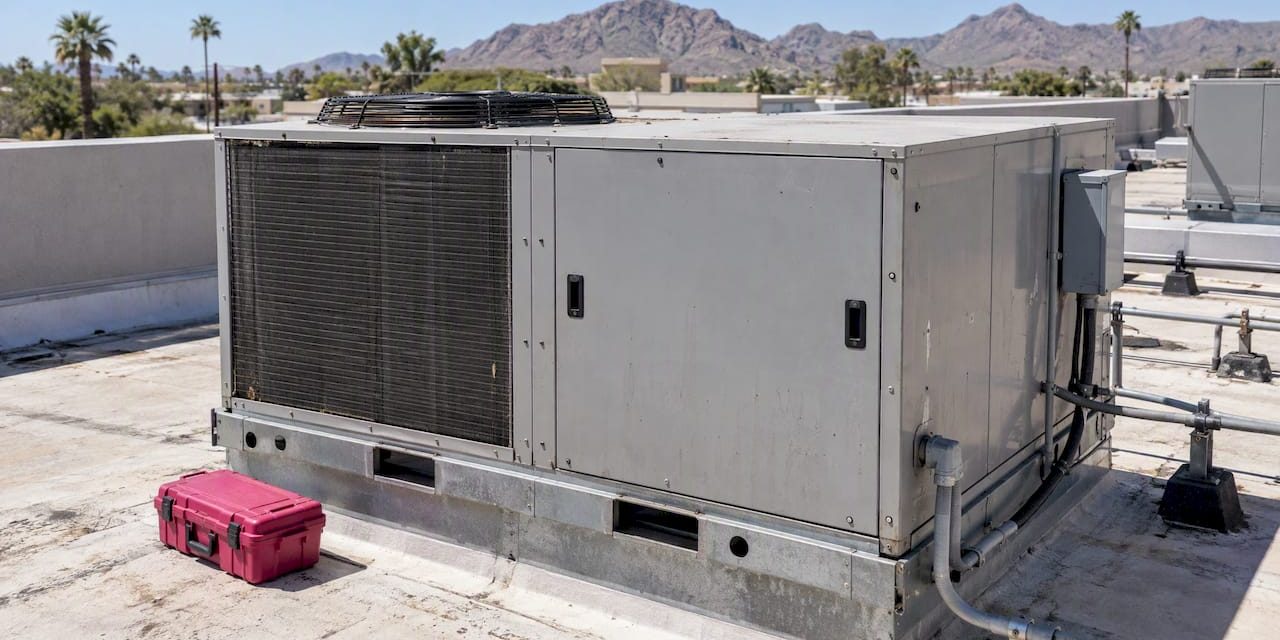
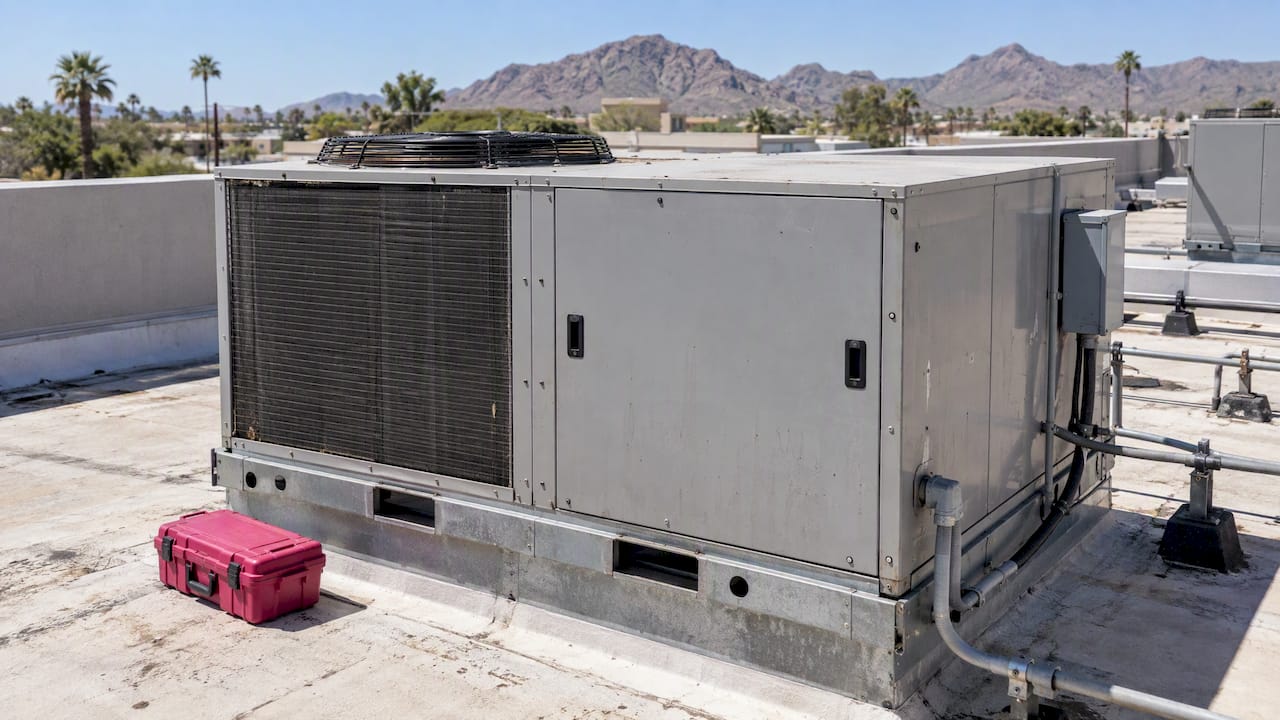
For a commercial building, that usually means rooftop units, split systems, furnaces or heat strips, ductwork, thermostats and building controls. A retail strip, a small office, a restaurant and a medical suite all have different loads, so the checklist below is a base you adjust, not a fixed template.
One point about standards. ANSI/ASHRAE/ACCA Standard 180-2018 sets minimum requirements for inspecting and maintaining HVAC in commercial buildings. It applies to non-residential buildings and excludes single-family homes and small multifamily buildings. Your lease, insurer or local code may or may not require it, but it is a useful yardstick for what a complete program looks like. The GSA’s commercial HVAC inspection and maintenance code is built on it, which shows how widely it is used as a reference.
Before the checklist: the three records every program needs
Start with paper, not wrenches. The ASHRAE standard calls for three things, and they make every later visit faster:
- An equipment inventory. Make, model, serial number, install year, location (which roof, which closet), and what area each unit serves.
- A written maintenance plan. Which tasks, how often, and who does them.
- Performance tracking. Readings and findings from each visit, kept in one place.
This matters more than most owners expect. Without a formal record of inspections and performance data, proving compliance during an audit is close to impossible. The same guidance recommends keeping an operating log and comparing what you record against design and start-up data, so a slow drift in performance shows up before a failure does.
A simple spreadsheet works. One row per unit, one column per visit: date, technician, filter condition, amp draw, temperature split, notes, and any parts replaced.
Monthly checks
Most of these take minutes and can be done by on-site staff. The point is catching changes early.
- Filters. Inspect every month and replace when loaded. Dirty filters restrict airflow and make the blower and compressor work harder. Heavy-traffic or dusty sites may need replacement monthly.
- Condensate drains and drain pans. Confirm lines are flowing and pans are free of standing water or slime. A clogged drain is a common cause of ceiling stains and shutdown switches tripping.
- Visual walk-around. Look and listen for unusual noise, vibration, oily residue, ice on lines, or panels left open.
- Thermostat and control settings. Confirm schedules and set points match how the space is used now, not how it was used when someone set them years ago.
- Outdoor clearance. Make sure nothing is stacked against condensers or blocking rooftop intakes. Windblown debris, plastic bags and leaves collect quickly.
- Log readings. If you keep an operating log, note anything that looks off.
Quarterly checks
These call for a technician or a trained maintenance staffer. A typical quarterly visit adds:
- Belts and pulleys. Inspect for wear, cracking, glazing and correct tension. Replace worn belts before they snap during a heat wave.
- Blower wheels and fan motors. Check for buildup, imbalance and bearing noise. Lubricate moving parts where the manufacturer calls for it.
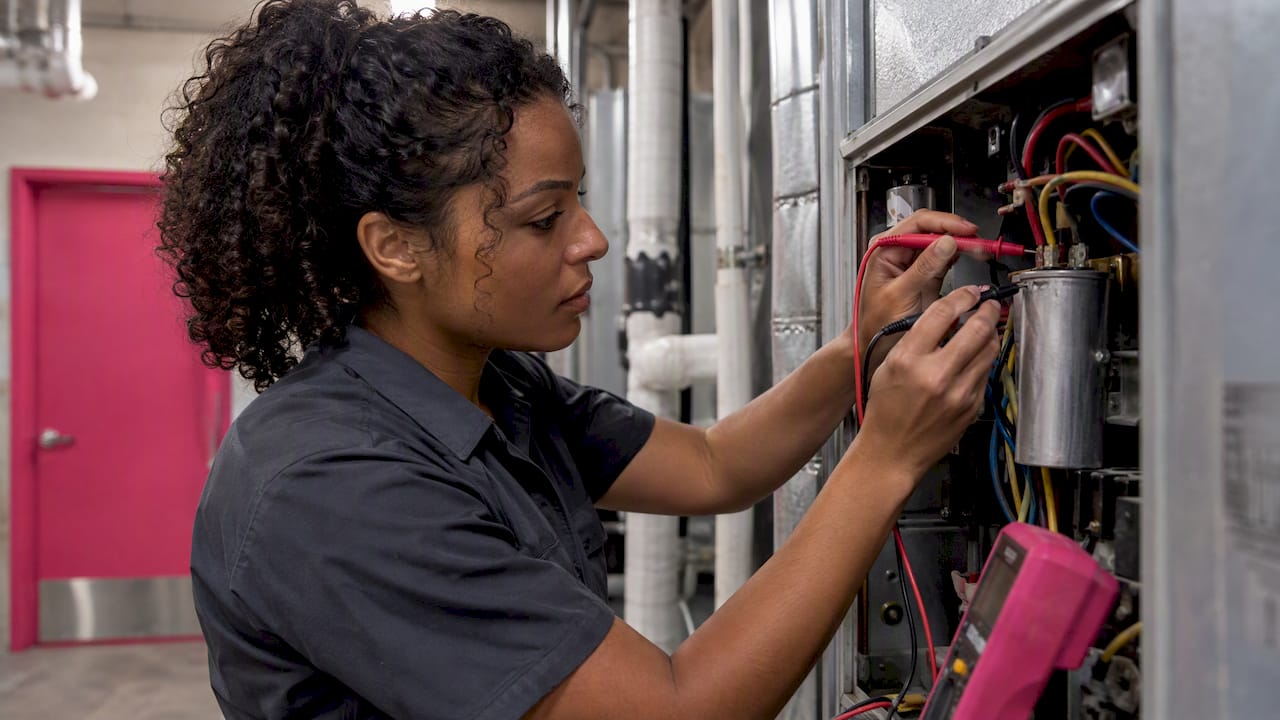
- Electrical connections. Look for discoloration, loose terminals and damaged wiring. Tightening connections is a standard item on the ENERGY STAR maintenance checklist.
- Refrigerant lines. Inspect for leaks, oil traces, and damaged insulation.
- Economizers and dampers (if installed). Confirm they move freely and respond to commands.
- Safety and shutoff controls. Test that the unit starts, runs and shuts down as it should, and that safeties trip when they are supposed to.
Twice-yearly: cooling and heating season prep
Two larger visits per year are the backbone of most commercial programs: one ahead of the cooling season and one ahead of heating.
Cooling season (spring)
- Clean condenser and evaporator coils. Dirty coils are among the most common reasons a system loses capacity.
- Check refrigerant charge and look for signs of leaks. Only a licensed technician should handle refrigerant.
- Measure the temperature drop across the evaporator coil and compare with your logged baseline.
- Check compressor and fan motor amp draw against nameplate values.
- Inspect start and run capacitors and contactors. These cheap parts fail often under summer load.
- Test sensors, valves, relays and shutoff switches.
- Clear and flush drain lines, then treat pans.
Heating season (fall)
- Inspect heat exchangers, burners, ignitors and flame sensors on gas furnaces.
- Check the flue and venting for blockage, corrosion or separation.
- Test the ignition sequence and high-limit safety switches.
- Inspect electric heat strips and their contactors where used.
- Confirm thermostat heating schedules and set points.
- Test carbon monoxide detectors in and near mechanical rooms.
Carbon monoxide is the safety item to take seriously here. If a technician finds a cracked heat exchanger or a venting problem, treat it as a shutdown condition, not a note for next quarter. If you smell gas or a detector alarms, leave the area and call your gas utility or 911 from outside.
Annual review: controls, ducts and performance
Once a year, step back from the individual parts.
- Controls and building automation. Review schedules, set points, setbacks, and occupancy sensors. ENERGY STAR notes that maintenance tends to fixate on components while neglecting operational controls. Effective programs balance both.
- After-hours walk-through. Walk the building when it is empty. Stray equipment noise or units running with nobody inside can reveal real energy waste, and it costs nothing.
- Ductwork. Inspect for leaks, disconnected joints, crushed sections and failing insulation. Look at supply and return grilles for dust staining.
- Outdoor air and ventilation. Confirm outdoor air intake and exhaust are working and unobstructed.
- Equipment age review. Compare each unit’s age and repair history against replacement planning.
- Update the inventory and the plan. Add new equipment, retire old, and adjust frequency based on findings.
A quick reference table
| Task | Monthly | Quarterly | Spring / Fall | Annual |
|---|---|---|---|---|
| Filter inspection and replacement | X | X | ||
| Drain and pan check | X | X | X | |
| Visual and noise walk-around | X | X | X | |
| Belts, pulleys, bearings | X | X | ||
| Electrical connections and amp draw | X | X | ||
| Coil cleaning | X | |||
| Refrigerant check | X | |||
| Heat exchanger and burner inspection | X (fall) | |||
| Controls and set point review | X (quick look) | X | ||
| Duct inspection | X | |||
| After-hours energy walk-through | X |
Adjusting frequency for your building
The table is a starting point. ASHRAE’s handbook chapter notes that maintenance frequency depends partly on system run time and type of operation in the facility. Think about:
- Run hours. A unit that runs 18 hours a day wears faster than one that runs eight.
- Occupancy and use. Restaurants, medical offices, and high-traffic retail load filters and coils faster than a quiet office.
- Environment. In the Arizona desert, dust, monsoon debris, and months of triple-digit heat put extra strain on condensers, coils and capacitors. Plan on checking coils and filters more often than a generic national schedule suggests.
- Performance history. One approach described in a commercial maintenance guide drawing on ASHRAE standards is to reduce frequency if three successive inspections find acceptable conditions, and to investigate the root cause and increase frequency if unacceptable conditions appear twice in a row.
That last rule is worth adopting. It turns the schedule into something that responds to evidence instead of habit.
Maintenance versus repair: when the numbers say replace
Even a well-kept system ages. A commonly cited heuristic is the $5,000 rule: multiply the system’s age in years by the estimated repair cost in dollars. If the result is $5,000 or more, replacement may be the better value. Below that, repair usually wins. A 12-year-old unit facing a $500 repair scores 6,000, which points toward replacement. A 6-year-old unit facing the same repair scores 3,000, which points toward repair.
Treat it as a starting point, not a verdict. It does not account for refrigerant type, efficiency gains, tenant disruption or warranty. Your maintenance log is what makes the decision easier, because it shows how often a unit has failed and how its performance has trended.
What good maintenance can save
The return is not only fewer breakdowns. The UK-published guide cited above says proper maintenance can deliver energy cost savings of 10% to 40% compared with systems receiving only reactive, breakdown-based care. That is an industry range, not a promise for any single building, and results depend on the starting condition of your equipment. The U.S. Department of Energy’s Better Buildings page on preventive maintenance also frames HVAC upkeep as essential to a comfortable and healthy indoor environment for occupants.
There are softer returns as well: fewer hot-office complaints, steadier conditions for customers and staff, and fewer surprise shutdowns on the hottest day of the year.
Our perspective: what we see in the field
We are a family-owned HVAC company in New River, and the pattern we see is simple. Systems rarely die from one dramatic event. They wear down from small, skipped things: a filter that stayed in too long, a coil caked with desert dust, a capacitor nobody tested.
Two habits separate buildings that stay comfortable from those that live on emergency calls. First, someone owns the checklist. It does not matter whether that is a facility manager, an office manager or the owner, as long as a name is attached and visits are written down. Second, the technician is paid to tell you the truth. Our technicians are NATE-certified and non-commissioned, so a recommendation is based on what your equipment needs, not on a sales target. If a unit has years left, we say so. If it does not, we show you why.
Our advice for a first plan: inventory your equipment this month, schedule the spring and fall visits now, and add a monthly filter check that anyone on your team can do. That alone beats most reactive approaches.
— Brett
Doing it yourself, or with a contractor
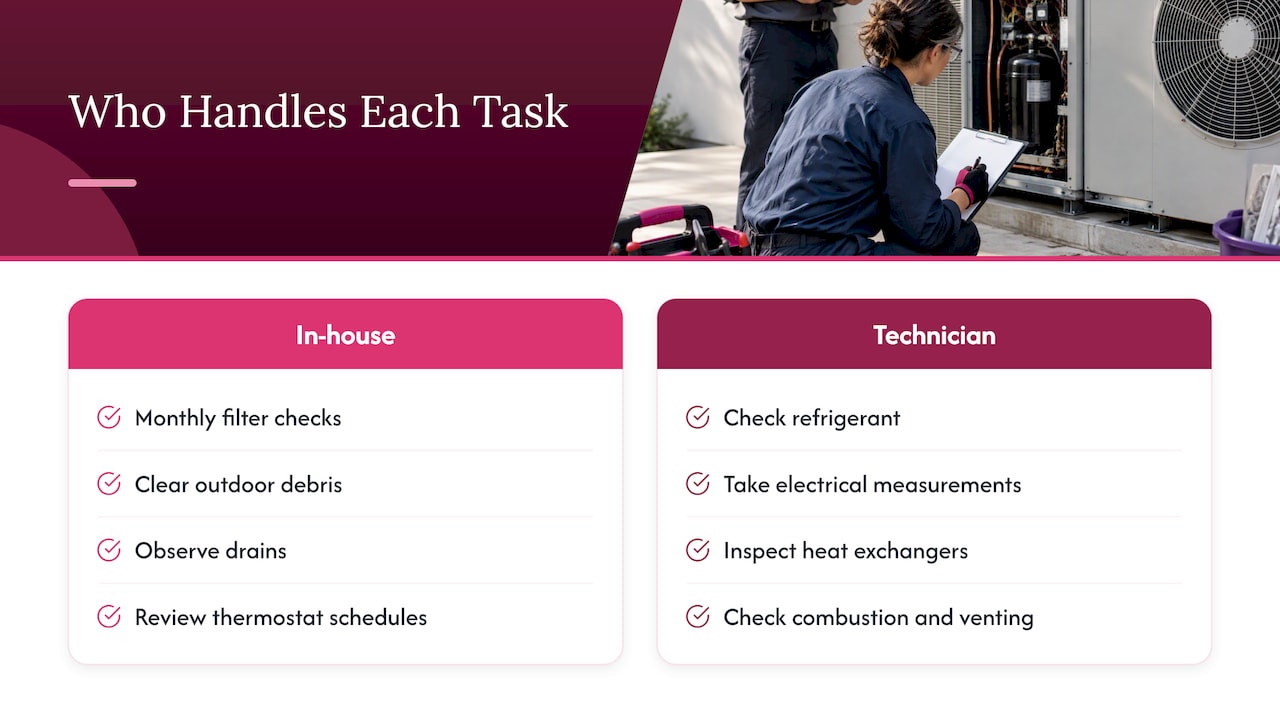
Some of this checklist suits in-house staff: monthly filter checks, clearing debris around outdoor units, drain observation, thermostat schedule reviews, and the after-hours walk-through. Other tasks should go to a qualified technician: refrigerant checks, electrical measurements, heat exchanger inspection, combustion and venting checks, and anything that requires opening live electrical panels.
When you interview contractors, ask for the same things the standard asks of you: an equipment inventory, a written scope by visit, and a service report after every visit. If a contractor cannot say what is done on each visit, you cannot hold them to it.
If you manage a property with a mix of residential-style units, our homeowner guides can help your on-site team with basics, including the AC maintenance checklist, the furnace maintenance checklist and the filter and maintenance schedule. They are written for homes, so treat larger rooftop and commercial equipment as a job for a technician.
How Tru Comfort can help
We install, repair and maintain air conditioners and furnaces for residential and commercial clients in New River and surrounding areas. If you want this checklist run on a schedule, our Tru Comfort Advantage maintenance plans are designed to provide cost savings and peace of mind. For equipment questions, see our air conditioner installation, maintenance and repair services and our furnace services. If something fails outside the schedule, we offer emergency HVAC service.
FAQ
What is commercial HVAC maintenance?
It is the routine, planned care of a non-residential building’s heating, ventilation and cooling equipment: inspecting, cleaning, lubricating, testing and documenting. The goal is to prevent failures, hold efficiency, and keep occupants comfortable. It differs from service, which is the reactive response after a breakdown.
How often should commercial HVAC be serviced?
Most programs combine monthly filter and visual checks with quarterly inspections and two larger visits per year, one before cooling season and one before heating. Dusty sites, long run hours and busy businesses may need more. ASHRAE guidance suggests adjusting frequency based on what inspections find.
What is the $5,000 rule for HVAC?
Multiply the system’s age by the estimated repair cost. If the result is $5,000 or more, replacement may make more financial sense than repair. It is only a starting point, so ask a technician to evaluate the specific unit before deciding.
What should a commercial HVAC maintenance plan include?
Look for an equipment inventory, a scheduled list of tasks by visit, written reports after each visit, and clear terms for emergency response. The ASHRAE standard expects a documented plan and evidence of performance tracking, so a good contractor should be comfortable providing both.
Sources
- ENERGY STAR: Operation and Maintenance Best Practices
- ANSI/ASHRAE/ACCA Standard 180-2018 (preview)
- ASHRAE Handbook, Chapter 39: Operation and Maintenance Management
- HVAC Maintenance Guide (ECEX)
- Commercial HVAC Maintenance Guide (Moat Systems)
- GSA Commercial HVAC Inspection and Maintenance Code 2018
- Better Buildings: Preventative Maintenance for Commercial HVAC Equipment
- CBS News: What is the $5,000 rule for HVAC systems?