6 Quick Checks to Triage Aux Heat That Keeps Running for Homeowners
Aux heat keeps running because your heat pump can’t pull enough warmth from the outdoor air on its own, and that’s normal below a system-dependent balance point typically between 25 and 40 degrees Fahrenheit or during a brief defrost cycle lasting typically 5 to 15 minutes every 30 to 90 minutes. It’s a problem if aux runs long during mild weather above 40 degrees, or if the outdoor unit sits silent or iced over while it does. If you’re unsure, watch it for 15 to 30 minutes before assuming the worst. If it doesn’t let up and the outdoor temp is mild, stop watching and call for service.
TL;DR:
- Auxiliary heat running for extended periods during mild weather above 40 degrees often indicates a mechanical fault, such as a failed compressor or iced outdoor unit.
- Most aux heat activation is normal below the system’s balance point, typically between 25 and 40 degrees Fahrenheit, and during defrost cycles lasting up to 15 minutes.
- Misconfigured thermostats, dirty coils, low refrigerant, or a stuck reversing valve are common causes of excess aux heat, requiring professional diagnosis.
- Homeowners should check the outdoor unit, thermostat mode, and airflow before calling a technician to quickly identify potential issues.
- Calling an HVAC technician is advised if aux runs longer than 15 to 30 minutes above 40 degrees, or if the outdoor unit remains silent or iced after defrost to prevent damage and costly repairs.
Table of Contents
- What Auxiliary Heat Is (And Why It’s Not Emergency Heat)
- When Aux Heat Running Is Actually Normal
- Common Causes When Aux Heat Runs Too Long
- How to Check Your System Before Calling for Service
- Fixes and Settings That Cut Down Unnecessary Aux Use
- When to Call an HVAC Technician
- How Tru Comfort Diagnoses Aux Heat Problems
- Why Most Aux Heat Complaints Are Actually Two Different Problems
- Get Your Aux Heat Checked by Tru Comfort
- Sources
What Auxiliary Heat Is (And Why It’s Not Emergency Heat)
Aux heat is supplemental electric resistance heat that automatically activates alongside your heat pump’s compressor when the compressor alone can’t keep up with demand. The two systems run together, splitting the workload. Emergency heat is a different animal entirely: it manually shuts the compressor off and runs the electric strips by themselves, with no help from the heat pump at all.
That distinction matters because of efficiency. A heat pump moves existing heat from outdoor air into your house, which is why it can produce more heat energy than the electricity it consumes. Electric resistance strips, on the other hand, convert electricity to heat at close to 100% efficiency and no better, since they’re generating heat directly rather than transferring it. Running on strips alone costs more per degree of warmth than running the compressor.
Thermostats label these modes differently depending on the brand, but you’ll usually see:
- Aux or Aux Heat: strips supplementing the compressor
- EM Heat or Emergency Heat: strips only, compressor disabled
- Heat or Heat Pump: normal mode, compressor-first with aux available as backup
Emergency heat exists for when the heat pump itself has failed and you need warmth until a technician arrives. It’s a manual override, not a setting to leave on out of habit. Using it when the heat pump is functional bypasses the heat pump’s efficiency entirely and drives your bill up.
When Aux Heat Running Is Actually Normal
Every heat pump has a balance point, the outdoor temperature below which the compressor alone can’t meet your home’s heat loss. Above that point, the compressor handles the job solo. Below it, aux steps in automatically to fill the gap. That balance point is system-dependent, but it commonly falls between 25 and 40 degrees Fahrenheit.
Three situations trigger normal aux activity:
- Cold weather below the balance point. The colder it gets, the more the compressor needs help, and aux may run continuously in a hard freeze. That’s expected.
- Defrost cycles. Heat pumps periodically defrost ice off the outdoor coil, and aux often kicks in during that window to keep supplying warm air indoors. These calls are typically brief, lasting 5 to 15 minutes and recurring every 30 to 90 minutes in cold, humid conditions.
- Large setpoint jumps. Bump your thermostat up 4 or 5 degrees at once, and aux will often fire to close that gap faster. It should taper off as the house approaches the new setpoint.
Quick gut check: if the outdoor unit is running (you can hear the compressor and see the fan spinning) and it’s genuinely cold outside, aux working alongside it is the system doing its job, not failing at it.
Common Causes When Aux Heat Runs Too Long
When aux runs well past what those normal triggers explain, especially in mild weather, a handful of usual suspects are almost always behind it.
Thermostat misconfiguration or wiring errors. If the thermostat is accidentally set to Emergency Heat, or wired so the heat pump can’t communicate properly, the system may run on strips alone and call it aux. Check the display mode first. It’s the fastest thing to rule out and the easiest one to miss.
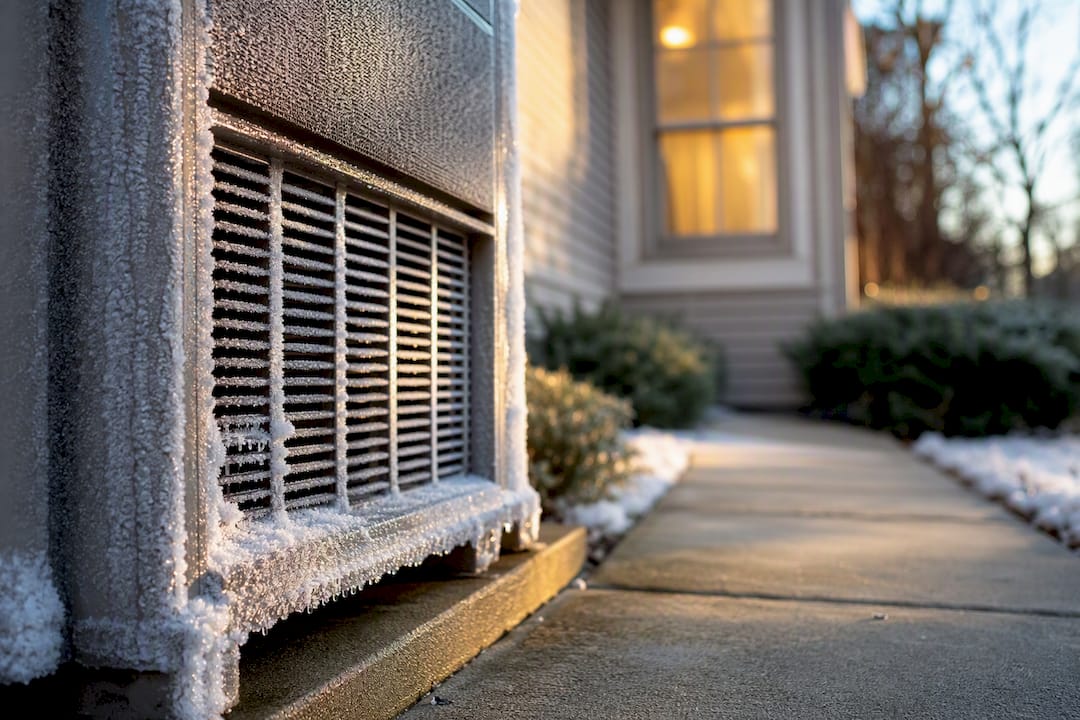
Compressor or outdoor unit failure. If the outdoor fan isn’t spinning, you don’t hear compressor operation, or the unit is coated in ice that never clears after a defrost cycle, the heat pump has effectively stopped contributing. Aux then becomes your only heat source, running nonstop to compensate. This is one of the more common reasons aux gets stuck on indefinitely, and it’s often misread as a thermostat problem when the real fault sits outside.
Low refrigerant or dirty coils. Either one weakens the heat pump’s output. The compressor runs, but it can’t move enough heat, so aux compensates for the shortfall around the clock.
Reversing valve stuck in cooling mode. This is a sneaky one. If the reversing valve fails to switch, the heat pump may actually push cool air even though it’s set to heat, forcing aux to work overtime just to keep the house from feeling cold.
House-side factors. Poor insulation, leaky ductwork, or an undersized system all raise your effective balance point. A heat pump sized correctly for a well-sealed home might need aux far less than the same unit fighting drafts and duct losses in a leakier one.
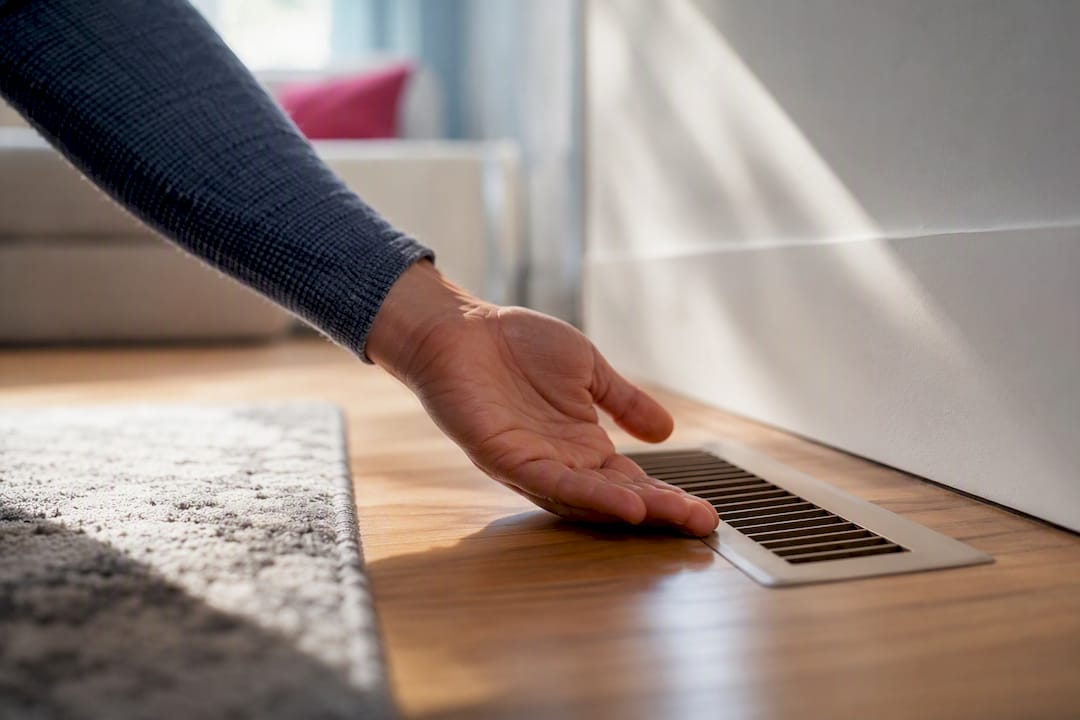
Pro Tip: Feel the air coming out of your supply registers while aux and the heat pump are both supposedly running. If it feels cool rather than warm, don’t assume the thermostat is wrong. A stuck reversing valve is a real possibility, and that’s a technician call, not a DIY fix.
How to Check Your System Before Calling for Service
Work through these checks in order. Each one either clears a possibility or gives you something concrete to report.
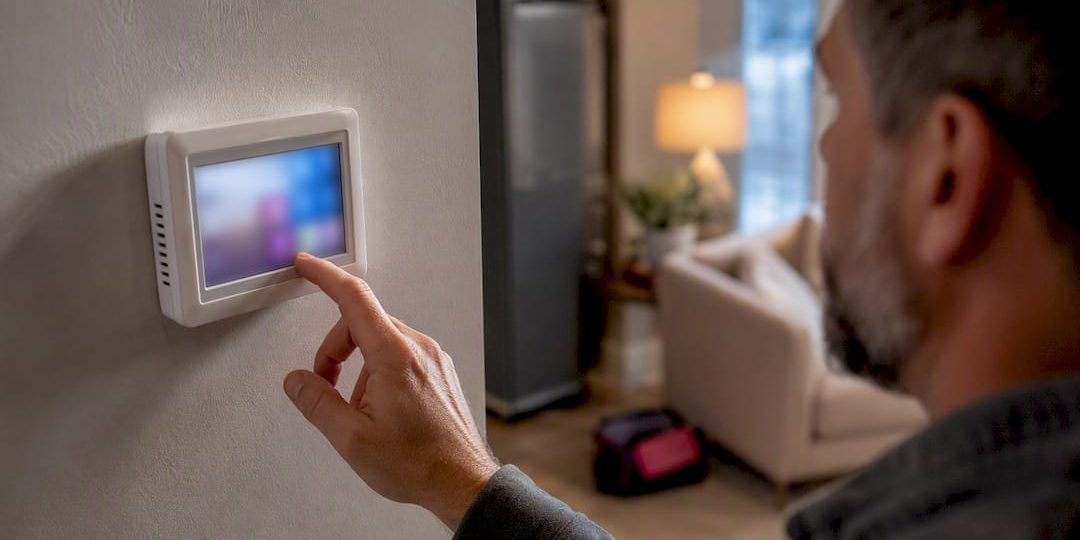
- Confirm the thermostat mode. Look for Heat or Heat Pump, not Emergency Heat. Note the exact model and any error message on the screen.
- Walk outside and observe the outdoor unit. Is the fan spinning? Can you hear the compressor humming? Is there ice on the coil that isn’t clearing between defrost cycles? A silent or iced unit while aux runs indoors is your strongest signal of a real fault.
- Feel the air at a supply register. Warm air suggests the system is working correctly for the conditions. Cold or lukewarm air alongside a running aux system points toward a mechanical issue.
- Check your air filter and vents. A clogged filter restricts airflow, forcing the system to work harder and sometimes lean on aux more than it should. Make sure supply and return vents aren’t blocked by furniture or closed dampers.
- Look at your breaker panel, but only reset, never open. If a breaker for the strip heater or compressor has tripped, resetting it once is fine. Repeated tripping means stop and call a technician. Don’t open electrical panels or attempt any wiring diagnosis yourself.
- Record the details. Outdoor temperature, how long aux has been running, and a photo of the thermostat display or any error code. This handful of data points is exactly what a technician needs to diagnose faster and often cuts a service visit’s diagnostic time significantly.
Fixes and Settings That Cut Down Unnecessary Aux Use
The single most common mistake homeowners make when aux seems excessive is switching the thermostat to Emergency Heat, thinking it will “fix” the problem. It won’t. It disables your compressor entirely and runs on strips full time, which usually makes the situation worse and always makes it more expensive. Leave the thermostat in Heat or Heat Pump mode and troubleshoot from there.
A few changes genuinely help:
- Adjust the setpoint gradually. Instead of jumping the thermostat up 5 degrees at once, raise it in 1 or 2 degree increments to avoid triggering unnecessary aux calls.
- Use balance-point or outdoor-sensor settings if your thermostat supports them. Smart thermostats from brands like ecobee, Nest, and Honeywell often include settings such as Compressor Minimum Outdoor Temperature or Aux Heat Maximum Outdoor Temperature, which let you fine tune exactly when aux is allowed to engage.
- Replace filters on schedule and clear debris around the outdoor unit. Leaves, dirt, and snow buildup around the condenser restrict airflow and drag down heat pump performance, pushing more of the workload onto aux than necessary.
- Consider upgrading your thermostat if it lacks balance-point controls. A basic non-programmable thermostat gives you no way to manage the handoff between compressor and aux.
Pro Tip: Never try to disable aux heat yourself through wiring changes, even if you’re trying to save money. Aux is tied into the system’s defrost logic, and cutting it out can leave your compressor unprotected during a hard freeze, risking far more expensive damage than the electric bill you were trying to avoid.
Refrigerant charging, reversing valve repair, compressor diagnostics, and thermostat rewiring all sit outside the DIY zone. Those require a licensed technician with gauges, electrical testing equipment, and training to do safely.
When to Call an HVAC Technician
Call for service if any of these apply: aux runs longer than 15 to 30 minutes when it’s above 40 degrees outside, the outdoor unit stays silent while aux keeps cycling indoors, or ice persists on the outdoor coil after a defrost cycle completes. None of those resolve on their own, and waiting typically just runs up your electric bill while the underlying fault sits there unaddressed.
A technician working this kind of call will typically:
- Test refrigerant pressures against the system’s rated specs
- Check compressor operation and test the capacitor
- Verify the reversing valve switches correctly between heat and cool
- Inspect thermostat wiring and the control board for faults
- Examine the sequencer and individual strip heat elements
Before you call, gather your thermostat’s model number, a photo of the outdoor unit, the exact wording of any thermostat message, and how long aux ran along with the outdoor temperature at the time. That handful of details often shortens the diagnostic visit considerably. Costs vary by what’s actually wrong. Furnace and strip-heater repairs tend to run less than reversing valve replacement or a refrigerant leak repair, which involves both diagnostic time and material cost.
How Tru Comfort Diagnoses Aux Heat Problems
Tru Comfort Heating & Cooling is a family-owned HVAC company, and every technician on staff is NATE-certified, meaning they’ve passed industry-standard testing on heat pump and control diagnostics, not just installation basics.
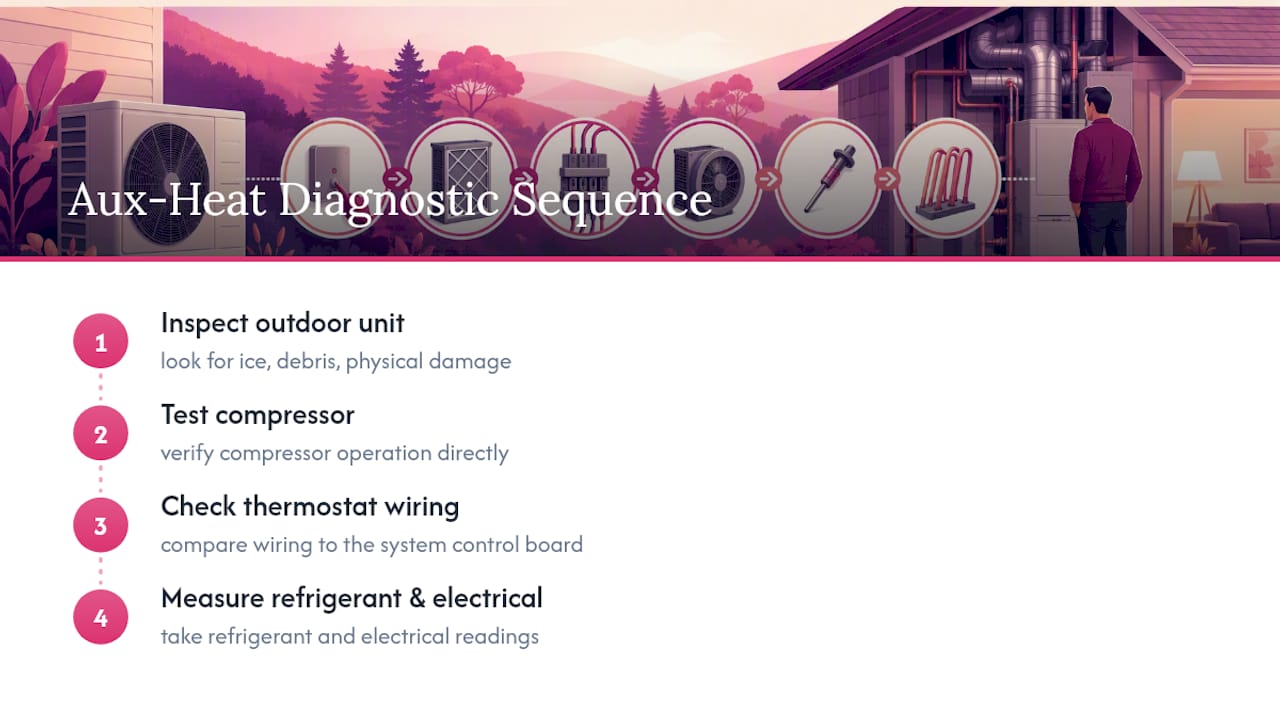
A typical aux-heat service call starts with a visual inspection of the outdoor unit, checking for ice buildup, debris, and physical damage. From there, technicians test compressor operation directly, check thermostat wiring against the system’s control board, and take refrigerant and electrical measurements to see exactly where the system is falling short.
Have your thermostat model, any error codes, and a note of how long aux has been running ready when you call. It speeds up the visit considerably. Homeowners on one of Tru Comfort’s maintenance plans tend to catch these issues at a routine visit, long before aux starts running around the clock and the bill shows up as the first warning sign.
Why Most Aux Heat Complaints Are Actually Two Different Problems
Homeowners tend to treat “aux heat keeps running” as one problem. It’s usually two, and they get lumped together because they look identical from the thermostat’s display.
Problem one is a system correctly compensating for cold weather or a house that loses heat faster than it should. Problem two is a system that’s broken and using aux as a crutch because the compressor, refrigerant charge, or reversing valve can’t do their job anymore. The fix for the first is a thermostat adjustment or better insulation. The fix for the second is a repair. Confusing them is how homeowners end up either paying for a technician visit they didn’t need or ignoring a real fault for months while their electric bill quietly climbs.
The conventional troubleshooting advice online skips the most useful diagnostic step: walking outside and looking at the compressor. Everything else, thermostat settings, filter checks, setpoint habits, matters less than that one observation. A silent or iced-over outdoor unit while aux runs tells you almost everything you need to know in about thirty seconds, no tools required.
If there’s one habit worth building, it’s this: check the outdoor unit before you touch the thermostat.
Get Your Aux Heat Checked by Tru Comfort
If your aux heat keeps running longer than it should, you can get a straightforward path to an actual answer instead of another guess. Technicians who work non-commissioned can provide a diagnosis focused on fixing the problem, not upselling a new system you may not need.

That matters most with aux heat specifically, since the fix could be a $20 thermostat setting or a reversing valve replacement, and you deserve a technician who tells you which one it actually is. If your system checks out and the real issue turns out to be the heat pump itself rather than the backup strips, Tru Comfort’s heat pump troubleshooting service covers that too, along with maintenance plans designed to catch compressor and refrigerant issues before they force aux to run nonstop through a cold snap. Call to schedule a diagnostic visit and get a straight answer on what’s actually happening with your system.
Sources
- Aux Heat on Your Thermostat: What It Means, When It Should Run, and When It’s a Problem – Thermostat & HVAC Helpers
- Heat Pump Auxiliary Heat Keeps Coming On: Causes and Fixes – Pick Comfort
- Aux Heat and Emergency Heat – Trane Home Support