Why Does My Furnace Smell Like Burning the First Time I Turn It On?
An Arizona furnace can sit unused for months. When the first cool evening finally arrives in New River or Anthem, turning on the heat may produce a noticeable hot or dusty smell.
That does not automatically mean the furnace is failing. It does mean you should pay attention to what the odor smells like, how long it lasts and whether anything else unusual happens while the system operates.
Months of Inactivity Change the First Startup
Dust can settle on heating components and inside the equipment while the furnace is unused. When those surfaces warm for the first time, the odor may become noticeable through the supply vents.
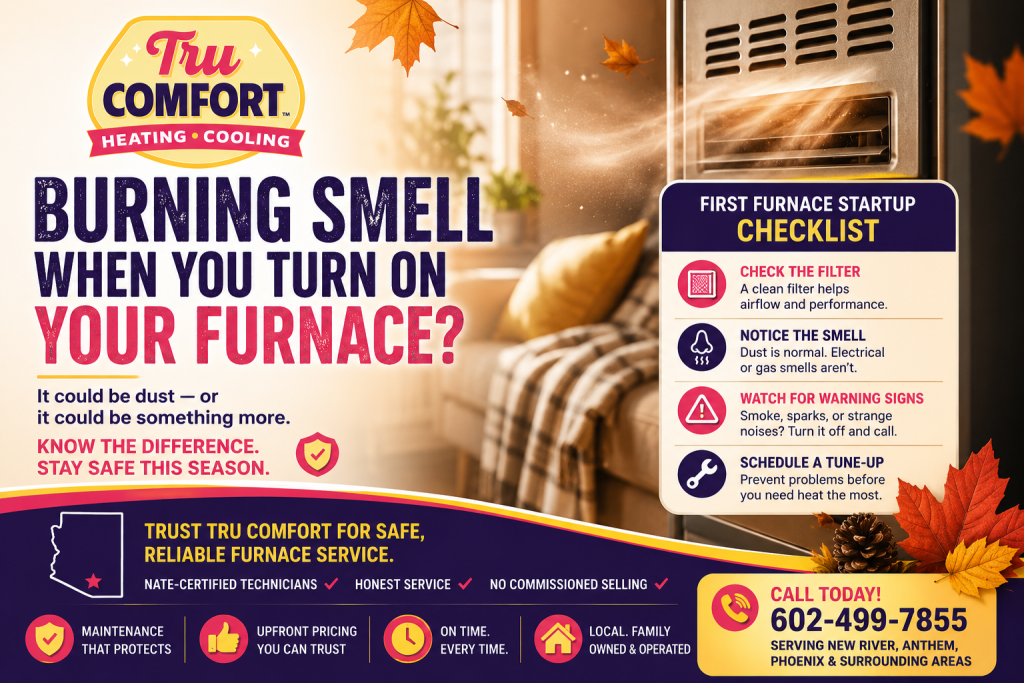
A brief dusty smell is different from a sharp electrical odor, visible smoke or a persistent burning smell.
This is one reason September is a useful time to test the heating system rather than waiting for the first genuinely cold night. If something is wrong, you have time to arrange service before heat becomes necessary.
Change or Inspect the Filter First
Before testing the furnace, inspect the HVAC filter. A filter that spent the summer collecting Arizona dust may already be heavily loaded.
The United States Department of Energy recommends cleaning or replacing furnace and air conditioning filters as part of routine home energy maintenance. Restricted airflow can make heating and cooling equipment work harder and interfere with normal system performance.
Install the correct size and type specified for the equipment. Do not operate the system without its filter simply to see whether the smell disappears.
An Electrical Burning Odor Is Different
A smell resembling overheated plastic, insulation or electrical equipment should not be treated as ordinary seasonal dust.
Possible electrical problems require professional diagnosis. Turn the heating system off when an unusual burning smell continues or is accompanied by buzzing, repeated breaker trips, smoke or unusual operation.
Tru Comfort lists strong burning odors among the warning signs that a furnace needs professional attention. Its furnace repair service also addresses electrical, ignition and blower problems.
Repeatedly restarting equipment after a breaker trips is not a useful test.
Gas Odors Require Immediate Attention
A gas furnace has additional safety concerns. If you suspect a gas leak, do not continue operating the equipment or remain inside trying to locate the source yourself.
Leave the area and follow the emergency guidance provided by your gas utility and local emergency services.
Carbon monoxide creates a different danger because people cannot reliably detect it by smell. The Consumer Product Safety Commission recommends a yearly professional inspection of fuel burning heating systems and working carbon monoxide alarms in the home.
Watch the Furnace After It Starts
Listen to the complete heating cycle. The burners or heating elements should start according to the equipment sequence, the blower should operate normally and warm air should reach the vents.
Arrange service if the furnace starts and stops repeatedly, blows cold air, makes new mechanical noises or fails to reach the thermostat setting.
A seasonal test is useful because it lets you discover these problems while the weather is still mild rather than at midnight during a colder spell.
Maintenance Looks Beyond the Odor
A proper heating inspection is not simply a smell check. The Consumer Product Safety Commission recommends inspecting heating equipment, electrical and mechanical components, thermostat controls, safety devices and venting.
Tru Comfort’s maintenance process includes checks of furnace safety and operating components, including the flame sensor, pressure switch, ignitor, temperature rise and shutdown cycle on gas furnaces.
Test the Furnace Before You Actually Need It
Tru Comfort Heating and Cooling provides furnace maintenance, diagnostics and repair throughout New River, Anthem, Phoenix and surrounding North Valley communities. If your furnace produces a persistent burning odor, operates strangely or has not been inspected recently, call 602 499 7855. A NATE certified Tru Comfort technician can check the heating system before a small warning becomes a cold weather breakdown.
Live References
Tru Comfort Advantage Maintenance
U.S. Consumer Product Safety Commission Home Heating Equipment