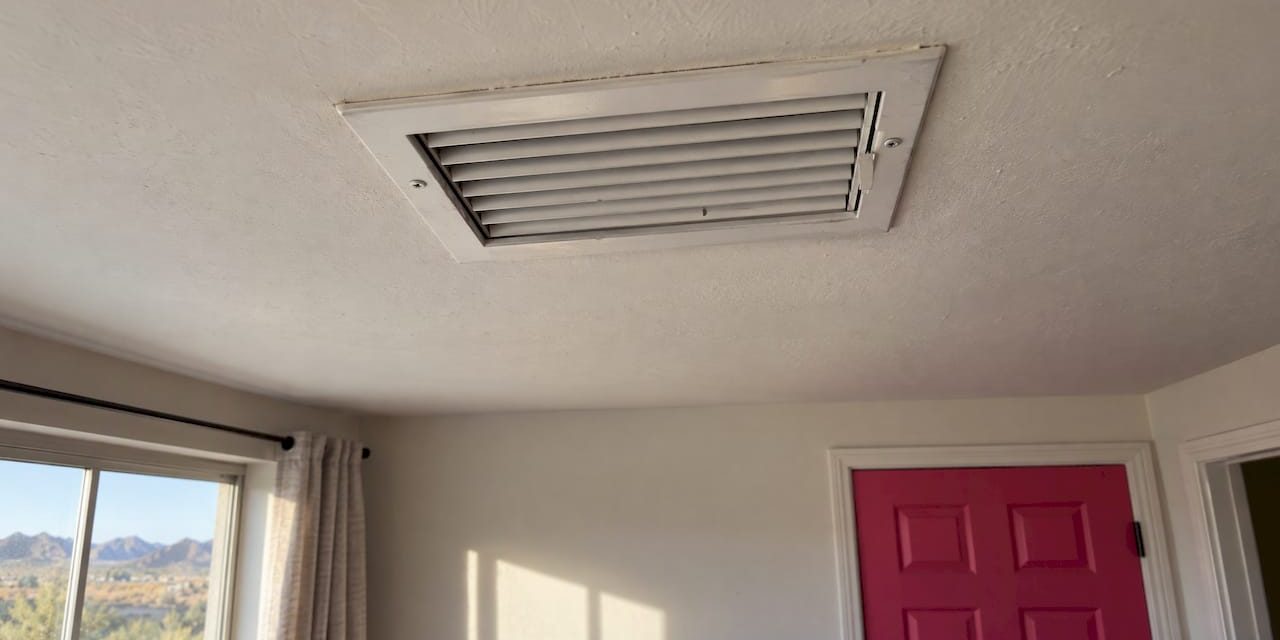
Closing Vents to Save Energy: Does It Work?
Short answer: no. In a typical home with central forced-air heating and cooling, closing the vents in rooms you don’t use will not lower your energy bill in any meaningful way, and it can push your equipment to work under strain. The blower still moves roughly the same amount of air. Closing a vent only changes where that air ends up, and it adds pressure to the ducts along the way. Below is why that happens, when closing a vent is harmless, and what saves money in a room you rarely use.
TL;DR
- Closing supply vents in unused rooms does not make your furnace or air conditioner produce less heating or cooling. It changes where the air goes, not how hard the equipment works.
- Closed vents raise static pressure in the duct system. Lab research found this can increase duct leakage and lead to problems such as frozen coils or cracked heat exchangers.
- The only setup built to shut off rooms is a properly designed zoned system, not a standard one-zone system with a few closed registers.
- Typical duct systems lose 25% to 40% of the heating or cooling energy they carry, so sealing ducts usually pays back more than closing vents.
- If your system struggles, a measured air balance or a duct inspection is the safe fix. Guessing with the vent levers is not.
Table of Contents
- Why closing a vent feels like it should save money
- What actually happens when you close a vent
- Is it ever okay to close a vent?
- What about zoned systems?
- Does closing doors help instead?
- Ways that do save energy in rooms you rarely use
- Comparing the options
- Perspective
- Signs you’ve closed too many vents
- What to do this week
- Let us measure it instead of guessing
- FAQ
- Sources
Why closing a vent feels like it should save money
The idea is easy to understand. You have a guest bedroom nobody has slept in since spring. Why pay to cool or heat it? Shut the vent and the conditioned air stays where people actually live.
That logic works for a space heater or a window unit, where the room is the thing being heated or cooled. A central system doesn’t work that way. It is a closed loop: one blower, one set of ducts sized for a particular airflow, and one piece of equipment that heats or cools the air passing through it. When you close a vent, the loop is still running at the same speed and the equipment still has to put out its full capacity. Only the destination of the air changes.
We hear this question constantly from homeowners around New River and the north Phoenix valley, especially in summer when a spare room or a casita is baking and the electric bill arrives. The honest answer is the same every time, and it doesn’t depend on the brand of your equipment.
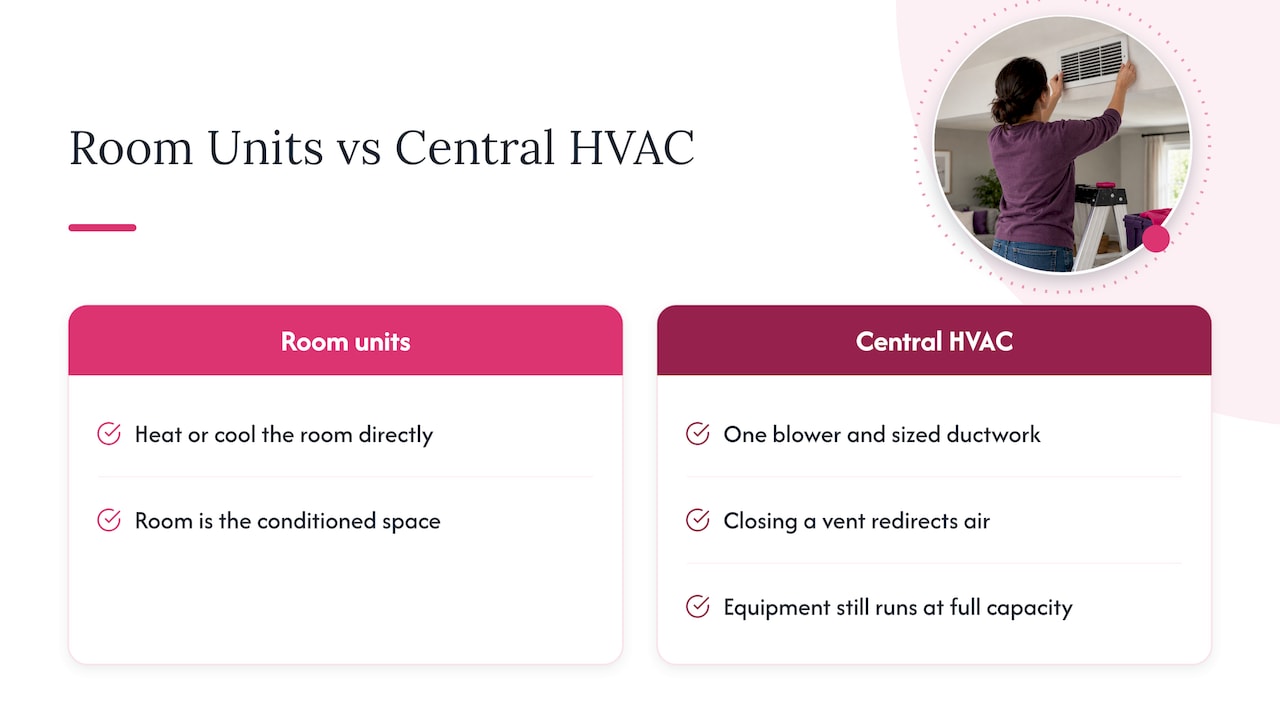
What actually happens when you close a vent
The blower doesn’t change what it is trying to do
Building scientist Allison Bailes explained that closing supply registers changes where air comes out, but not what the blower is trying to do or the amount of heat the equipment produces. In the same piece he notes that the only case where closing registers could save energy is a properly designed zoned system that signals the blower and equipment to adjust their output accordingly. A standard single-speed system has no such signal.
So the air you stop sending to one room has to go somewhere. It squeezes into the remaining ducts, goes through the remaining vents faster, or leaks out of the duct system before it ever reaches a room.
Pressure builds inside the ducts
Duct systems are designed around a certain airflow. Researchers at Lawrence Berkeley National Laboratory studied exactly this question in their work on register closing in forced-air heating systems. The findings point the same way: closing registers increases static pressure in the ducts, the system stays pressurized, and whatever savings you imagined are offset by more duct leakage and less efficient operation.
The same research describes how that pressure affects the blower. Closing registers raises static pressure, which can make an ECM blower use more energy to keep airflow up, or reduce airflow in a system with a PSC blower. Either way, you are not getting the clean saving you expected.
Think of it like pinching a garden hose while the spigot stays fully open. The pump (your blower) still pushes, the pressure rises, and any weak spot in the hose is more likely to leak.
Leaky ducts make it worse
Most homes have at least some leakage at duct joints, boots and connections. Higher pressure pushes more conditioned air out through those gaps, into attics, crawlspaces and wall cavities. In Arizona that often means cool air dumped into a 140-degree attic in July. You pay for that air and nobody feels it.
This is also why the room itself doesn’t get much cheaper to condition. As Family Handyman points out, there is no significant drop in heat loss for an unused room just because the vent is closed, since the temperature difference between that room and the outdoors still drives heat transfer through walls, windows and the ceiling. The room continues to gain or lose heat. It simply gets less help from your system.
Equipment can be damaged
A system is designed to move a specific volume of air across its coil or heat exchanger. Restrict that airflow and things start to go wrong:
- Air conditioners: low airflow lets the evaporator coil get too cold, which can freeze it. A frozen coil blocks air even more, and a struggling compressor is an expensive repair.
- Furnaces: low airflow lets the heat exchanger overheat. Over time it can crack. A cracked heat exchanger carries a risk of carbon monoxide entering the home, alongside the risk of a dead compressor on the cooling side.
The lab research mentioned above lists the same kinds of failures: frozen cooling coils and cracked heat exchangers among the mechanical problems tied to closed registers. If you heat with gas, have working carbon monoxide alarms on every level and near sleeping areas, and call a licensed technician right away if you suspect a cracked heat exchanger or an alarm goes off.
Is it ever okay to close a vent?
Yes, in small amounts, and with some judgment. Partly closing a vent or two is not going to wreck a system. The trouble starts when you close several vents all the way, or when your system has little spare capacity to begin with.
A few situations where adjusting makes sense:
- One room is too cold or too hot compared with the rest. A small adjustment can shift a bit of airflow from an overcooled room to a stuffy one. This is balancing, not saving energy, and it should be modest.
- A seasonal fix on a two-story house. Upstairs rooms run hotter in summer and downstairs rooms colder in winter. Slightly throttling the lower-level vents in summer can help, but it is better handled by a proper balance. We cover that below.
- A room that is being renovated or is truly sealed off. Even then, a partly open vent is better than a fully shut one.
The manual balancing dampers installed in many duct systems can be adjusted in small steps to fine-tune airflow. The same guidance warns that too many closed dampers can cause inadequate airflow and equipment malfunction, and that register controls are for fine-tuning, not for fixing major duct sizing errors.
A quick rule of thumb
If you have to close more than about one in five vents to get comfortable, the issue is not the vents. It is the duct design, the equipment size or a leak somewhere. That is the point to call for a measurement, not to keep closing registers. (That threshold is our own working guideline, not a published standard.)
What about zoned systems?
A zoned system is the legitimate way to stop conditioning rooms you don’t use. It has motorized dampers in the ductwork, separate thermostats for each zone and a control board that tells the equipment how to respond when a zone shuts. Many are paired with variable-speed equipment that can ramp down when fewer zones call for air.
That’s the difference from a handful of manually closed registers. The system knows a zone is off and adjusts. Zoning isn’t cheap, and it isn’t right for every house, so our zoning cost breakdown walks through what goes into the budget. If you already have zoning and it misbehaves, start with these homeowner checks for a zoned system that isn’t working before a technician measures static pressure and airflow.
Does closing doors help instead?
Closing the door to a room you don’t use is a different matter from closing its vent, but it doesn’t solve much either. A closed door keeps the room’s air separate, but the room is often still tied into the duct system, and if the room has a supply vent but no return path, pressure builds in that room and pushes air out around the door and through the walls. That is why many homes with closed bedroom doors feel stuffy while the hall is fine. Returns, either ducted or through transfer grilles or door undercuts, matter as much as supply vents.
If closed-door rooms are uncomfortable in your home, that points to a return air problem. A technician can measure the pressure difference with the door shut and recommend a fix.
Ways that do save energy in rooms you rarely use
Leaving the vents open feels like giving up. It isn’t. The savings are real, they are just somewhere else.
1. Seal and insulate the ducts
The U.S. Department of Energy’s Building America program reports that typical duct systems lose 25% to 40% of the heating or cooling energy produced by central equipment, and recommends that sealing and insulating be done by a qualified professional. That is a far bigger prize than a closed vent in a spare bedroom.
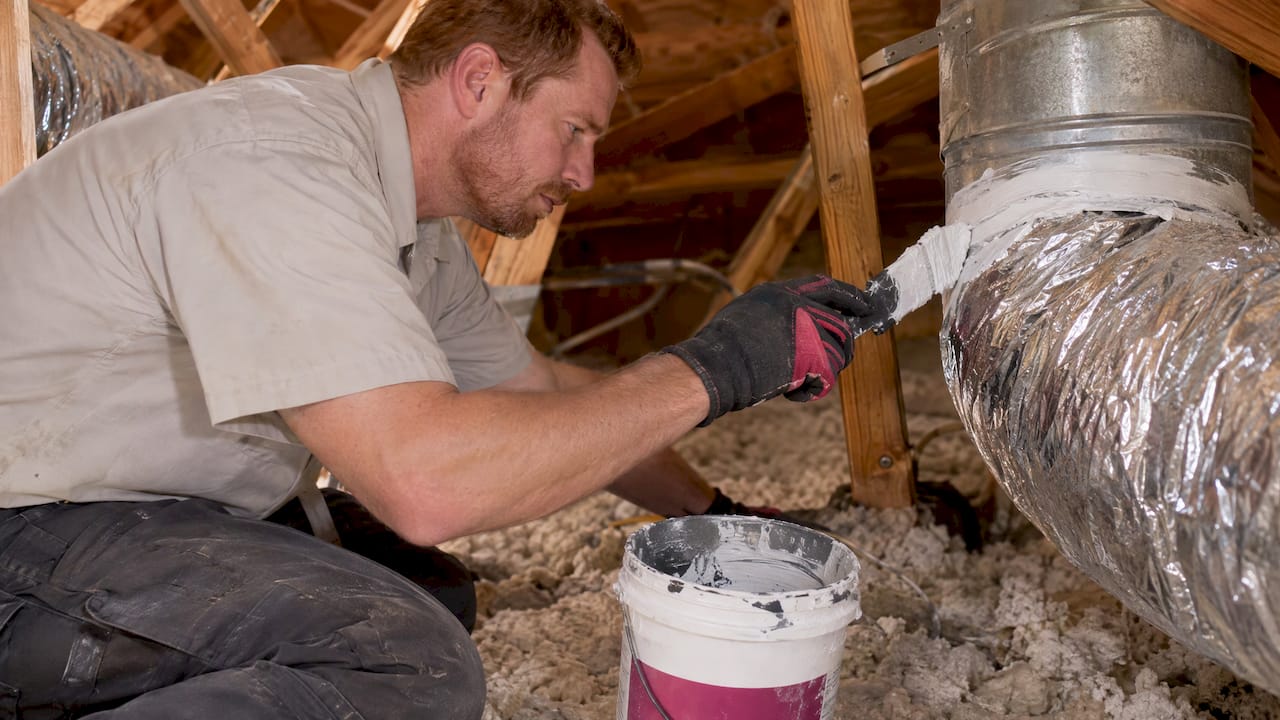
If you want to know how bad your ducts are, our guide to leaky air ducts, DIY seals and when a pressure test makes sense explains what you can handle yourself and what needs a test. For budgeting, see what duct sealing typically costs.
2. Get the system balanced by measurement
Balancing means measuring the airflow at each register and adjusting dampers so each room gets what it should. It is the proper version of what people try to do with vent levers. Our pages on air balancing for homeowners and measuring ducts first show what a technician checks and why guesswork often makes things worse.
3. Block the sun and heat at the source
In the desert, the room you want to stop cooling is usually a west-facing room with big windows. Shade screens, window film, blinds closed during the day and attic insulation do more for that room than any vent. Exterior shade also helps the outdoor unit work easier, which is covered in our note on sun exposure and clearance around your AC unit.
4. Keep the system clean and serviced
A dirty filter or coil restricts airflow in the same way closed vents do, and for the same reasons it costs energy and stresses equipment. Follow a filter and maintenance schedule and use our AC maintenance checklist for the seasonal basics.
5. Use the thermostat well
A programmable or smart thermostat that lets the house drift warmer in summer (or cooler in winter) when nobody is home reduces runtime for the whole house, not just one room. It works with your system instead of against it.
6. Replace equipment that has reached the end of its life
If the system is old, replacing it with a more efficient model makes sense and will lead to energy savings. Our guides on when to replace heating and air conditioning, when to replace a furnace and what a high-efficiency upgrade involves help you decide whether repair or replacement is the better call.
Comparing the options
| Approach | Effect on energy use | Risk to equipment | Best for |
|---|---|---|---|
| Closing several vents fully | Little or none; may rise from leakage and blower strain | Higher: frozen coil, overheated heat exchanger | Nothing we would recommend |
| Slightly adjusting one or two vents | Small comfort shift, no real saving | Low if modest | Fine-tuning hot or cold rooms |
| Sealing and insulating ducts | Addresses the 25% to 40% typical loss | None | Almost every home with ducts in an attic or crawlspace |
| Professional air balancing | Better comfort, more even airflow | None | Rooms that never feel right |
| Zoning with motorized dampers | Can reduce conditioning of unused zones | Low if designed properly | Larger or multi-story homes |
| Shading and insulation | Cuts heat gain at the source | None | Sun-baked rooms |
Perspective
We get asked about this at the front door of nearly every service call in the summer, so we will say it plainly. A closed vent feels like a saving because you can see it. The savings you can’t see, in leaky ducts, a dirty coil or a system that was never balanced, are the ones that show up on the bill.
Our technicians are NATE-certified and non-commissioned. That means when we recommend a duct repair or a balance instead of a new system, nobody in our company earns more by steering you one way or the other. If your house has a room that never cools right, we would rather measure it than guess at it, and tell you what we find.
A family-owned shop lives on repeat customers. A homeowner who hears the truth about vents today is the one who calls us when the compressor really does need replacing. That is how we like to earn the work.
Signs you’ve closed too many vents
If you’ve been closing vents for a while, check the system for these problems:
- Whistling or rushing noises at open vents, which suggests air is being forced through smaller openings.
- Ice on the refrigerant line or the indoor coil in cooling mode.
- Weak airflow at the vents that remain open.
- A furnace that shuts off early, cycling on its limit switch.
- Some rooms much hotter or colder than others.
- A higher electric bill than similar months last year.
If you see ice, turn the cooling off and run the fan so the coil can thaw before you call. For a furnace that overheats or cycles abnormally, or if a carbon monoxide alarm sounds, leave the home and call for emergency help.
If you’re not sure whether the problem is airflow, our guide to an AC that isn’t blowing cold air walks through the likely causes, and the ten signs your AC needs maintenance will help you spot trouble early.
What to do this week
- Open every supply vent you have closed, or at least most of the way.
- Replace the air filter and check that return grilles are not blocked by furniture or rugs.
- Walk the house and note rooms that are consistently hotter or colder. Write down the time of day.
- Shade the worst rooms from the sun.
- If problems remain, schedule a duct inspection and airflow measurement instead of closing registers again.
Let us measure it instead of guessing
If you have a room that wastes energy, or you’ve been closing vents and aren’t sure what damage that may have done, we can look at the whole system: airflow, duct condition, filters, coils and equipment condition. Our NATE-certified technicians serve New River and the surrounding areas for air conditioner repair and maintenance, furnace service and duct installation.

A Tru Comfort Advantage maintenance plan keeps coils, filters and airflow checked on a regular schedule, so problems like these get caught early. For urgent problems, such as no cooling in the heat or a furnace that won’t run safely, our emergency HVAC service is available through our main page.
FAQ
Should you close vents in unused rooms?
Generally, no. A central system keeps moving about the same amount of air whether a vent is open or not, so closing it mostly raises duct pressure and leakage. Research from Lawrence Berkeley National Laboratory found that perceived savings are offset by inefficient operation. If you want to cut energy use in a room you don’t use, seal the ducts and shade the room instead.
Is it bad to close vents?
Closing one vent partly is unlikely to cause harm. Closing many vents completely can freeze an AC coil, overheat a furnace heat exchanger and shorten equipment life. Over time, a cracked heat exchanger can create a carbon monoxide risk, so keep working CO alarms in the home and call a technician if you notice warning signs.
Does closing vents ever save energy?
Only in a system designed for it, such as a properly zoned system with dampers and controls that tell the equipment to adjust. On a standard single-zone system, the blower and equipment keep running as before. If you want real zoning, talk to a contractor about what your ductwork and equipment can support.
Why are some rooms still hot when all vents are open?
That usually points to duct leakage, undersized or crushed ducts, a missing return path, a dirty filter or equipment that is the wrong size. These are measurable problems. An airflow test and a look at the ducts will show which one it is, and then the fix is targeted rather than a guess.
Is it okay to cover a heating vent?
Covering a vent restricts airflow just like closing it, so the same pressure and overheating concerns apply. It also creates a fire risk if anything flammable touches a hot register or baseboard unit. Leave vents uncovered and keep furniture and curtains clear of them.
Sources
- Register Closing Effects on Forced Air Heating Systems, Lawrence Berkeley National Laboratory
- Is It OK to Close Air Conditioner Vents in Unused Rooms?, Green Building Advisor
- Why Closing Vents in Unused Rooms Won’t Lower Heating Bills, Family Handyman
- Improving the Efficiency of Your Duct System, U.S. Department of Energy Building America
- Pressure Balancing Supply and Return Ducts in Existing Homes, Building America Solution Center