Homeowners: Electrostatic Air Filters Pay Off After 12–24 Months
Electrostatic air filters are worth it for eco-minded homeowners in low-allergy homes who commit to monthly cleaning, but they trade consistent fine-particle capture for reusability. If anyone in your house has asthma, severe allergies, or you smoke indoors, a pleated MERV 8–13 disposable filter will protect you better with far less risk to your system.
TL;DR:
- Washable electrostatic filters typically perform at a low MERV 4 to 8 level, making them less effective at capturing fine particles than pleated filters or HEPA units.
- Efficiency of electrostatic filters diminishes over time with repeated washing, as charge retention weakens and media can sag or tear, reducing their dust-capturing ability.
- Proper maintenance—including monthly rinsing and drying—is essential for washable electrostatic filters to prevent system strain, blower issues, and potential repair costs.
- Homeowners with asthma, severe allergies, or heavy indoor smoke should prioritize disposable pleated MERV 8–13 filters or professional airflow testing over electrostatic options.
- System compatibility requires precise measurement of filter size, MERV rating, and static pressure limitations to avoid airflow restrictions and system damage.
Table of Contents
- How Does an Electrostatic Air Filter Actually Work?
- What Types of Electrostatic Filters Can You Buy?
- Electrostatic Filters vs. Pleated and HEPA: Which Actually Catches More?
- How Do You Maintain an Electrostatic Filter Without Damaging Your System?
- Who Should Use an Electrostatic Filter (and Who Shouldn’t)?
- Do Electrostatic Filters Actually Save You Money?
- How Do You Pick the Right Filter for Your HVAC System?
- What Tru Comfort Technicians See in the Field
- Should You Trust the Hype Around Electrostatic Filters?
- Want a Second Opinion on Your Filter and Airflow?
- Sources
- FAQ
How Does an Electrostatic Air Filter Actually Work?
An electrostatic air filter uses static charge to grab particles that would otherwise slip through plain fiber mesh. There are two distinct mechanisms hiding under one marketing term, and confusing them is where most buyers go wrong.
Passive electret filters use plastic fibers charged once during manufacturing, similar to how a balloon sticks to a wall. No power, no wiring, just self charged media that attracts dust as air passes through. Active electronic precipitators work differently: they run current through an ionizing wire, charge incoming particles, then pull them onto oppositely charged collecting plates.
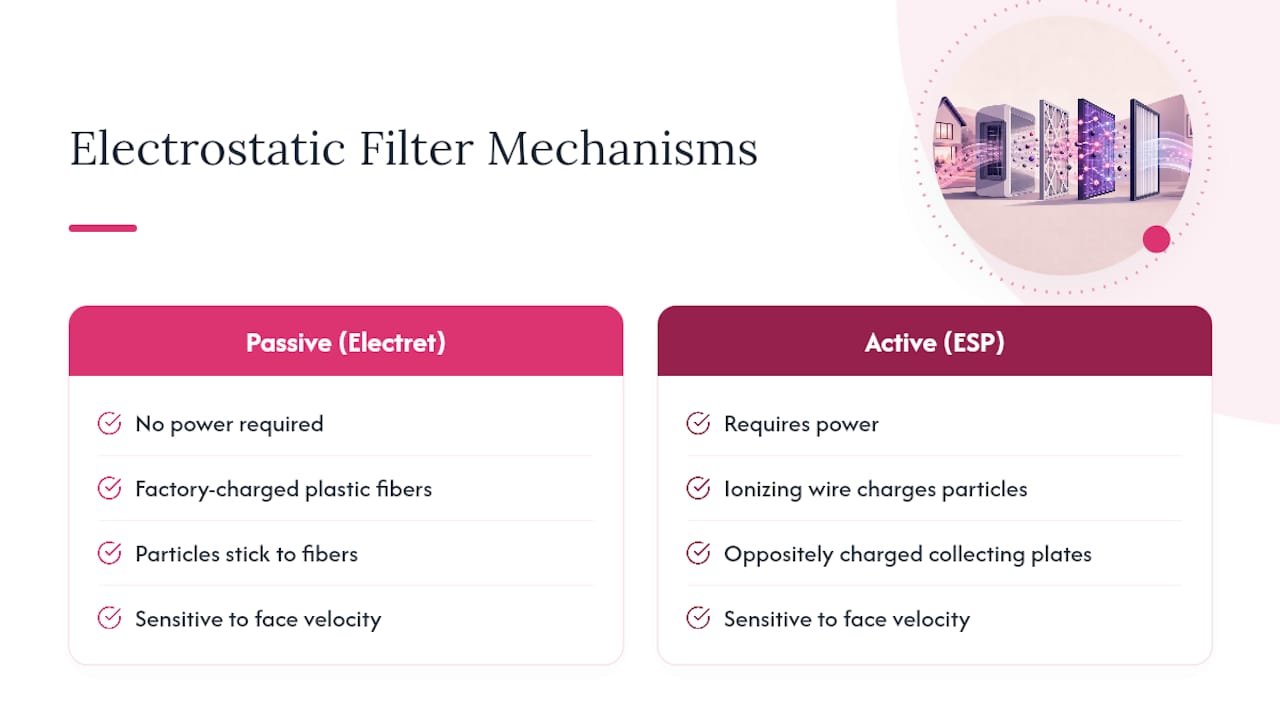
The physics behind both relies on dielectrophoretic and electrophoretic attraction, and the effect is measurable. A 2024 study on electrical field-induced filter polarization applied a 10 kV voltage to a MERV 11 base filter and recorded collection efficiency jumps of 51.6%, 47.2%, and 30.7% for 0.3 micron particles, depending on airflow speed. That last detail matters: efficiency dropped as flow rate climbed from 850 to 2,550 cubic meters per hour, because faster-moving air gives particles less time near the charged fibers. Face velocity, not just charge strength, decides how well any electrostatic system performs in your actual ductwork.
What Types of Electrostatic Filters Can You Buy?
Three product categories get marketed under the electrostatic label, and they behave very differently once installed.
- Washable permanent electrostatic filters: rigid plastic frames with layered charged polypropylene media, usually rated MERV 4 to MERV 8, designed to be pulled out, hosed down, dried, and reinstalled.
- Electrostatic pleated disposables: paper or synthetic pleated media with an electret charge added, sold in standard filter sizes and thrown away like conventional filters, typically MERV 8 to MERV 11.
- Electronic air cleaners (precipitators/ionizers): whole-house units wired into the return duct, built with a mesh prefilter, an ionizing and collecting cell, and often a charcoal postfilter stage, as described in Resideo’s electronic air cleaner documentation.
Check the box or spec sheet for a MERV number before buying. Vague language like “traps allergens” without a rating is a warning sign, not a feature.
Electrostatic Filters vs. Pleated and HEPA: Which Actually Catches More?
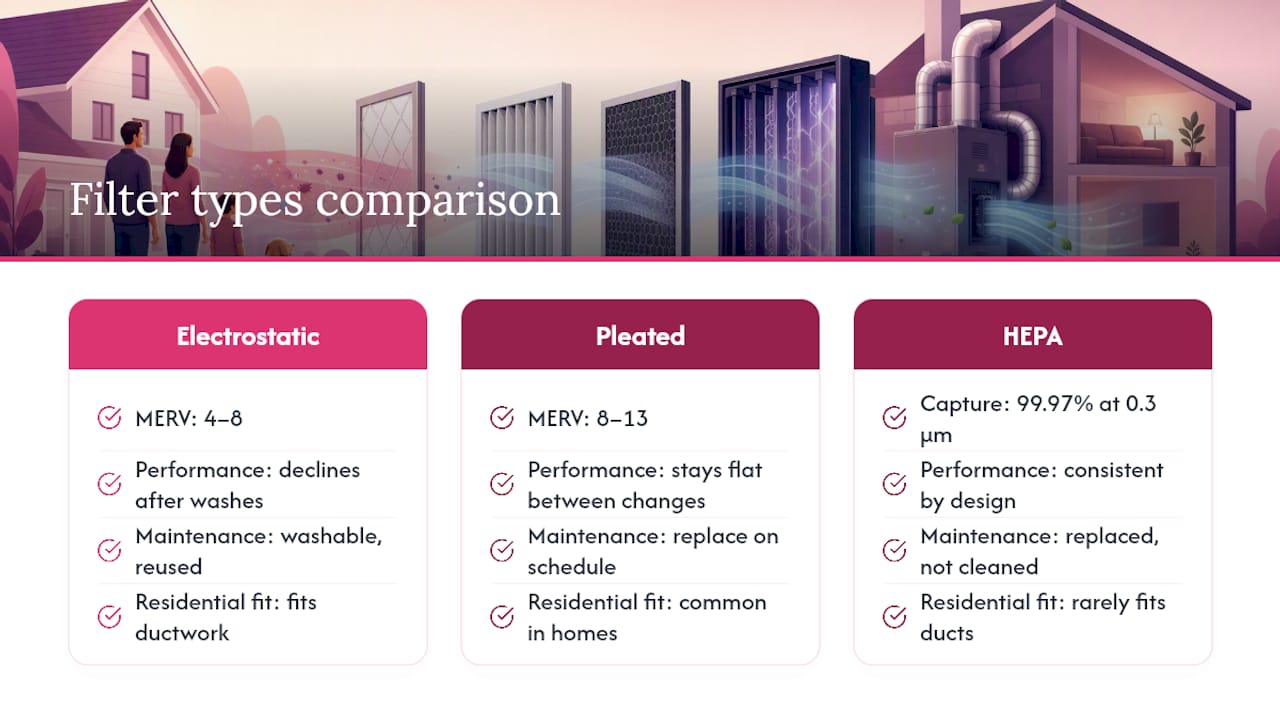
Washable electrostatic filters typically sit at MERV 4 to 8. Standard pleated disposables run MERV 8 to 13, and true HEPA media, which almost never fits residential ductwork without a dedicated cabinet, captures 99.97% of particles at 0.3 microns by design standard. That gap explains most of the “electrostatic filter vs. HEPA” confusion online: they are not competing in the same weight class.
Field testing and technician experience compiled by HVACSync consistently finds washable electrostatic filters landing in the low MERV range and losing efficiency as they cycle through wash after wash, which is why many technicians default to pleated MERV 8–13 for most homes. The 2024 polarization study shows what electrostatic media can do under lab conditions with an applied field, but residential systems rarely run at the controlled flow rates or voltage levels that produced those efficiency gains. Real ductwork moves air faster and less evenly than a test rig.
The bigger practical issue is consistency. A brand new washable electrostatic filter performs reasonably well. After a few wash cycles, charge retention weakens, media can sag or develop micro-tears, and capture rates for sub-micron particles drift downward well before the filter looks visibly dirty. Pleated and HEPA-style media don’t have that decay curve between cleanings, because you’re not cleaning them. You’re replacing them on a fixed schedule, which keeps performance flat instead of sliding. The EPA’s indoor air quality guidance frames filtration as one layer among several for improving indoor air, not a standalone fix, which is a fair way to think about any filter type you choose.
How Do You Maintain an Electrostatic Filter Without Damaging Your System?
Skipping maintenance is the single fastest way to turn a washable electrostatic filter from a money saver into a repair bill.
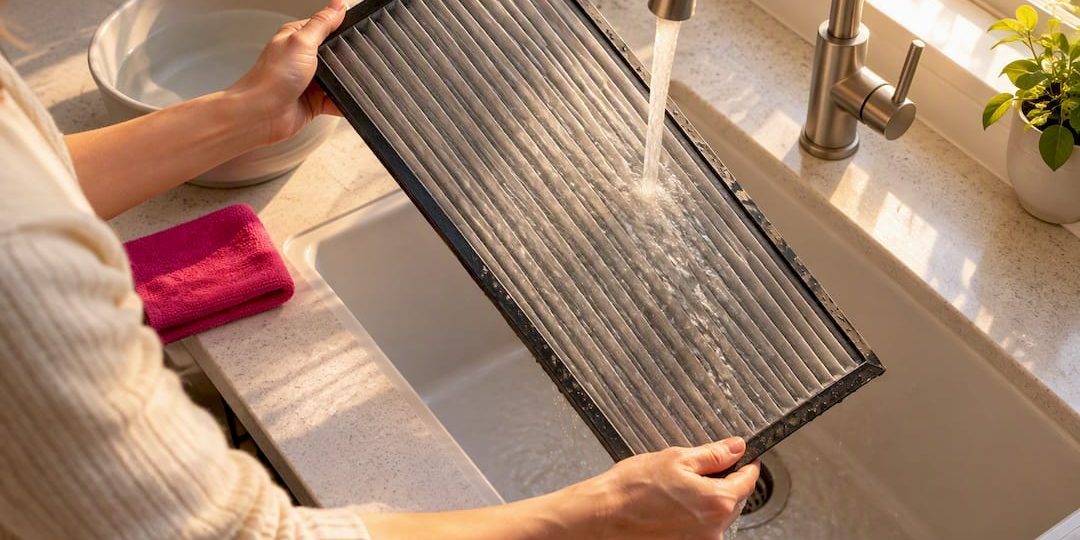
- Pull the filter and rinse it with a garden hose or in a utility sink, spraying from the clean side toward the dirty side to push debris out rather than deeper in.
- Use a mild detergent for heavy grease or pet dander buildup, but skip harsh solvents that can degrade the charged plastic media.
- Let it air dry completely, which usually takes 24 hours, before reinstalling. Installing a damp filter is the top cause of mold growth inside the housing.
- Clean on a monthly cycle for most homes, or every two weeks with pets or heavy dust.
- For electronic air cleaners, follow the manufacturer’s schedule specifically. Honeywell Home’s maintenance guidance recommends cleaning collector cells regularly and replacing postfilters twice a year to hold performance steady.
A dense or clogged electrostatic filter raises static pressure inside the duct system, which forces the blower motor to work harder and can quietly inflate your energy bill for months before anyone notices. Watch for snapping or arcing sounds from an electronic collector, unusual blower noise, or short cycling. Any of those means it’s time to stop cleaning it yourself and call a technician.
Pro Tip: If you hear a snapping or crackling sound from the return grille, pull the filter and check for wet spots or debris bridging the plates immediately. Persistent arcing after drying usually means the media is saturated or damaged and needs replacing, not another cleaning cycle.
Who Should Use an Electrostatic Filter (and Who Shouldn’t)?
Electrostatic filters fit a narrower slice of homeowners than the marketing suggests.
- Good fit: low-occupancy homes, no pets, no smokers, and an owner who will genuinely clean the filter monthly without skipping months.
- Good fit: eco-minded households prioritizing less landfill waste over squeezing out the last percentage point of particle capture.
- Poor fit: anyone with asthma, severe seasonal allergies, or a household member on a compromised immune system.
- Poor fit: homes with heavy indoor smoke, frequent wildfire smoke infiltration, or an older HVAC blower already sensitive to added static pressure.
If you fall into the second group, a pleated MERV 8–13 disposable, replaced on a fixed maintenance schedule, is the safer default.
Do Electrostatic Filters Actually Save You Money?
Washable electrostatic filters usually cost more upfront, often two to four times a single pleated disposable, but they’re reused for one to five years instead of thrown away every one to three months. That math looks appealing until you factor in the hidden costs: time spent cleaning, drying, and reinstalling every month, plus the energy penalty from pressure drop if you fall behind on cleaning.
Some cost analyses put the breakeven point for a washable electrostatic filter somewhere around 12 to 24 months compared to buying disposables that whole stretch, depending entirely on how often you’d have replaced the throwaway version. A five year outlook tells a more honest story: if you clean faithfully every month, the washable filter usually wins on pure material cost. If you skip cleanings, the resulting blower strain and potential repair cost can erase that savings fast.
How Do You Pick the Right Filter for Your HVAC System?
Buying the wrong size or the wrong rating is the most common mistake homeowners make, and it’s an easy one to avoid with a short checklist.
- Measure your current filter’s exact length, width, and depth. A quarter inch off in depth can leave gaps that let unfiltered air bypass the media entirely.
- Check your furnace or air handler manual for a maximum MERV rating or static pressure limit. Older systems with smaller blowers often can’t handle the resistance of a dense electrostatic pleated filter without added strain.
- If your home feels stuffier or the system runs longer cycles after switching filters, that’s a sign your new filter is too restrictive for the blower.
- Ask any seller three questions before buying: What’s the MERV rating? What are the exact drying requirements? And is there independent data behind any “HEPA-level” claim? A vague answer to any of those three is a red flag.
If you’re not confident reading your own system’s airflow specs, a technician airflow test settles the question in one visit rather than a season of guesswork.
What Tru Comfort Technicians See in the Field
Tru Comfort’s NATE certified technicians report the same pattern repeatedly: homeowners reinstall washable electrostatic filters while still damp, or stretch cleaning cycles to every two or three months instead of one. Both mistakes quietly stress the blower motor over time. When a filter starts causing airflow complaints, snapping noises, or a spike in energy bills, that’s the point to schedule a professional airflow test or switch to a high-MERV pleated filter instead of troubleshooting further on your own.
Should You Trust the Hype Around Electrostatic Filters?
The honest answer is that electrostatic filters aren’t a scam and they aren’t a miracle. They’re a reasonable choice for a specific kind of household, and a poor one for a much larger group of households that the marketing copy doesn’t mention. If you’re unsure which camp you’re in, the safest move is checking your filter’s dryness and airflow before assuming the product failed you.
Want a Second Opinion on Your Filter and Airflow?
If you’d rather skip the monthly wash-and-dry routine, or you’re not sure whether your ductwork can even handle a denser filter, that’s exactly the kind of question a professional airflow test answers in one visit instead of months of guessing. Technicians who diagnose your actual system rather than push whatever filter or unit pays the best commission.
A technician can measure your static pressure, tell you whether your blower supports a higher MERV filter, and flag any airflow issue before it turns into a repair call. For homes that want ongoing peace of mind instead of a one-time visit, the Tru Comfort Advantage maintenance plans build filter checks and system tune-ups into a set schedule. If your air conditioner or furnace is already showing signs of strain from a restrictive filter, book an inspection and get a straight answer on what your system actually needs.
Sources
- Aerosol collection efficiency enhancement in HVAC systems through electrical field-induced filter media polarization — 2024
- Are Washable Electrostatic Filters Worth It or Just Marketing Hype? — HVACSync
- Electronic air cleaner operational and maintenance guidance — Johnson Controls / Resideo
- Maintenance For Electronic Air Filters — Honeywell Home support
FAQ
Do Electrostatic Air Filters Really Work?
Yes, but with conditions. A 2024 study measured efficiency gains of 51.6%, 47.2%, and 30.7% for fine particles depending on airflow speed when an electrical field was applied to filter media, though real-home performance depends heavily on airflow and maintenance.
Which Is Better, a HEPA or an Electrostatic Filter?
For allergy and asthma protection, HEPA-grade filtration outperforms washable electrostatic filters, which typically rate MERV 4 to 8 versus HEPA’s much higher sub-micron capture standard. Electrostatic filters win on reusability and lower long-term waste, not raw filtration power.
What Are Electrostatic Air Filters?
They’re filters that use static electric charge, either built into the media or generated by an electronic collector, to attract and hold airborne particles beyond what plain mesh filtration catches. The two main types are washable permanent filters and powered electronic air cleaners.
Which Electrostatic Air Filter Is the Best?
The best choice depends on your household, not a single product. For eco-minded homeowners who will clean monthly, a washable permanent electrostatic filter works well; for anyone managing allergies or an older HVAC blower, a pleated MERV 8–13 disposable, or a professional airflow assessment from Trucomfortaz, is the more reliable route.