$3,000 Average HVAC Zoning Cost: Line Item Budget for Homeowners
Most homeowners pay between $1,500 and $8,500 to add zoning to an existing ducted system, averaging around $3,000 for a basic two-zone retrofit. A ductless mini-split approach runs higher, often $4,500 to $15,000. Zoning is usually worth it if you have a two-story home, a bonus room over a garage, or rooms that never match the thermostat setting.
TL;DR:
- Zoning a home’s HVAC system typically costs between $1,500 and $8,500 for ducted systems, and $4,500 to $15,000 for ductless mini-split setups.
- Each additional zone on a ducted system generally adds $350 to $500, with a 2-zone retrofit averaging around $3,000 for a 1,800 to 2,500 square foot home.
- The main cost drivers are duct condition, floor plan complexity, blower capacity, regional labor rates, and whether ductless options are economically viable.
- Unexpected expenses like bypass ducts ($300–$600), duct sealing ($500–$1,500), and load calculations can significantly increase total costs.
- Proper installation requires load assessments, static pressure checks, and duct sealing, and failing to do so can lead to early system failure or poor performance.
Table of Contents
- How Much Does HVAC Zoning Cost by Zone Count and System Type?
- What Do Dampers, Panels, and Wiring Actually Cost?
- What Actually Drives Your Final HVAC Zoning Cost Up or Down?
- How Fast Does HVAC Zoning Pay for Itself?
- What Hidden Costs Show Up After You Sign the Contract?
- What Should You Ask Before Signing an HVAC Zoning Quote?
- What Do Installers Actually See on the Ground?
- Ready to Get a Line-Item HVAC Zoning Quote?
- Sources
How Much Does HVAC Zoning Cost by Zone Count and System Type?
Price scales with the number of zones and the type of system you’re retrofitting into, not just square footage. A single added zone on an existing ducted system typically runs $1,700 to $2,800, and each zone after that tends to add roughly $350 to $500 as long as your ductwork and blower can handle the extra dampers.
Here’s how that plays out across common setups:
- 2-zone retrofit (existing ducted system): $1,700–$3,200, including a control panel and two thermostats
- 3-zone retrofit: $2,200–$4,000
- 4-zone retrofit: $2,800–$5,000
- 5+ zone retrofit: $3,500–$6,500, sometimes higher on complex floor plans with long duct runs
A real-world example: a 1,800 to 2,500 square foot two-story home splitting the upstairs and downstairs into separate zones usually lands between $1,800 and $3,000 installed, assuming the existing ductwork is in decent shape and doesn’t need rework.
Ductless mini-split zoning works differently. You’re paying per indoor unit rather than per damper, and total project costs run $4,500 to $15,000 depending on how many rooms you’re conditioning separately. That’s a wide range because “zoning” covers several distinct approaches. A retrofit with motorized dampers, a full mini-split install, and adding a second complete HVAC system are three different projects with three different price tags, and a lot of quote confusion starts when homeowners compare across them without realizing it.
Speaking of a second system: once you’re looking at 5 or more zones on a single blower, or your existing furnace and AC are already near capacity, installing a second complete HVAC unit can actually cost less than an aggressive zoning retrofit, especially if the ductwork would need major rework either way. If your equipment is already near end of life, it’s worth pricing a new furnace for a home your size alongside zoning quotes before committing.
What Do Dampers, Panels, and Wiring Actually Cost?
Breaking a zoning quote into its components is the fastest way to catch a lowball bid that’s missing pieces, or a padded one charging twice the going rate for a control panel.
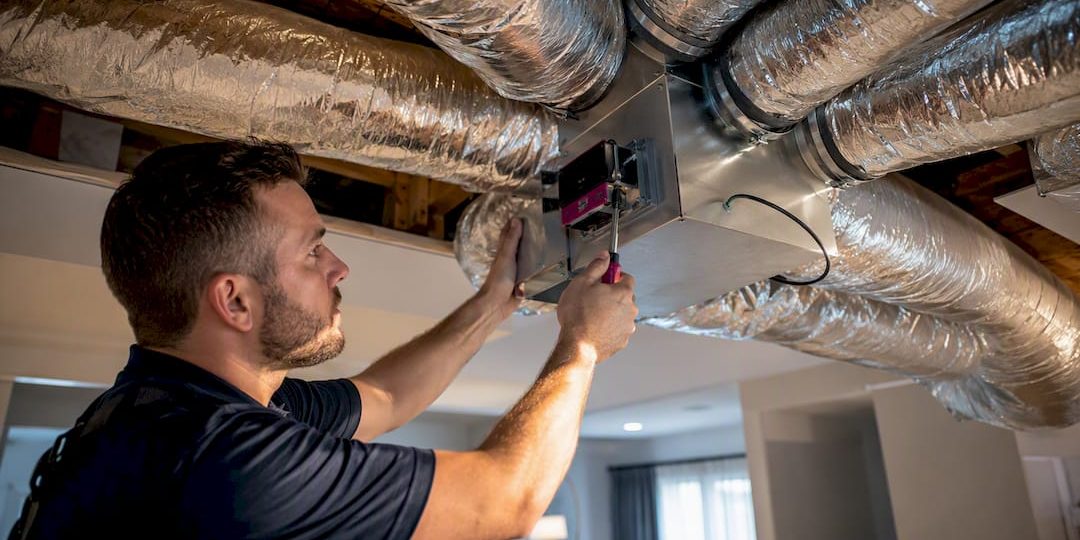
- Motorized dampers: $70–$340 each, with most retrofits needing one damper per zone plus sometimes a return-air damper
- Zone control panel: $120–$300; this is the brain that talks to your dampers and thermostats, and compatibility with your existing furnace board matters more than price
- Thermostats: $100–$600 per unit, from basic non-programmable models to smart, zone-aware thermostats that learn usage patterns
- Wiring runs: $50–$150 per run in a finished home, higher if the installer has to fish wire through finished walls or ceilings rather than an open attic
- Bypass duct: $300–$600 when your blower needs pressure relief (more on this below)
- Permits and electrical work: varies by municipality, but budget $50–$300 for permit fees where required
Labor typically makes up the largest slice of the total bill, not the parts. Small, straightforward retrofits often finish in a single day or two; larger jobs with multiple dampers, panel programming, and duct modifications can stretch to two to five days. If your quote lists a one-day installation for a 5-zone system with duct rework, ask how.
What Actually Drives Your Final HVAC Zoning Cost Up or Down?
Two homes with identical zone counts can get quotes $2,000 apart, and it’s rarely the installer padding the bill. These are the variables that actually move the number:
- Duct condition. Leaky, undersized, or poorly routed ductwork needs sealing or partial replacement before zoning makes sense, and that work isn’t optional if you want the system to actually work.
- Floor plan complexity. More rooms, more damper runs, and awkward attic or crawlspace access all add labor hours.
- Blower capacity. Older single-stage systems have limited tolerance for the static pressure changes zoning introduces, sometimes forcing a bypass duct or ruling out zoning altogether without equipment upgrades.
- Regional labor rates. Urban markets run 12% to 20% higher than rural ones for the same scope of work, and local permit requirements vary just as much.
- Ducted vs. ductless economics. If your ducts are already leaking 20% to 30% of conditioned air, a mini-split zoning approach can outperform a ducted retrofit on comfort even though it costs more upfront.
How Fast Does HVAC Zoning Pay for Itself?
The U.S. Department of Energy estimates targeted conditioning through zoning can reduce energy costs approximately up to 30% compared to conditioning your whole house to a single set point, though that figure depends heavily on your home’s layout and duct condition.
Run the math on a typical $2,400 annual heating and cooling bill. A 15% savings, a realistic outcome for a modest two-zone retrofit, saves about $360 a year. On a $3,000 installed cost, that’s roughly an 8-year payback.
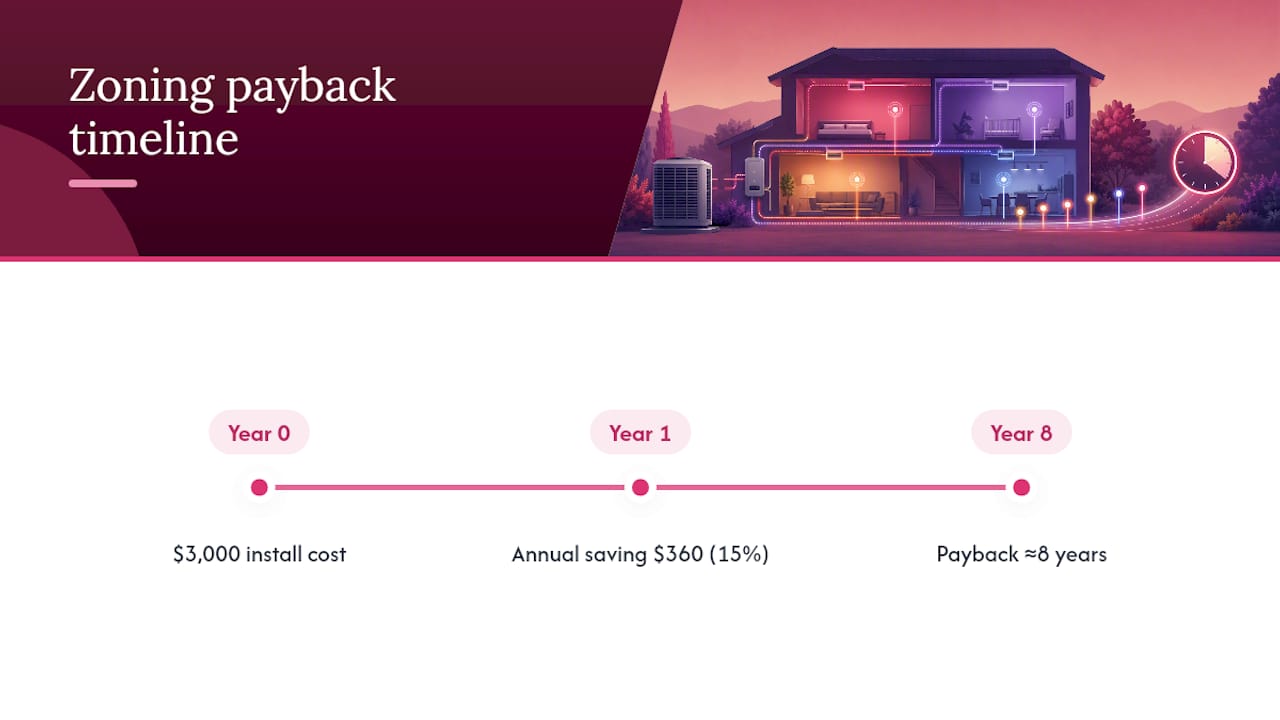
Homes with the fastest payback share a pattern: multiple stories, rooms with very different sun exposure, and occupants who keep certain rooms closed off or unused for long stretches. If your ducts are leaky or your attic insulation is thin, expect savings toward the low end of that range, since heat gain or loss will undercut the zoning system’s ability to hold a setpoint.
What Hidden Costs Show Up After You Sign the Contract?
Bypass ducts are the single most common line item missing from quick estimates, and they typically add $300 to $600. Single-stage blowers need somewhere for excess air pressure to go when one or more zone dampers close, and skipping this step causes the exact problems zoning was supposed to fix.
- Adding dampers to an undersized or aging system without a proper load calculation can stress the blower motor and lead to early failure
- Restricted airflow from poorly balanced zoning can raise indoor humidity, sometimes enough to encourage mold in closed-off rooms
- A quote that never mentions duct sealing on an older home should raise questions. Expect $500 to $1,500 in added work if your ducts haven’t been assessed
- Installers unfamiliar with zoning sometimes oversell the number of zones a single blower can handle, setting you up for comfort complaints within the first year
Pro Tip: Ask every bidder to show you their static pressure reading and load calculation before signing anything. If they can’t produce one, that’s a sign they’re guessing at your system’s capacity rather than measuring it.
What Should You Ask Before Signing an HVAC Zoning Quote?
Getting comparable bids means asking every contractor the same specific questions, not just requesting “a price for zoning.”
- Does this quote include a bypass or pressure-relief duct if my blower needs one?
- Have you run a manual load calculation and static pressure assessment on my system?
- Is duct sealing included, or will that be billed separately if issues turn up?
- Are permit fees and filing included in this price, or are they extra?
- What brands and models are you installing for the control panel and thermostats, and what’s the warranty on each?
- Can you provide proof of NATE certification and current insurance?
Get the scope in writing with per-item pricing, not just a lump sum, and use it to line up bids side by side against the same checklist.
What Do Installers Actually See on the Ground?
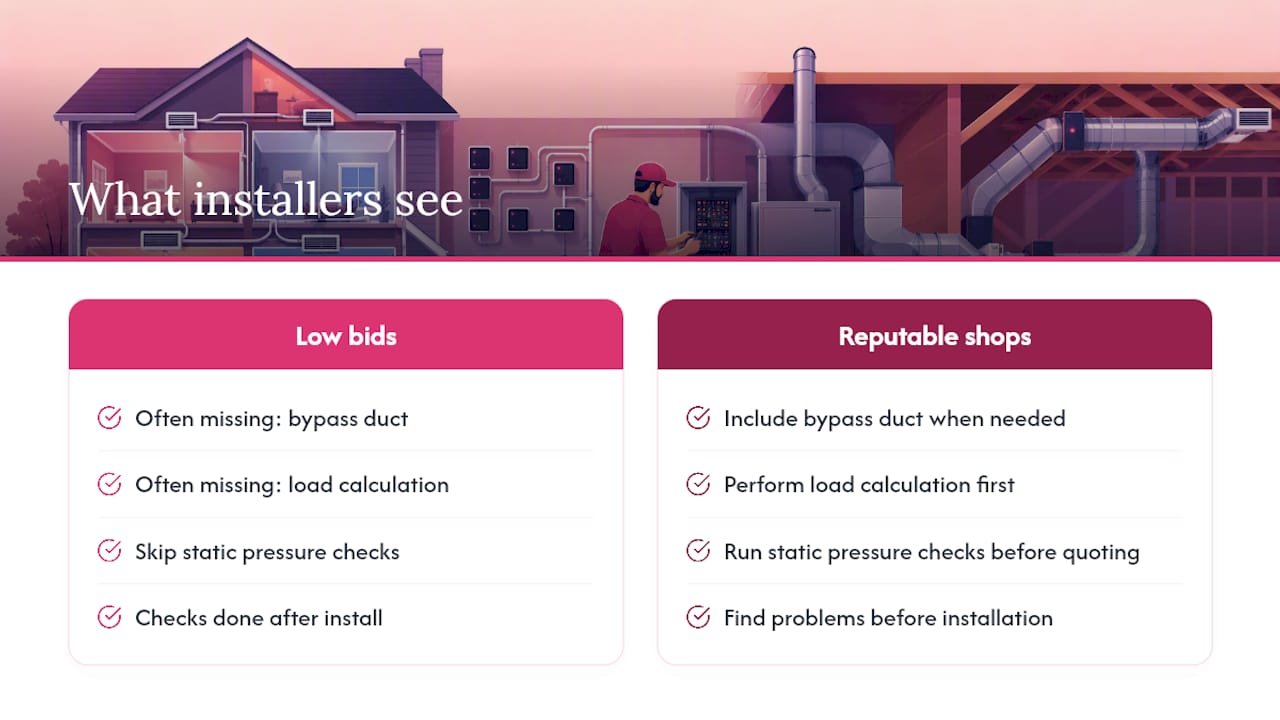
Brett here. After looking at enough zoning estimates, the pattern is predictable: the quotes that look cheapest on paper are almost always missing the bypass duct, the load calculation, or both. Some NATE-certified technicians run static pressure checks before quoting a zoning job, not after installation exposes a problem, because that’s the difference between a system that lasts 15 years and one that burns out a blower motor in three.
The most common surprise in this region isn’t the dampers or the panel. It’s homeowners who assume their existing ductwork can handle five zones when it was designed and sized for one. A reputable installer will tell you that before taking your deposit, not after your energy bill goes up and your upstairs still runs hot. As a family-owned shop, we’d rather lose a sale than install a system we know will fail early.
Ready to Get a Line-Item HVAC Zoning Quote?
Some companies build every zoning estimate around a real load calculation and static pressure check first, not a flat per-zone number pulled from a price sheet. That’s the gap between the quotes that hold up for 15 years and the ones that need a service call within the first summer. NATE-certified technicians often handle the installation, ductwork assessment, and permit filing as one scoped job, so you see the bypass duct, the duct sealing, and the labor broken out separately instead of buried in a lump sum.
If your ductwork needs work before zoning makes sense, our ductwork pricing breakdown shows what repairs typically run in this area. And if you’re weighing zoning against a full system replacement, our page on installing central air with existing ductwork walks through timelines for that route too. Beyond HVAC, simple upgrades like replacing interior doors to improve room separation can make zoning more effective by reducing air transfer between conditioned zones. Have photos of your furnace nameplate and attic ductwork ready, and some HVAC providers can give you a scoped estimate before any work begins.
Sources
- HVAC Zoning System Cost 2026 Data | Angi
- How Much Does an HVAC Zoning System Cost to Install? (2026)
- HVAC Zoning System Cost 2026: What Zone Control Really Costs | HVACProjectCost