Blower Motor Squealing: Causes, Fixes, and When to Call a Pro
A high-pitched blower motor squeal almost always means worn or dry bearings. Other likely culprits include debris caught in the squirrel-cage wheel, a loose fan wheel, or a failing resistor pack.
The pitch tells you a lot. A squeal that gets sharper as fan speed increases usually points to bearings; a noise that comes and goes at random, or only shows up on high, often traces back to electrical controls instead.
Before you touch anything: cut power to the unit at the breaker or, in a vehicle, turn off the ignition. Then check the air filter and look for obvious debris around the intake. That single step resolves more cases than people expect.
- Squeal gets worse at higher fan speeds → likely bearings
- Squeal only at one speed setting → check the resistor pack
- Grinding or scraping sound → debris or a broken blade
- Clicking or thumping → loose or unbalanced blower wheel
Key Takeaways
A blower motor squeal that grows louder with fan speed points to worn bearings, while speed-dependent silence or surging points to a resistor pack.
| Point | Details |
|---|---|
| Listen before you inspect | Pitch that scales with fan speed usually means bearings; erratic noise often means debris or controls. |
| Filter and debris first | Checking the filter and clearing visible debris resolves many cases without opening the motor. |
| Lubricate only with oil ports | Sealed-bearing motors should never be oiled; use two to three drops on motors with visible oil ports. |
| Test before assuming motor failure | A multimeter check of voltage and continuity separates a bad motor from a wiring or resistor problem. |
| Call Trucomfortaz for lasting fixes | Trucomfortaz’s NATE-certified technicians diagnose bearing wear and control faults before recommending repair or replacement. |
Table of Contents
- What Causes Blower Motor Squealing?
- Quick DIY Fixes Worth Trying First
- How to Troubleshoot a Squealing Blower Step by Step
- When Should You Stop and Call a Technician?
- Repair or Replace: What Determines the Right Call?
- Why Trust This Diagnostic Approach?
- What the Conventional Advice Gets Wrong
- Get a Professional Blower Diagnosis From Trucomfortaz
- Frequently Asked Questions
- Sources
What Causes Blower Motor Squealing?
Worn bearings are the single most common source of blower motor noise, and they behave in a predictable way. As the bearing surface wears down, friction increases, so the squeal typically grows louder and higher pitched the faster the blower spins. Idle it down and the sound often fades or drops in tone. That relationship between pitch and speed is the clearest diagnostic clue you have, and it costs nothing to check.
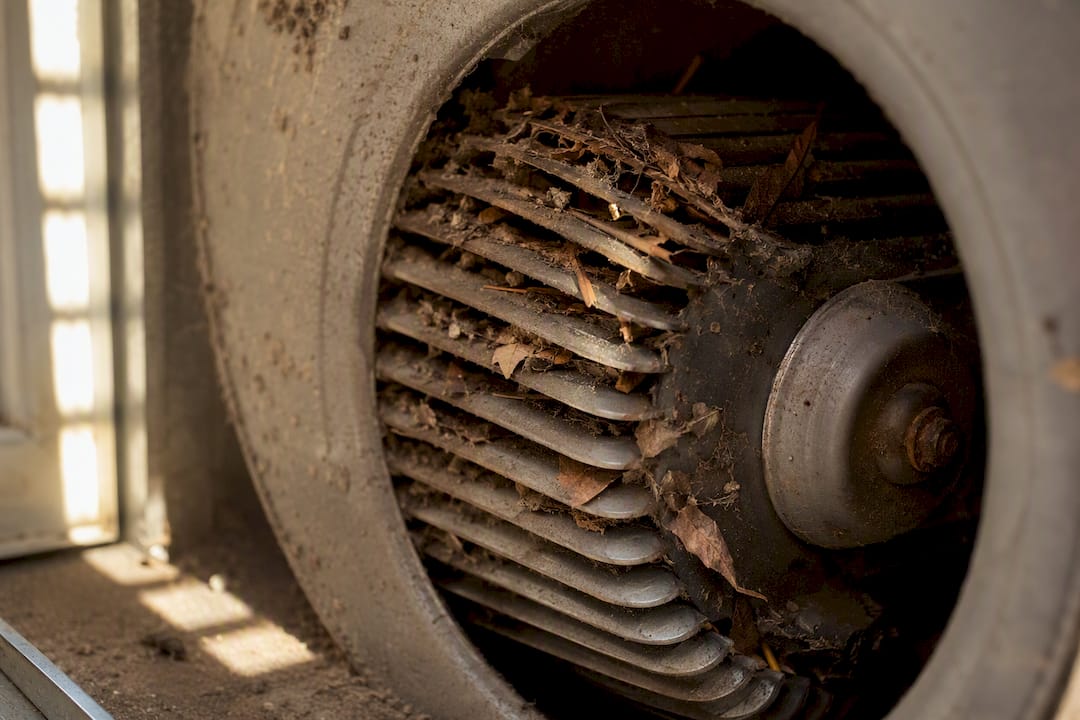
Debris tells a different story. Leaves, pet hair, insulation fragments, or a stray screw caught in the squirrel-cage wheel usually produces a scraping or rattling sound rather than a clean squeal, and it tends to be inconsistent rather than tied smoothly to speed.
Electrical and control issues sound different again. Electrical and control issues like a failing resistor pack or worn brushes can cause surging, whining, or a squeal that appears only at certain speed settings. If your blower only runs on high, suspect the resistor pack before assuming the motor itself has failed.
Less common but worth ruling out:
- A cracked or broken fan blade creating an intermittent slap or ping
- A rodent nest packed into the blower housing (surprisingly frequent in furnaces that sit idle over summer)
- A loose mounting bolt letting the whole assembly vibrate
Quick DIY Fixes Worth Trying First
Most squealing complaints get resolved, or at least narrowed down, with a few low-risk steps that take fifteen minutes.
- Check the filter. A clogged filter forces the blower to work harder and can produce a strained, higher pitched sound. Swap it and listen again.
- Clear visible debris. In a vehicle, this means popping the cabin air filter housing and checking the intake for leaves or debris. In a furnace, it means opening the blower compartment (power off first) and clearing anything wedged in the wheel.
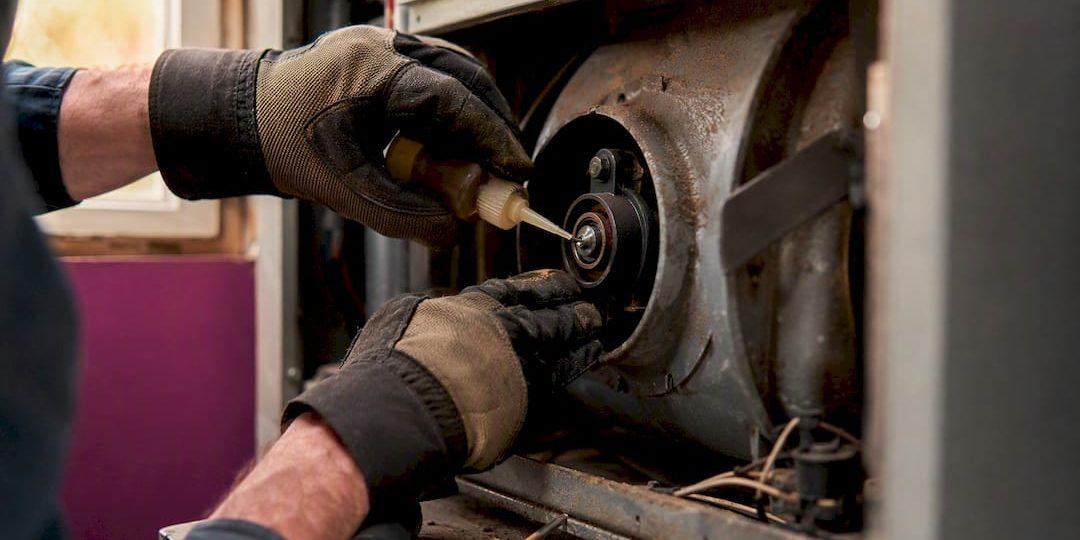
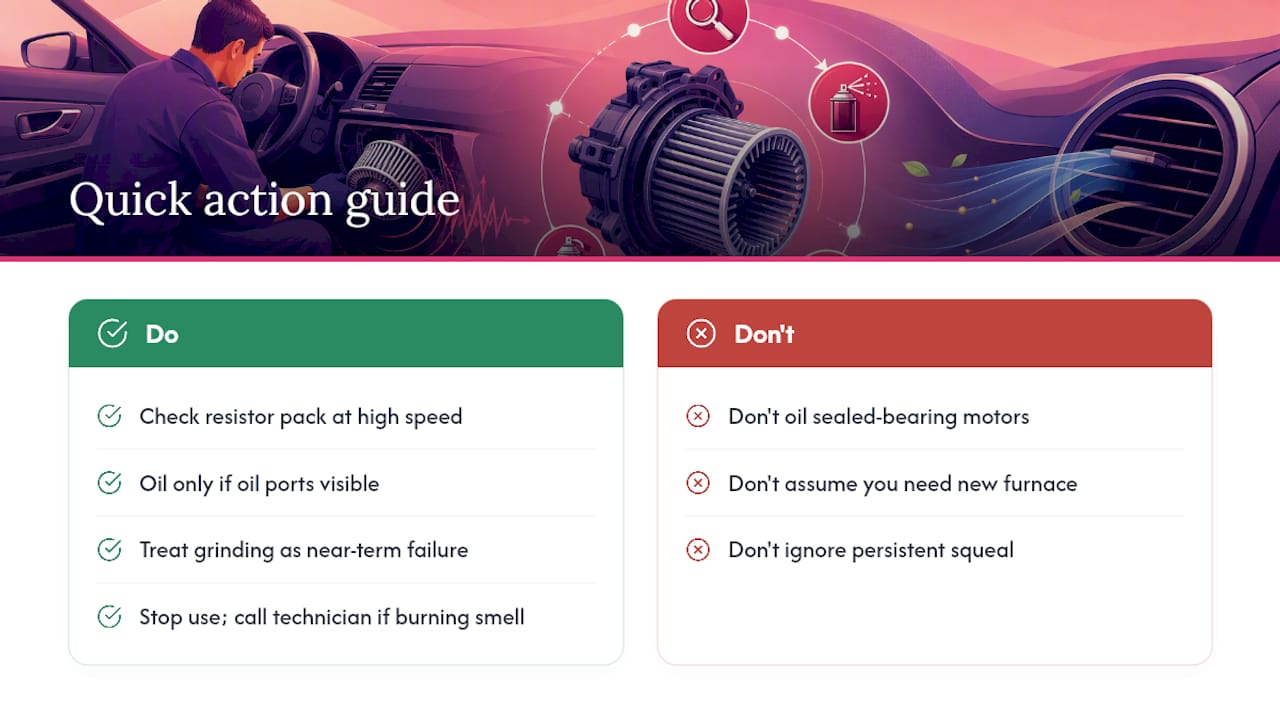
- Lubricate, but only if there’s an oil port. Older blower motors have small oil ports near the shaft ends. If yours has them, apply two to three drops of electric-motor oil, wait a few minutes, then test. Sealed-bearing motors have no ports and should never be oiled.
- Tighten what’s loose. Check mounting screws on the blower assembly and, if accessible, confirm the fan wheel is still centered and set screws are snug.
Pro Tip: Never reach for WD-40 or general-purpose household oil on a blower motor. It’s too thin to lubricate properly, attracts dust, and can gum up the bearing surface faster than doing nothing at all.
If lubrication quiets things down temporarily but the squeal returns within days or weeks, that’s a strong sign the bearings are too worn for oil to help long term.
How to Troubleshoot a Squealing Blower Step by Step
Work through this in order. Each step either narrows down the cause or tells you it’s time to stop and call someone.
- Kill the power and confirm it’s off. Flip the breaker for a furnace or shut off the vehicle. Use a non-contact voltage tester to confirm the circuit is dead before touching anything.
- Access the blower. In a vehicle, that’s usually behind the glove box. In a home furnace, it’s the blower compartment panel, typically held with a couple of screws or spring clips.
- Restore power briefly and listen across speeds. Run the blower on low, medium, and high. Note exactly when the squeal appears, worsens, or disappears.
- Cut power again and inspect physically. Look for:
- Debris wedged in the wheel
- A wobbling or off-center fan wheel
- Oil ports (present or absent)
- Rodent nesting material or chew marks on wiring
- Check the electrical side. Inspect the fuse, the wiring connector at the motor, and look for melted or discolored plastic. A multimeter check of voltage and continuity at the motor tells you whether the motor itself is getting proper power or whether the fault sits upstream in the wiring or resistor.
- Map what you found to an action:
- Debris only → clean and reassemble
- Oil ports present, squeal scales with speed → lubricate
- No oil ports, squeal scales with speed → bearings are likely worn; plan for replacement
- Voltage present but motor won’t run smoothly → motor fault
- No voltage at the motor → wiring, fuse, or resistor issue, not the motor itself
When Should You Stop and Call a Technician?
Some situations aren’t worth the risk of DIY, and a few signs mean you should close the panel and pick up the phone.
- Always verify power is off with a tester or multimeter before opening anything electrical.
- Never oil a sealed-bearing motor or use household lubricants like WD-40 as a substitute for proper electric-motor oil.
- Leave capacitors, ECM (electronically commutated) motors, and modern control boards alone. These carry a shock risk and require specialized diagnostic tools.
- If you smell burning, see a tripped safety limit, or the motor overheats even briefly, stop immediately.
Pro Tip: If lubrication quiets the squeal for a day and it comes right back, that’s not a mystery. It’s a worn bearing telling you it needs replacement, not more oil.
Repair or Replace: What Determines the Right Call?
Lubrication is a temporary bridge, not a fix, when bearings are actually worn. It buys time, sometimes weeks, sometimes months, but sealed bearings that have started grinding will keep grinding until the motor is replaced.
Expect a wide cost range depending on the system. Vehicle blower motors can run considerably less than furnace units once labor for accessing the compartment gets factored in, and furnace blower motor replacement costs climb further when the assembly is buried behind ductwork or requires a hard-to-source OEM part.
A technician evaluating your blower checks more than just the squeal:
- Bearing play and shaft wobble under load
- Motor winding resistance and insulation condition
- Blower wheel balance (a wheel that’s slightly bent throws the whole assembly off)
- Whether the exact OEM motor is still available or a compatible replacement is needed
Replacement usually wins out over repeated lubrication once bearings show measurable play, because a motor running rough draws more current, runs hotter, and risks taking out the control board with it.
Why Trust This Diagnostic Approach?
Diagnosing blower noise by ear, then confirming with a multimeter, is standard practice among trained technicians, not a shortcut. Trucomfortaz is a family-owned HVAC company in New River, Arizona, staffed by NATE-certified technicians who diagnose blower issues without commission-driven upselling.
A diagnostic visit should always start with listening across fan speeds and end with a voltage check, not a parts swap. That sequence is what separates a five-minute fix from a motor that gets replaced unnecessarily.
Emergency service is available when a squeal turns into a full stop, and maintenance plans catch bearing wear before it becomes a midnight breakdown.
What the Conventional Advice Gets Wrong
Most articles on this topic treat lubrication as a fix. It isn’t, and treating it as one is the single biggest mistake homeowners make with a squealing blower. Oil quiets a dry bearing temporarily because it reduces friction, not because it repairs the worn metal surface underneath. If the squeal comes back within a few weeks, you haven’t found a solution, you’ve just delayed the real one.
The bigger issue is that most guides skip the listening step entirely and jump straight to “clean it or replace it.” Differential listening, how the pitch changes across fan speeds, is the fastest and cheapest diagnostic tool you have, and it costs nothing but two minutes and some attention. It tells you whether you’re dealing with a mechanical bearing problem or an electrical control issue before you open a single panel.
My take: spend your first ten minutes listening and checking the filter, not searching for a tutorial. If the sound scales cleanly with speed and there’s no oil port, stop trying to fix it yourself. That’s a bearing on borrowed time, and a technician visit will cost less than a second motor.
Get a Professional Blower Diagnosis From Trucomfortaz
If you’ve gone through the filter check, the debris clean out, and the lubrication test and the squeal is still there, you’re likely looking at a worn bearing or a control issue that needs a trained eye. Trucomfortaz sends NATE-certified technicians to New River and the surrounding area who diagnose the actual cause before recommending a fix, not just a parts swap.

Every visit includes the same electrical checks covered above, voltage, continuity, resistor pack condition, plus a hands-on inspection of bearing play and wheel balance that’s hard to do accurately without shop tools. If replacement turns out to be the right call, Trucomfortaz’s furnace repair service handles it start to finish, and existing maintenance plan members get priority scheduling. Ready to stop guessing at the noise? Schedule a diagnostic visit and get a straight answer on what your blower actually needs.
Frequently Asked Questions
Why does my blower motor only squeal at high speed?
That pattern usually points to a resistor pack rather than the motor itself. The resistor controls lower fan speeds, so if it’s failing, high speed may be the only setting that still bypasses it cleanly.
Can I just oil a squealing blower motor myself?
Only if you can find actual oil ports on the motor housing. Sealed-bearing motors, common in newer furnaces and many vehicles, should never be oiled, since there’s no way for the oil to reach the bearing surface.
How long does a squealing blower motor last before it fails completely?
It varies widely. Some motors run for months with a mild squeal; others seize within days once bearing wear accelerates. Once you hear grinding instead of squealing, treat it as a near-term failure.
Is a squealing blower motor dangerous?
It’s not usually an immediate safety hazard, but a seized motor can overheat wiring or trip a safety limit switch in a furnace. Persistent squealing paired with a burning smell means stop using it and call a technician.
Does a squealing blower motor mean I need a whole new furnace?
No. Blower motor replacement is a component-level repair, not a full system replacement, and it’s typically far less expensive than swapping the entire furnace.