Heat Pump Defrost Mode: What Homeowners Need to Know
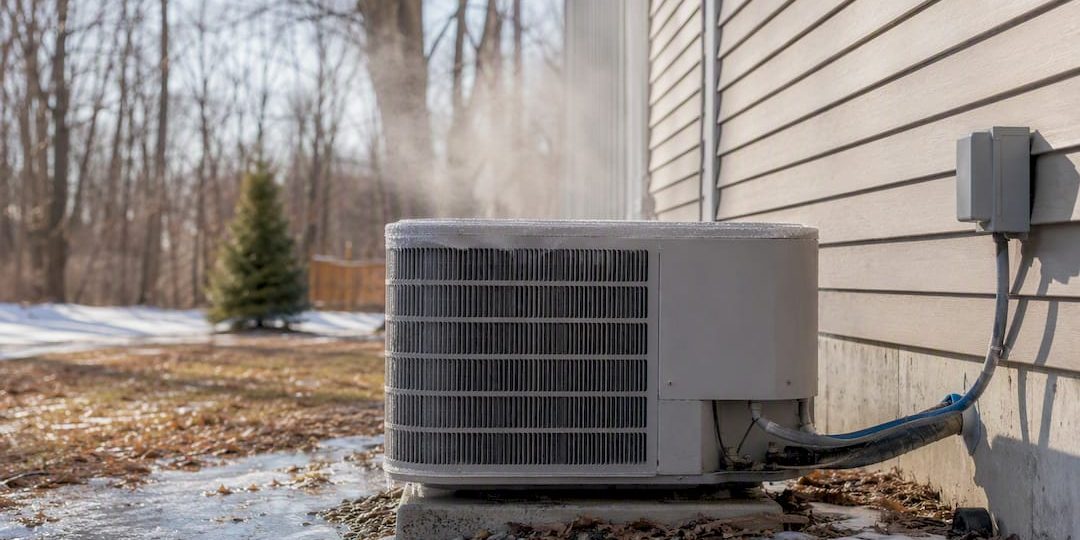
Defrost mode is your heat pump’s automatic, short refrigerant reversal that melts frost off the outdoor coil, and it’s normal. A single cycle usually runs several minutes, and during it you might notice a brief dip in indoor heat, steam rising off the outdoor unit, or the fan going quiet outside. None of that means the system is failing.
Seasonal field data compiled by ElectrifyAtlas shows defrost cycles can reduce a heat pump’s usable capacity by a significant percentage in cold, humid and dry climates. That’s a real performance cost, which is why AHRI capacity ratings and proper sizing matter so much in colder regions. If your unit behaves oddly outside these norms, a local pro like Trucomfortaz can check it before a minor quirk turns into a bigger repair.
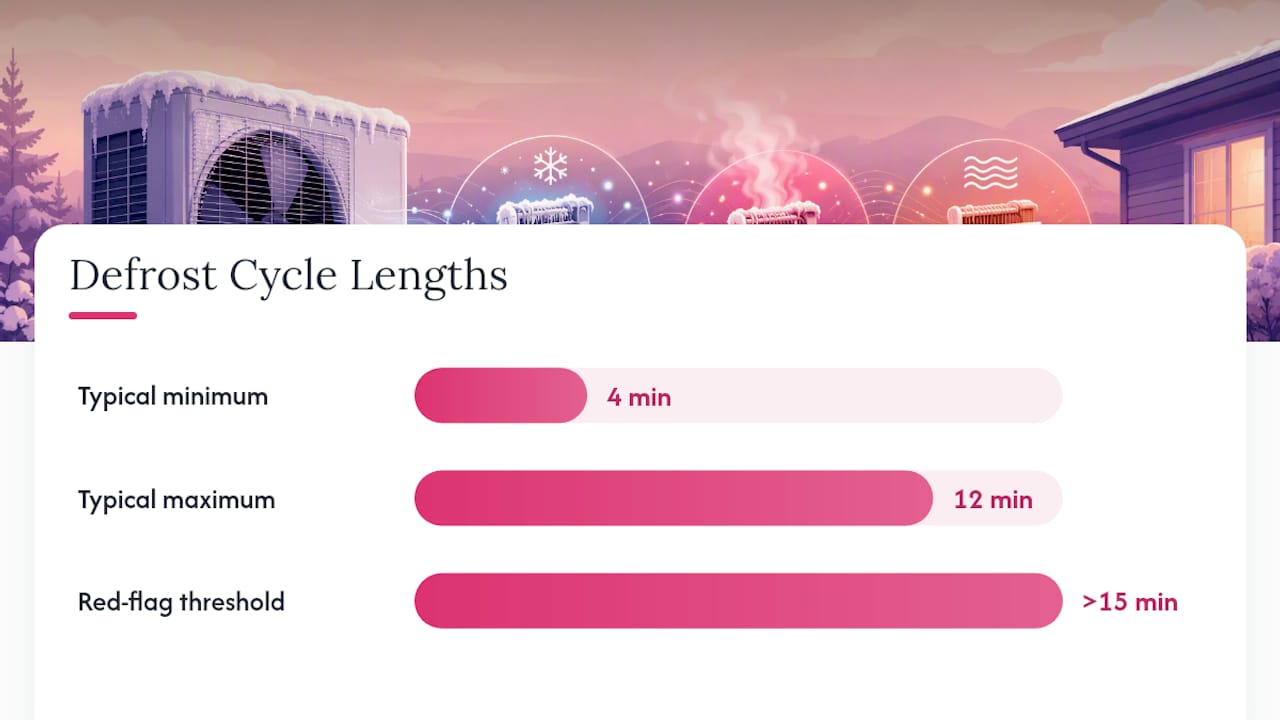
- Cycle length: typically 4 to 12 minutes
- What you’ll notice: steam, a quiet outdoor fan, a short warm-air lull indoors
- When to worry: cycles that last unusually long or a unit coated in solid ice afterward
Key Takeaways
Heat pump defrost mode is a normal, automatic refrigerant reversal, and problems only start when cycle length, frequency, or ice buildup fall outside expected ranges.
| Point | Details |
|---|---|
| Normal cycle length | Expect 4 to 12 minutes per defrost, shorter on demand-defrost systems. |
| Watch temperature bands | Cycles peak between 20°F and 35°F in humid air, drop off below 15°F. |
| Know the red flags | Cycles over 15 minutes or solid ice afterward mean it’s time to call a pro. |
| Don’t DIY electrical or refrigerant work | Leave board jump tests and refrigerant checks to certified technicians. |
| Trucomfortaz for diagnosis and upkeep | NATE-certified techs and maintenance plans catch defrost faults before they escalate. |
Table of Contents
- How Does Heat Pump Defrost Mode Actually Work?
- What Will You Notice During a Defrost Cycle?
- How Long Do Defrost Cycles Last and How Often Do They Run?
- Is Defrost Mode the Same as Emergency Heat?
- Why Does Frost Build Up on a Heat Pump in the First Place?
- When Should You Worry About Defrost Behavior?
- What Can Homeowners Safely Check Before Calling for Service?
- What Do Technicians Check When Diagnosing Defrost Problems?
- Sources
How Does Heat Pump Defrost Mode Actually Work?
A heat pump makes heat by moving it, not creating it, and in cold weather that process leaves frost on the outdoor coil. Defrost mode is the fix built into the system to clear that frost before it chokes airflow entirely.
Here’s the sequence, step by step:
- The reversing valve flips, sending hot refrigerant to the outdoor coil instead of the indoor one
- The outdoor fan shuts off so the coil can warm up without cold air blowing across it
- Frost melts and drains away from the coil and base pan
- The reversing valve flips back, and the system resumes normal heating
During that reversal, the indoor blower keeps running, but it’s now moving air that hasn’t been fully heated. That’s why backup or auxiliary heat often kicks in briefly. As Trane explains, this backup heat exists specifically to keep supply air from feeling uncomfortably cold while the outdoor unit handles frost removal.
Not every system decides when to defrost the same way. Older and budget models use time-temperature controls, defrosting on a fixed schedule (often every 30, 60, or 90 minutes) regardless of how much frost has actually built up. Demand-defrost systems use thermistors to sense real coil conditions and only trigger a cycle when frost is actually a problem, which is why American Standard notes these systems often run shorter, more efficient cycles.
Pro Tip: Where your outdoor unit sits matters more than most homeowners realize. If the base pan can’t drain freely, because of uneven ground, ice damming, or a blocked riser, meltwater refreezes into solid ice around the coil instead of running off. That single site issue can turn a normal defrost cycle into a recurring headache.
What Will You Notice During a Defrost Cycle?
Most defrost cycles are easy to live with once you know what’s normal. You might see steam or vapor curling off the outdoor unit. That’s melted frost turning to vapor, not smoke and not a sign of an electrical problem.
Other common signs include:
- The outdoor fan pausing or going completely silent for several minutes
- A brief whoosh or pressure-change sound as the reversing valve shifts
- An “AUX” or “EM HEAT” light appearing briefly on your thermostat
- Slightly cooler air from your vents for a few minutes
That last one catches people off guard, but it’s expected. The system is temporarily borrowing heating capacity to defrost the coil, and it typically resolves itself within minutes once the cycle ends.
How Long Do Defrost Cycles Last and How Often Do They Run?
A single cycle typically runs several minutes. Demand-defrost systems tend toward the shorter end, often running only a few minutes, because they stop as soon as sensors detect the coil is clear. Time-based systems run their full programmed duration whether the coil needs it or not, according to ElectrifyAtlas.
Frequency depends heavily on outdoor conditions. Defrost activity peaks in the 20°F to 35°F range when humid air is present. That combination of cold coil and moist air is exactly what builds frost fastest. In those conditions, cycles every half hour to one and a half hours aren’t unusual. Drop below roughly 15°F, though, and cycles become far less frequent, since colder air simply holds less moisture, a pattern documented by Coastline Heating & Air.
| Outdoor Condition | Typical Defrost Behavior |
|---|---|
| 20°F to 35°F, humid | Most frequent cycles, often every 30 to 90 minutes |
| Below 15°F | Cycles become much less frequent |
| Demand-defrost systems | Typically 4 to 12 minutes per cycle |
| Time-based systems | Runs full programmed duration regardless of frost level |
Is Defrost Mode the Same as Emergency Heat?
No, and mixing these up leads to a lot of unnecessary panic. Defrost mode is a short, automatic refrigerant reversal your system triggers on its own to clear coil frost. Emergency or auxiliary heat is a separate backup heating source your thermostat calls on when the heat pump alone can’t keep up with demand.
- Auxiliary heat often runs briefly during defrost to offset the temporary heating gap
- Seeing “AUX” flash for a few minutes during a cycle is normal
- AUX running constantly, or emergency heat staying on for hours, usually points to undersizing, a stuck component, or a system fault worth having checked
Why Does Frost Build Up on a Heat Pump in the First Place?
Frost forms whenever the outdoor coil runs colder than the surrounding air’s dew point, and certain conditions make that worse. Freezing rain, fog, and wet snow all load the air with moisture right when coil temperatures are already low, accelerating frost formation well beyond what dry cold produces.
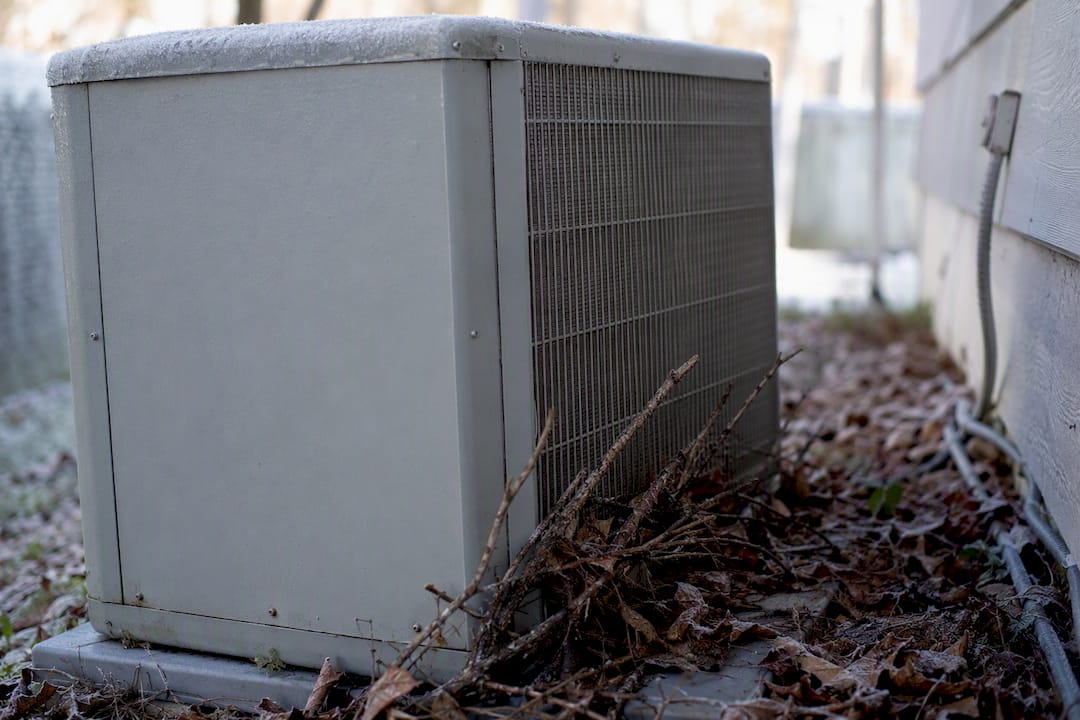
Installation and site conditions play a bigger role than most homeowners expect. Leaves, dead vegetation, snow drifts, or a unit tucked too close to a fence can all restrict airflow across the coil, and restricted airflow speeds up frost buildup even in mild weather. A blocked drainage riser compounds the problem by letting meltwater refreeze instead of draining away.
Then there are the internal causes: dirty coils, low refrigerant charge, a failing sensor, or a control board mismatched to your climate. A time-based defrost control installed in a mild, dry region will trigger cycles far more often than necessary, wasting energy for no real benefit. Getting the condenser coil clean and clear goes a long way toward preventing most of these issues before they start.
When Should You Worry About Defrost Behavior?
Most defrost activity is background noise you can ignore. A few patterns, though, mean it’s time to call someone.
- A single cycle running longer than 15 minutes
- The outdoor unit coated in solid ice once a cycle finishes, rather than clear or lightly frosted
- Defrosting every few minutes, a pattern known as short-cycling
- Sustained cold air indoors well after the cycle should have ended
- Loud banging or hissing beyond the normal whoosh of the reversing valve
- AUX heat that never shuts off between cycles
If defrost runs longer than 20 minutes or the unit looks frozen solid, Trane recommends powering the system down and calling a professional rather than waiting it out. Solid ice after a cycle usually points to a failed defrost initiator, a stuck reversing valve, or a bad sensor, none of which resolve on their own.
What Can Homeowners Safely Check Before Calling for Service?
Before you assume the worst, there are a handful of checks you can safely run yourself.
- Clear 2 to 3 feet of space around the outdoor unit, removing leaves, debris, and snow buildup
- Confirm the drainage path and riser aren’t blocked, so meltwater can actually leave the unit
- Check and replace your indoor air filter if it’s dirty, since restricted airflow indoors can worsen how the whole system performs
- Verify your thermostat is set to the correct mode and watch how AUX behaves over a full cycle
- If the system seems stuck, a full power cycle at the disconnect can sometimes reset a hung control board
What you should never do: open the electrical panel, jump test pins on the defrost board, or attempt any refrigerant-related repair yourself. Those tasks require training and the right instrumentation, and getting them wrong can damage the system or injure you.
- Keep vegetation trimmed back from the unit through fall
- Schedule a coil inspection before the coldest months hit
Pro Tip: A seasonal maintenance visit before winter catches dirty coils, low refrigerant, and worn sensors long before they show up as a 2 a.m. defrost problem. It’s cheaper than an emergency call every time.
What Do Technicians Check When Diagnosing Defrost Problems?
When a defrost issue needs a professional look, the diagnostic process follows a fairly consistent path. According to ACHR News, certified technicians typically inspect:
- The defrost control board and its terminals
- The coil thermistor or thermostat sensor
- Reversing valve operation and timing
- Pressure switches and refrigerant charge
- The outdoor fan motor and condensate drainage path
To confirm what’s actually wrong, techs run a specific set of tests:
- Jump the defrost board’s test pins to force a cycle on demand, a technician-only procedure
- Measure coil temperature against outdoor air temperature to check whether the system is defrosting at the right threshold
- Verify compressor and reversing valve timing line up with the control board’s signals
- Check refrigerant charge, since low charge is a common hidden driver of excess frost
Having a NATE-certified technician run these tests with proper gauges and meters matters because guessing at a defrost fault often leads to replacing parts that were never the problem.
A Technician’s Take on Defrost Panic
Steam off the outdoor unit almost always means melted frost, not failure. The mistake I see most is homeowners popping open panels or jumping board pins themselves. Leave that part to a pro.
When to Call Trucomfortaz for Defrost Trouble
If your heat pump is icing solid, short-cycling into defrost every few minutes, or running auxiliary heat nonstop, that’s your cue to stop troubleshooting and get a second set of eyes on it.

Trucomfortaz sends NATE-certified technicians who diagnose the actual cause, whether it’s a failed control board, a stuck reversing valve, or a sensor reading frost that isn’t there, instead of swapping parts by guesswork. Our technicians work on a non-commissioned basis, so the fix you get is the one your system actually needs, not the one that pads a bill. Beyond one-off repairs, our maintenance plans catch dirty coils and low refrigerant before they turn into a frozen unit at midnight, and if your heat pump is aging out entirely, we can walk you through whether repair or replacement makes more sense for your budget. If you’re seeing any of the red flags above, reach out to Trucomfortaz and schedule a diagnostic visit before the next cold snap.
Sources
- Heat Pump Defrost Cycles Explained: What Happens Below 20°F and Why It Matters for Sizing — ElectrifyAtlas
- What Is a Heat Pump Defrost Cycle? — Trane
- Understanding a defrost board on a heat pump — ACHR News
- What Is a Heat Pump Defrost Cycle? — American Standard
- Heat Pump Defrost Cycle Explained | Normal vs. Problem Signs — Coastline Heating & Air