Energy-Efficient HVAC Options for Your Home: How to Choose
The most efficient HVAC options for a home are heat pumps (ducted or ductless), high-SEER2 central air conditioners and high-AFUE gas furnaces. The right pick depends on your climate, your ductwork and how your house is built. In a hot desert area like New River, Arizona, cooling drives the bill, so the cooling rating and a correctly sized system matter most. Below you will find how each option works, which ratings to compare, what savings are realistic and how to get the efficiency you paid for.
TL;DR
- Heat pumps and ductless mini-splits are the most efficient way to heat and cool. Central AC paired with a furnace is still a strong choice when you already have good ducts.
- Compare SEER2 and EER2 for cooling, HSPF2 for heat pump heating and AFUE for gas furnaces.
- Efficiency only pays off when the unit is sized correctly and the ducts are sound. Ask for a Manual J load calculation before you approve a bid.
- Savings depend on what you are replacing. Moving from an old, inefficient unit saves far more than moving from a recent one.
- Yearly professional maintenance protects the efficiency rating you bought.
Table of Contents
- The main energy-efficient options at a glance
- Heat pumps: one system, heating and cooling
- Ductless mini-splits: efficiency without ducts
- Central air conditioners and furnaces
- The ratings that matter, and what each one measures
- How much can an efficient system save?
- Is a high-efficiency system worth the higher price?
- Choosing by climate and home layout
- Sizing and ducts decide the real result
- Features that improve efficiency and comfort
- Keeping efficiency over the years
- Our perspective
- Get an honest recommendation for your home
- FAQ
- Sources
The main energy-efficient options at a glance
| Option | Best for | Efficiency rating to check | Needs ducts? |
|---|---|---|---|
| Ducted heat pump | Homes with good ductwork that want one system for heating and cooling | SEER2, EER2, HSPF2 | Yes |
| Ductless mini-split heat pump | Homes without ducts, additions, garages, converted spaces, zoned comfort | SEER2, HSPF2 | No |
| High-efficiency central air conditioner | Hot climates with a separate heating source | SEER2, EER2 | Yes |
| High-efficiency gas furnace | Cold winters, homes already plumbed for gas | AFUE | Yes |
| Dual setup (AC plus furnace) | Big swings between hot summers and cold nights | SEER2 and AFUE | Yes |
None of these is best everywhere. The U.S. Department of Energy says the system you choose depends on house size, insulation, heating and cooling use and local climate, and it recommends equipment with the ENERGY STAR label.
Heat pumps: one system, heating and cooling
A heat pump moves heat instead of making it. In summer it pulls heat out of your house like an air conditioner. In winter it reverses and brings heat in. Because it relocates energy rather than burning fuel or heating a wire, it can be very efficient. ENERGY STAR says that in winter a heat pump can deliver up to three times more heat energy than the electrical energy it uses, which means it can cost less to run than furnaces, boilers or electric resistance heat.
NYSERDA adds that air source heat pumps, both central ducted and ductless, can heat and cool a home two to four times as efficiently as conventional systems. Ground source heat pumps are another category, with higher installation complexity.
If you live somewhere with hard freezes, cold climate models exist. ENERGY STAR describes them as built with advanced compressors and refrigerants for low outdoor temperatures. Southern Arizona and the Phoenix valley rarely need that capability, but higher desert elevations can see cold nights, so ask about it if your property sits high.
A heat pump suits you when you want to replace both an air conditioner and a furnace with a single unit, when you want lower winter operating cost than electric resistance heat, or when your gas service is limited or absent.
Ductless mini-splits: efficiency without ducts
A mini-split has an outdoor unit connected to one or more indoor heads by a small refrigerant line. There is no duct system to leak. That matters because leaky ducts waste conditioned air before it reaches a room.
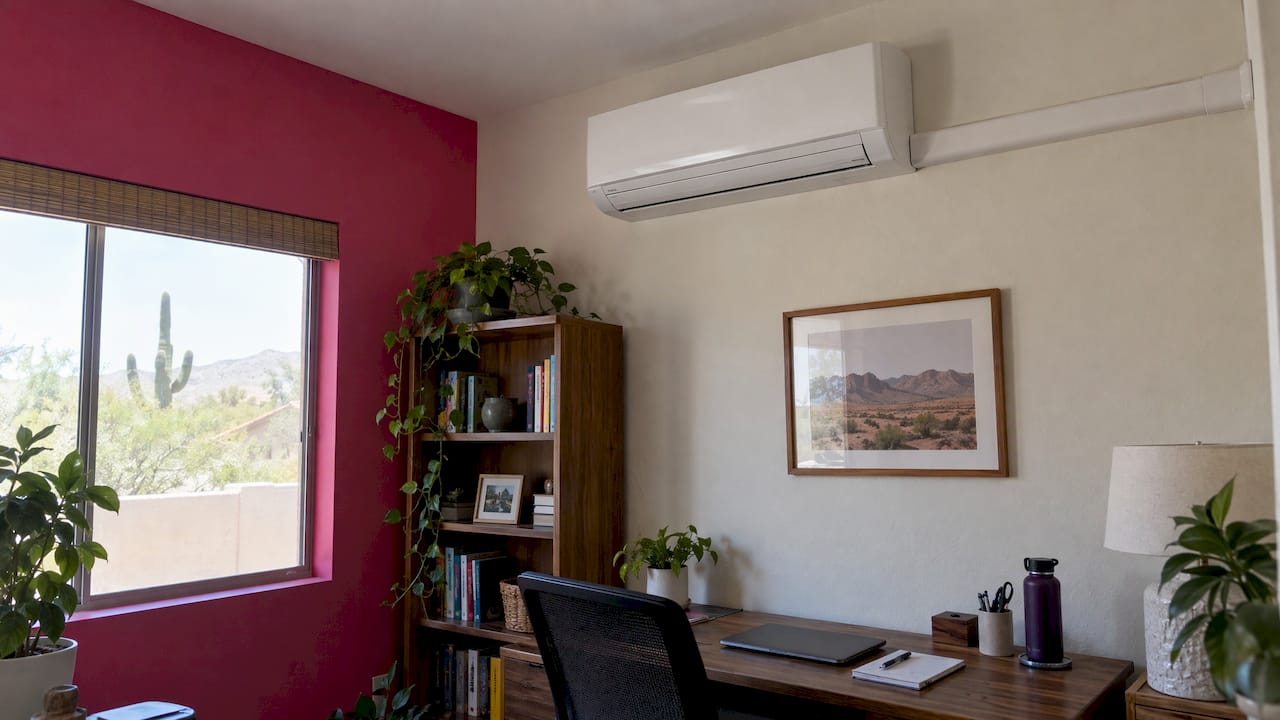
The Building America Solution Center at PNNL reports that high-performance ductless heat pumps are available with heating efficiencies above 22 HSPF2 and cooling above 35 SEER2, and that many can heat in cold climates without a backup source. Those figures describe top-end equipment, so expect typical models to land lower.
NYSERDA notes that mini-splits require no existing ductwork, let you control the temperature of each room and are less invasive and less expensive than installing ducting for a central system. It also points out they can cost more than central heat pumps and conventional systems on equipment price, so compare the total installed cost, not just the unit.
Mini-splits fit well in:
- Homes that never had ducts, or whose ducts are beyond repair
- Additions, sunrooms and converted spaces
- Garages and workshops. See our look at garage cooling options in Arizona for why sealing comes first.
- Houses with one room that never keeps up. If that sounds familiar, read why one room is hotter than the rest in New River.
Central air conditioners and furnaces
If your house has sound ductwork, a high-efficiency central system can be the most practical upgrade. You keep the duct layout, and the work is usually faster. Our guide on how long it takes to install central air with existing ductwork walks through what to expect.
Federal rules set a floor. The Department of Energy notes that since January 2006 residential air conditioners sold in the U.S. must have a SEER of at least 13, and ENERGY STAR qualified central air conditioners must reach at least 14 on that older scale. Newer equipment is rated on SEER2, which is measured differently, so do not compare an old SEER number directly with a new SEER2 number.
For heating, a gas furnace is rated by AFUE, which ENERGY STAR defines as the amount of heating your equipment delivers for every dollar spent on fuel. A higher percentage means less of your fuel is wasted. If you are weighing a furnace, see our furnace installation and maintenance services.
The ratings that matter, and what each one measures
Efficiency labels look like alphabet soup. Here is what each tells you.
- SEER2 is seasonal cooling efficiency. ENERGY STAR defines it as the heat removed during the cooling season divided by the electricity used over the same season. Higher is better.
- EER2 measures cooling efficiency at one hard condition. Trane’s guide describes it as measured at 95°F outdoors, 80°F indoors and 50% humidity. In a hot desert climate, EER2 is arguably more telling than SEER2 because summer afternoons live near that condition.
- HSPF2 is the heating efficiency of a heat pump over a winter season.
- AFUE is the percentage of fuel a furnace converts to heat.
A practical rule: shop on the rating that matches your biggest energy use. In Arizona that is cooling, so look at SEER2 and EER2 together. If you want the details on what a higher SEER buys you, our page on what a higher SEER really saves goes through it.
How much can an efficient system save?
Savings depend on what you are replacing and how you use it. The Department of Energy states that upgrading from SEER 9 to SEER 14 can cut energy consumption by more than 35%. By its example, a household paying $100 a month in direct cooling cost could save up to $35 a month. That figure comes from older guidance and from a large jump in rating, so a newer system replaced by a slightly better one will save less.
Rewiring America puts the average yearly saving from moving to a heat pump at $370 per homeowner, and closer to $1,000 for people leaving fuel oil, propane or electric resistance heat. Those are national averages. Arizona’s electric rates, your usage and your home’s envelope will move the number.
Things that shrink or grow your savings:
- The age and condition of what you have now. The older it is, the bigger the gain.
- Correct sizing. An oversized unit cycles on and off and wastes energy.
- Duct condition. Leaks and poor insulation eat into the rating.
- Insulation and shading. Less heat gain means less cooling work.
- Thermostat habits. The Department of Energy says each 1°F you set heating back for eight hours saves about 1% on heating, and it suggests 78°F in summer when you are away.
Is a high-efficiency system worth the higher price?
Efficient equipment costs more at purchase. Rewiring America reports an average heat pump installation of $16,000, and says savings often pay that back in about 15 years. That is a national figure. Local quotes vary with home size, equipment and ductwork.
The math looks best when:
- Your current system is near the end of its life and must be replaced anyway, so you are only paying the difference between standard and high efficiency.
- You run cooling for many months a year, as most Arizona households do.
- You plan to stay in the home long enough to collect the savings.
If your system is failing, timing matters too. Our page on when to replace your AC covers the signals that repair costs are no longer worth it, and our overview of replacing heating and air conditioning helps with the heating side.
For a wider look at what drives replacement quotes, this HVAC replacement cost guide explains why a load calculation should come before any bid.
Choosing by climate and home layout
The Department of Energy ties system choice to local climate. Practically, that breaks down like this:
- Hot, dry desert (New River and the Phoenix area). Cooling dominates. Prioritize a high SEER2 and EER2, a right-sized unit and tight ducts. A heat pump handles mild winters well and removes the need for a separate furnace.
- Higher elevation with colder winters. A cold climate heat pump or an AC and furnace pair, depending on your gas access.
- No ducts, or a home addition. A ductless mini-split is the natural fit. ENERGY STAR says ductless cold climate heat pumps are currently more widely available than ducted ones.
- Good ducts, one thermostat, whole-house comfort. A ducted heat pump or central AC.
We go deeper on local conditions in energy-efficient HVAC in Arizona: what to buy and ask and in our guide for homeowners upgrading to high-efficiency HVAC.
Sizing and ducts decide the real result
A 22 SEER2 label on an unsuitable unit can perform worse than a 16 SEER2 unit that fits your house. Two checks come before equipment:
Load calculation. A Manual J calculation measures how much heating and cooling your house actually needs, based on size, windows, insulation and orientation. Bigger is not better. Our AC sizing guide explains why upsizing backfires, and our note on sizing for sunrooms shows the same logic in a tricky space. Before work starts, review what a proper job includes in our AC installation process.
Ductwork. Leaky or undersized ducts waste efficiency. If yours are failing, repair or replacement belongs in the budget. See our duct installation services and our breakdown of ductwork cost per linear foot.
If you want separate temperatures in different parts of the house, look at HVAC zoning cost for a line-item budget. Mini-splits give you room-by-room control by design.
Features that improve efficiency and comfort
Beyond the base rating, a few features separate good systems from great ones:
- Variable-speed or modulating operation. The equipment adjusts its output instead of running full blast or off. This holds temperatures steadier and can reduce wasted energy.
- Zoning. Conditioning only the rooms in use.
- Smart or programmable thermostats. They make setbacks automatic.
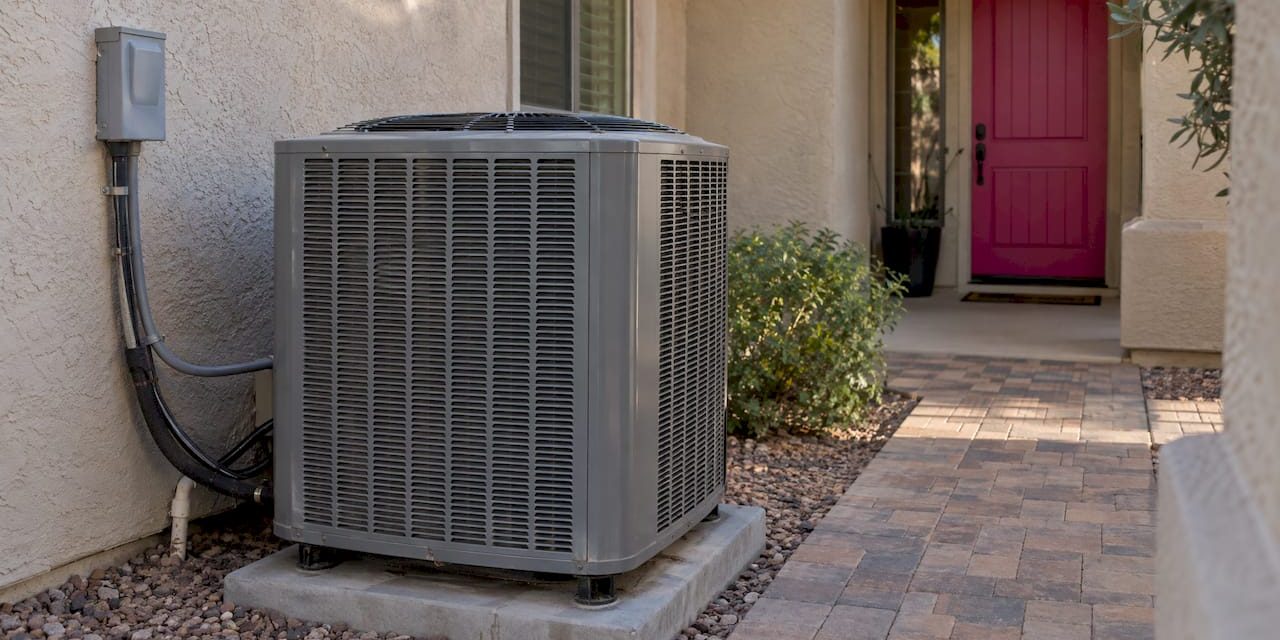
- Proper placement. Outdoor units need airflow and, ideally, shade. See condenser clearance and sun exposure.
Manufacturers publish figures for their top models, so treat a brochure number as the best case for that exact matched system, not a promise for every installation.
Keeping efficiency over the years
A rating describes the equipment when it is clean and well installed. Maintenance keeps it that way. NYSERDA advises that for ducted heat pumps you replace or clean filters routinely, check the evaporator coil yearly and have a qualified contractor service the unit once a year. For ductless mini-splits, clean or change filters monthly during peak use, with a contractor service at least yearly.
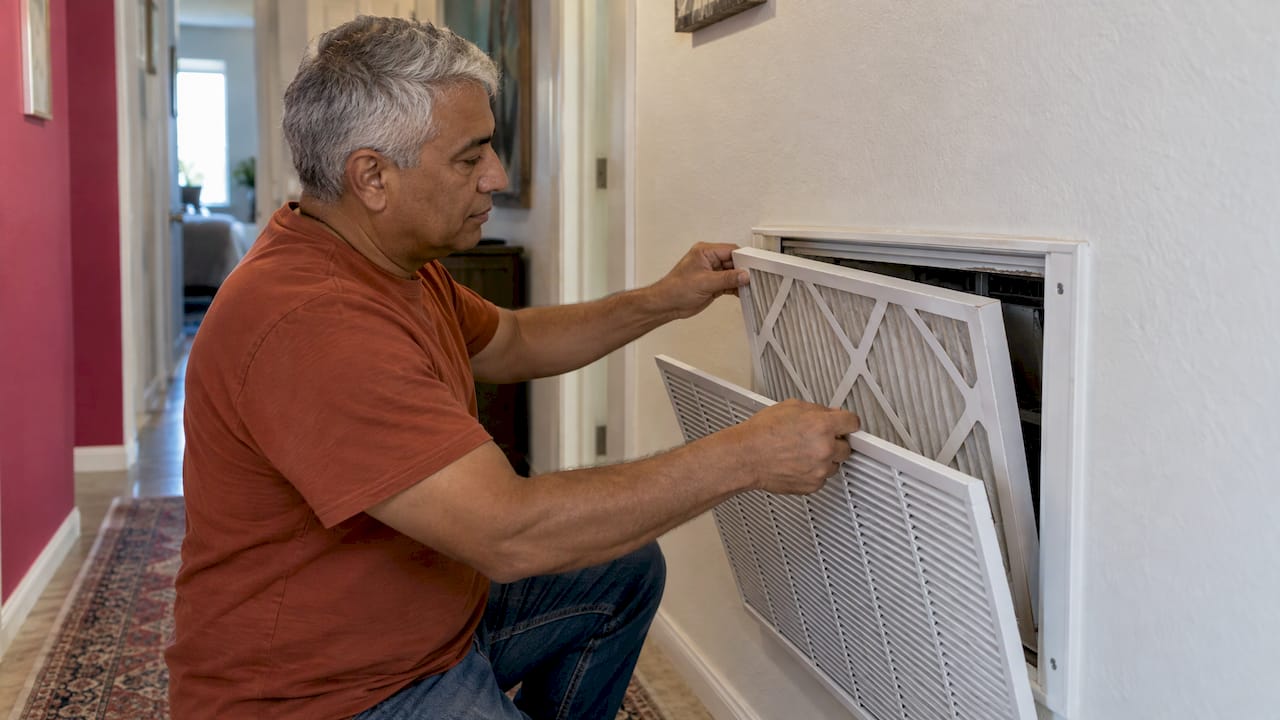
In a desert with dust and long cooling seasons, filters clog fast. Follow our HVAC maintenance schedule and AC maintenance checklist. If performance slips, our list of ten signs your AC needs maintenance is a good first stop.
Our perspective
Most efficiency complaints we hear are not about the equipment. They are about a system that was too big, ducts that leaked, or a unit nobody serviced. A high rating is only the starting point.
That is why every technician on our team is NATE-certified and non-commissioned. Nobody here earns more by selling you a bigger or pricier system, so our recommendation follows what your house needs. For some homes that is a heat pump, for others a ductless unit for a problem room, and sometimes a repair plus duct sealing is the smarter move.
We would rather build a long relationship with you than win one install. Our Tru Comfort Advantage maintenance plans are designed to keep your system running at the efficiency you paid for, with added savings and peace of mind.
Get an honest recommendation for your home
If you are planning an upgrade in New River or the surrounding area, we install, repair and maintain air conditioners and furnaces for homes and businesses, and we handle ducts too. Start with our air conditioner installation, repair and maintenance services and tell us what you want to improve.

Already have a system and want it to last? Our Tru Comfort Advantage maintenance plans are built for that. If something has stopped working, our emergency HVAC service is available.
FAQ
Is a high-efficiency HVAC system worth it?
Often yes, especially when your current system is old or you run cooling most of the year. The Department of Energy says moving from SEER 9 to SEER 14 can cut consumption by more than 35%. Gains are smaller when replacing a newer unit, and correct sizing and ducts determine whether you see them.
What is the most energy-efficient type of HVAC system?
Heat pumps, including ductless mini-splits, are generally the most efficient because they move heat instead of generating it. NYSERDA says air source heat pumps can be two to four times as efficient as conventional systems. Your home layout and climate decide which type fits best.
What is the difference between SEER2 and EER2?
SEER2 averages cooling efficiency over a whole season of varying temperatures. EER2 measures it at one hot condition: 95°F outside and 80°F inside. In a hot climate, looking at both gives you a fuller picture.
Does the thermostat setting affect efficiency?
Yes. The Department of Energy suggests setting your thermostat to 78°F in summer when you are away, and says each degree of winter setback over eight hours saves about 1% on heating. A programmable thermostat makes this automatic.
Sources
- Guide to Home Heating and Cooling, U.S. Department of Energy
- Clean Heating and Cooling, ENERGY STAR
- Tax Credit Definitions, ENERGY STAR
- Heating & Cooling Systems, NYSERDA
- Ductless (Mini-Split) Heat Pumps, Building America Solution Center
- 3 ways heat pumps save you money, Rewiring America
- Learn HVAC Metrics, Trane
- HVAC replacement cost guide