Avoid CO Danger: Emergency HVAC Checklist for Homeowners, By a Tech
If you smell gas, hear a carbon monoxide alarm, or see smoke or sparks, evacuate the house and call 911 immediately, no exceptions. If none of those signs are present, shut the HVAC system off if you notice burning smells or visible damage, then run a few safe checks on your thermostat, breaker, and filter. Call an emergency HVAC technician when danger, extreme indoor temperatures, flooding, or pipe damage is on the table.
TL;DR:
- Most HVAC issues are not emergencies unless there are signs of gas leaks, smoke, sparks, or a carbon monoxide alarm, which require immediate evacuation and professional help.
- Conduct safe checks such as verifying thermostat settings, inspecting breakers, and replacing dirty filters only after ruling out life-safety threats, and avoid DIY repairs involving refrigerant or electrical components.
- Use fans, cold packs, or space heaters to manage indoor temperatures during system outages, and shut off water or power for leaks while waiting for professional repair.
- Emergency HVAC calls often cost an extra $150 to $300, so confirm whether your situation involves danger, extreme temperatures, or pipe risks before calling after-hours service.
- Implement seasonal maintenance, like filter changes and vent inspections, to prevent common failures and keep emergency issues from occurring unexpectedly.
Table of Contents
- Is This Really an HVAC Emergency?
- What to Do First: Gas, Carbon Monoxide, Smoke, or Fire
- Safe Checks Before You Call for Help
- How to Stay Comfortable and Limit Damage While You Wait
- When to Call Emergency HVAC Now vs. Waiting
- Preventing the Next Emergency: A Homeowner’s Checklist
- Keeping a Level Head When the System Fails
- Emergency Service and Maintenance Plans From Tru Comfort
- Sources
- FAQ
Is This Really an HVAC Emergency?
Not every broken system needs a 2 a.m. phone call. Most HVAC breakdowns fall into “annoying, but survivable until morning,” and HVACDatabase notes that life-safety issues, extreme temperature risk, or frozen-pipe threats are the real triggers for an after-hours call. Everything else can usually wait.
Three categories decide it:
- Life-safety: gas odor, carbon monoxide alarm, visible smoke, sparking, or a burning smell from equipment.
- Health-risk: indoor temperatures climbing above 90 to 95°F with infants, older adults, or anyone with a chronic illness in the house, or dropping low enough that pipes and people are both at risk.
- Property-risk: a fast water leak, a frozen or burst pipe, or outdoor temperatures below freezing with no heat running.
Run through those three in order. If none apply, you’re dealing with a comfort problem, not an emergency, and normal business hours are fine.
What to Do First: Gas, Carbon Monoxide, Smoke, or Fire
Skip the troubleshooting. If any of these signs show up, get everyone out of the house first and figure out the cause later.
- Evacuate immediately if a CO alarm sounds, you smell gas, or you see smoke or flames.
- Call 911 from outside the home, then call your gas utility if the smell is gas-related.
- Do not restart the furnace, water heater, or any fuel-burning appliance until a professional inspects it.
- Shut off the main gas valve only if you can do so safely and already know its location. Don’t go looking for it during an active emergency.
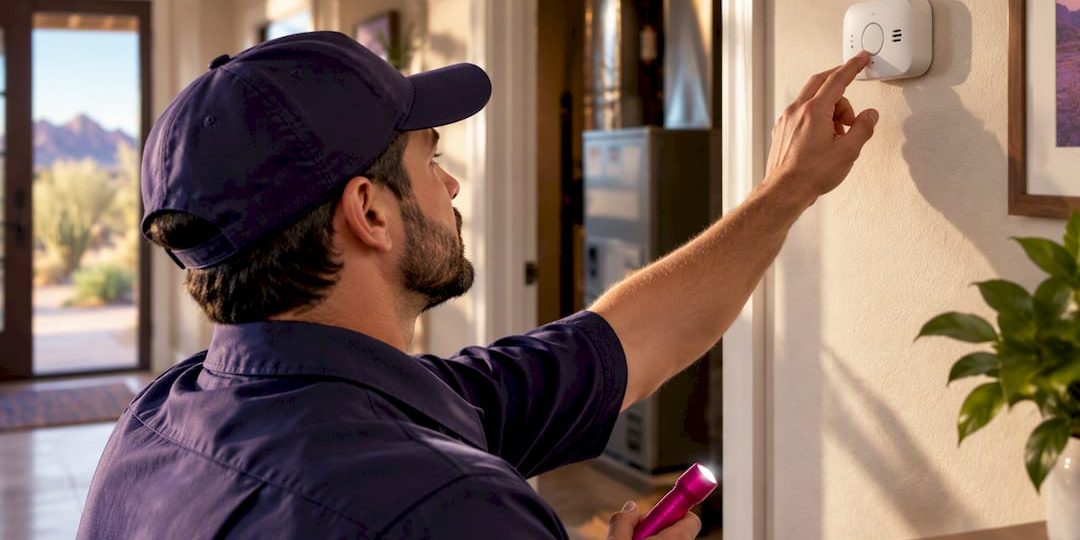
Carbon monoxide has no smell and no color, which is exactly why the alarm matters more than your nose. The CDC points out that headache, dizziness, nausea, confusion, or unusual fatigue can all signal exposure, and any of those symptoms alongside an active alarm means you leave now and call 911 from a safe location. Severe exposure sometimes needs hospital oxygen therapy and a follow-up neurological exam, according to CDC clinical guidance, so don’t shrug off symptoms just because they fade once you’re outside. Test your CO detector batteries twice a year and make sure at least one unit sits near sleeping areas.
Safe Checks Before You Call for Help
Once you’ve ruled out life-safety issues, a handful of checks can solve the problem without a service call at all.
- Thermostat: confirm it’s set to the right mode and temperature, and swap the batteries if the screen is blank.
- Breaker panel: look for a tripped breaker on the HVAC circuit. Reset it once. If it trips again immediately, stop and call a technician.
- Filter: a clogged filter chokes airflow and can freeze the coil or overheat the furnace. Swap it if it’s visibly gray or dusty.
- Vents and returns: make sure furniture or rugs aren’t blocking supply and return grilles.
- Condensate pan: check for standing water or obvious clogs near the indoor unit.
- Outdoor unit: clear leaves, dirt, or ice away from the condenser, but don’t open panels or touch electrical components.
If your AC still isn’t cooling after these checks, our homeowner fix guide walks through a few more diagnostic steps you can try safely.
Pro Tip: Anything involving refrigerant lines, gas valves, or the electrical contactor inside the unit is not a DIY zone. Technicians test line voltage, control voltage, and voltage to individual components in a specific sequence to isolate a fault, and guessing your way through that with a screwdriver usually just adds a part-replacement bill on top of the original problem.
How to Stay Comfortable and Limit Damage While You Wait
For heat with no AC: use fans to move air, apply cold packs to your wrists and neck, drink water, and if the house climbs past 90°F with vulnerable occupants inside, head to a cooling center. Ready is blunt about this: fans alone don’t prevent heat illness once temperatures get extreme, and relocating is safer than waiting it out.
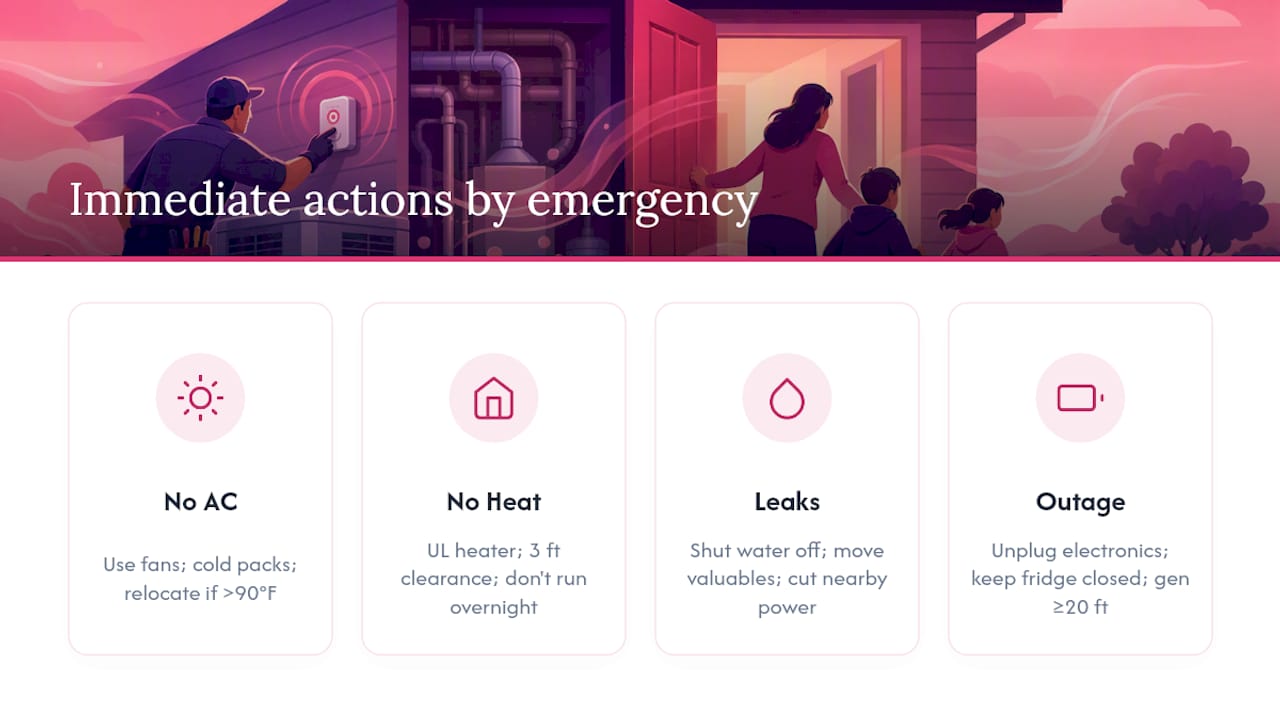
For cold with no heat: use a UL-listed space heater with auto shutoff, keep it at least 3 feet from anything flammable, layer clothing, and close off unused rooms to concentrate warmth. Never leave a space heater running unattended overnight.
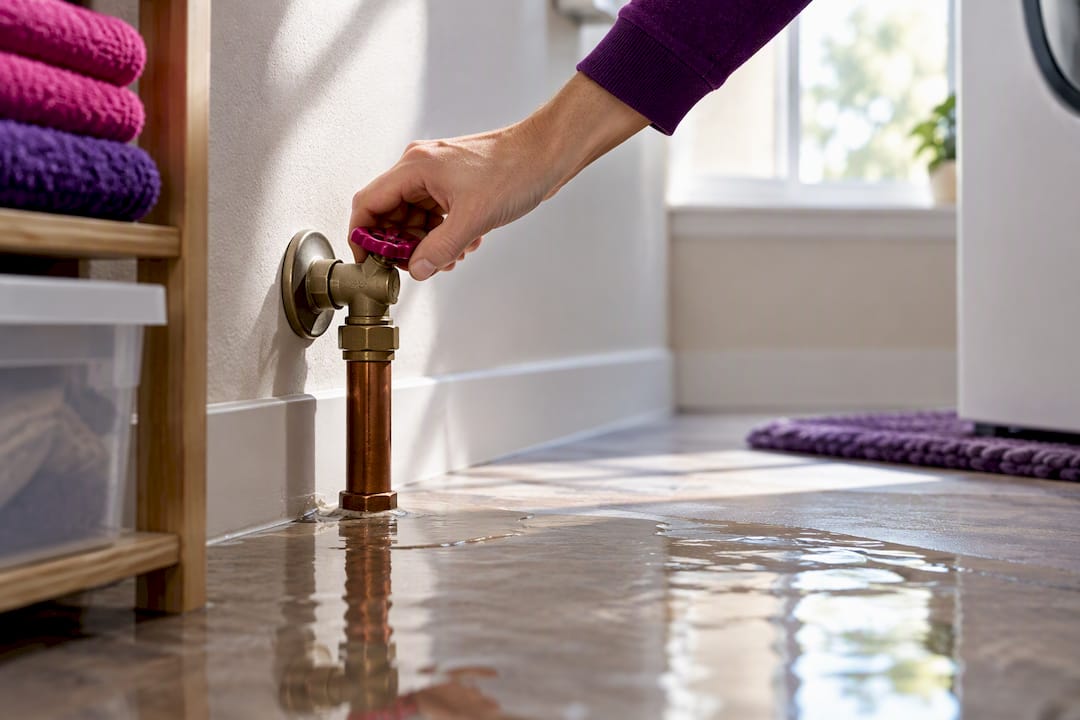
For leaks or flooding: shut off water to the affected area, move valuables out of the path, and cut power to any circuit near standing water before it reaches an outlet.
For power outages: unplug sensitive electronics to avoid surge damage when power returns, keep the refrigerator closed, and if you run a generator, keep it outdoors and at least 20 feet from windows or doors.
When to Call Emergency HVAC Now vs. Waiting
Some situations justify the after-hours fee. Others don’t, and knowing the difference saves you real money.
| Situation | Action |
|---|---|
| Gas smell, CO alarm, smoke, or fire | Call 911 first, then a technician |
| Indoor temp above 90 to 95°F with vulnerable occupants | Call emergency HVAC now |
| Freezing outdoor temps with no heat (pipe risk) | Call emergency HVAC now |
| System making noise but house is comfortable | Wait for normal business hours |
Emergency surcharges typically add $150 to $300 or more onto a standard service call, depending on the time of day and how far the technician has to travel. Before you agree to anything over the phone, ask about the emergency fee upfront, confirm the technician is licensed and insured, request a written estimate before work starts, and ask whether they can source parts on the spot or if you’ll be waiting on a special order. If you’re already on a maintenance plan, ask whether that status affects the emergency fee or scheduling priority.
Preventing the Next Emergency: A Homeowner’s Checklist
Most 2 a.m. HVAC failures trace back to something that could’ve been caught during a routine visit. A few habits go a long way:
- Replace your filter every 1 to 3 months, more often if you have pets.
- Schedule a pre-season tune-up each spring and fall, before the extreme temperatures hit.
- Test CO detector batteries twice a year and inspect vent flues for blockage or corrosion.
- Keep at least 2 feet of clearance around the outdoor condenser unit.
Our AC maintenance checklist covers the seasonal details in more depth. Tru Comfort’s NATE-certified technicians build these checks into every maintenance plan visit, so small issues get flagged before they turn into a weekend emergency.
Pro Tip: Print your emergency shutoff locations, breaker labels, and filter size on an index card and tape it inside a hall closet. When something goes wrong at 11 p.m., you don’t want to be hunting for that information in the dark.
Keeping a Level Head When the System Fails
The biggest mistake I see homeowners make isn’t a wrong repair. It’s panic that skips straight past the safety checks and either does too much (poking around a gas valve nobody actually knows how to shut off) or too little (ignoring a CO alarm because “it’s probably just dust”). Slow down, run the decision rules, and remember that most of these situations are preventable with a filter change and a seasonal tune-up somebody actually kept on the calendar.
Emergency Service and Maintenance Plans From Tru Comfort
Tru Comfort gives you something a lot of after-hours HVAC calls don’t: a technician who isn’t working on commission, so the advice you get on your doorstep is about your system, not a sales quota. Every technician is NATE-certified, and the company’s Emergency HVAC Services are built around getting to New River, AZ area homeowners quickly when a gas smell, a dead furnace in a cold snap, or a flooded closet can’t wait until Monday.

If tonight’s problem turns out to be a one-time fluke, the smarter long-term move is preventing the next one. The Tru Comfort Advantage maintenance plans build in the seasonal tune-ups, filter reminders, and inspections that catch small failures before they become 2 a.m. calls. If your AC or furnace needs an urgent look right now, check air conditioner repair options or furnace repair services and get a technician on the way today. If the emergency has spread beyond your HVAC system, such as roof or attic water damage, our partners at Budget Roofing and Siding handle that side of the repair.
Sources
These come from public-safety and clinical authorities, not marketing material:
This article is general information, not a substitute for advice from a qualified doctor. Consult a qualified healthcare professional about your own circumstances before acting on anything here.
FAQ
What Qualifies as an HVAC Emergency?
A true HVAC emergency involves a life-safety threat like gas, carbon monoxide, smoke, or fire, or a situation where extreme indoor temperatures put vulnerable occupants at risk. Frozen or burst pipes from a lost heat source also count. A noisy system in an otherwise comfortable home usually doesn’t.
What Is the HVAC $5,000 Rule?
Some technicians use a rough guideline to decide between repair and replacement based on multiplying the repair cost by the age of the unit in years, with replacement often favored if the result is high. It’s a decision aid, not a fixed industry standard, so ask your technician how it applies to your specific system.
How Much Does Emergency HVAC Repair Cost?
Emergency HVAC repair usually costs more than a standard daytime visit because of after-hours surcharges, which commonly add $150 to $300 or more depending on time and location. Ask for the emergency fee and a written estimate before any work begins. Tru Comfort’s exact rates for Emergency HVAC Services are available directly from the company.
What Is the 3 Minute Rule for AC?
The 3 minute rule refers to giving a compressor about three minutes to reset after it shuts off, whether from a power blip or a thermostat adjustment, before restarting it. Restarting too quickly can strain the compressor and trip a breaker or safety switch. If the unit still won’t restart after a few minutes, that’s a sign to call a technician rather than keep cycling the power.