AC Freezing Up? Do This First to Avoid Real Damage
If your AC is freezing up, stop the cooling right now. Switch the thermostat to Off and set the fan to On. Most freezes trace back to restricted airflow or a refrigerant problem, and both get worse the longer the system keeps running iced over.
Here’s why the rush matters: a frozen air conditioner won’t fix itself, and forcing it to keep cooling while iced up puts serious strain on the compressor, which is the most expensive part in the whole system.
- Turn the thermostat’s mode to Off
- Set the fan to On (not Auto)
- Leave it running until the ice is fully melted
- Don’t touch or chip at the coil
Key Takeaways
An AC that keeps freezing almost always signals restricted airflow first and a refrigerant or mechanical fault second, and running it while frozen risks the compressor.
| Point | Details |
|---|---|
| Act immediately | Turn cooling off and set the fan to On the moment you spot ice, before running the system further. |
| Check airflow first | Dirty filters, closed vents, and blocked returns cause most freeze-ups and are the easiest to rule out. |
| Never chip ice | Scraping or forcing ice off risks puncturing coil fins or refrigerant lines. |
| Repeat freezing means call a pro | Ice returning after a proper thaw and filter change points to a refrigerant leak or mechanical failure. |
| Trucomfortaz diagnoses before repairing | NATE-certified technicians run a leak search and airflow check instead of just topping off refrigerant. |
Table of Contents
- How Do You Know Your AC Is Actually Frozen?
- Safe Steps to Thaw Your AC and Limit Damage
- What’s Actually Causing the Ice Buildup?
- When Does Freezing Mean You Need a Technician?
- Maintenance Habits That Stop Freezing Before It Starts
- What Should a Real Service Visit Look Like?
- Freezing Usually Means Airflow First, Refrigerant Second
- Get a Straight Answer From Tru Comfort Instead of a Guess
- Sources
How Do You Know Your AC Is Actually Frozen?
You don’t always need to pull off a panel to confirm it. A few signs give it away fast, and catching them early saves you a bigger repair bill later.
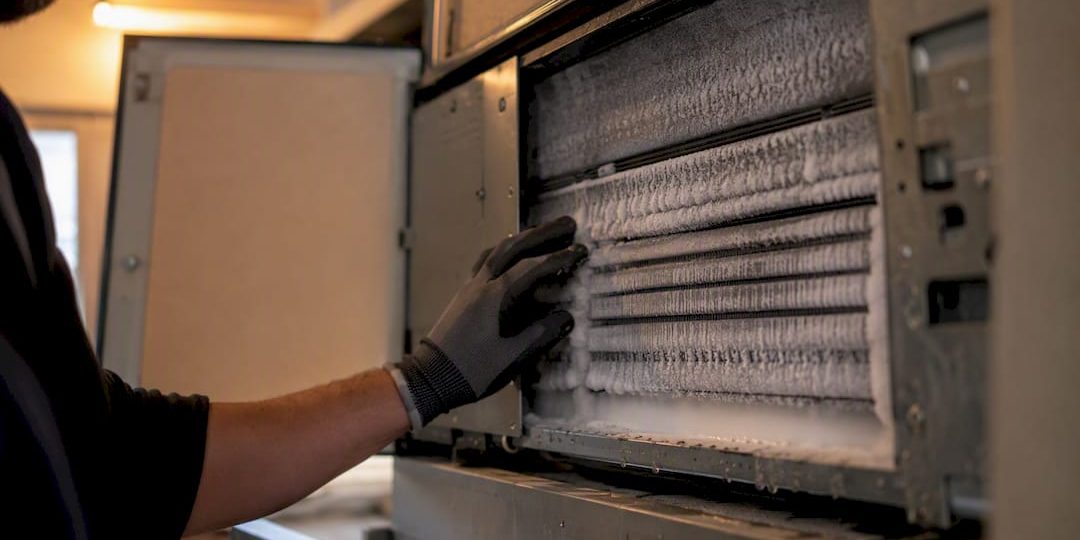
Look for visible ice or frost coating the indoor coil, the fatter of the two copper lines near the outdoor unit, or even the outdoor unit itself in humid conditions. Registers blowing weak or barely-cool air, even though the system sounds like it’s running hard, is another giveaway. So is a puddle forming under the air handler, either from the coil dripping as it thaws or from a clogged drain backing up.
Pay attention to runtime, too. A system that never seems to shut off and never quite hits the temperature on the thermostat is often already struggling against ice. Hissing or bubbling sounds near the indoor unit or refrigerant lines are worth noting separately. That’s not an airflow issue. That points toward a refrigerant leak, which is a different repair conversation entirely.
Safe Steps to Thaw Your AC and Limit Damage
Once you’ve confirmed ice, work through these steps in order. Skipping ahead, especially to “just add refrigerant,” is how a $150 filter problem turns into a $1,500 compressor problem.
- Turn the thermostat to Off, kill the cooling call entirely.
- Set the fan setting to On so warm room air moves across the coil and speeds up the thaw.
- Place towels or a shallow pan under the air handler to catch melt water.
- Check the condensate drain line for a visible clog or standing water, since a backed-up drain often overflows once the ice starts melting.
- Pull the air filter and inspect it. If it’s gray, matted, or you can’t see light through it, replace it.
- Walk the house and open every supply and return register, including ones in rooms you don’t use often.
- Give the system enough time to fully clear before restarting cooling, usually a few hours depending on how much ice built up.
Never scrape or chip the ice off yourself. It feels like the faster fix, but it risks puncturing the coil fins or refrigerant lines, turning a maintenance issue into a repair bill. Once the coil is visibly clear and dry, restart cooling and watch the vents for the next hour. If cold air returns and stays steady, you likely caught an airflow issue in time.
Pro Tip: Don’t restart cooling the moment the ice disappears. Give it another 30 to 60 minutes on fan mode alone. Residual moisture on the coil can refreeze almost immediately if you jump straight back to cooling.
What’s Actually Causing the Ice Buildup?
Freezing happens for one of two reasons: not enough warm air is moving across the coil, or the refrigerant inside the coil isn’t behaving the way it should. Everything else is a variation on those two problems.
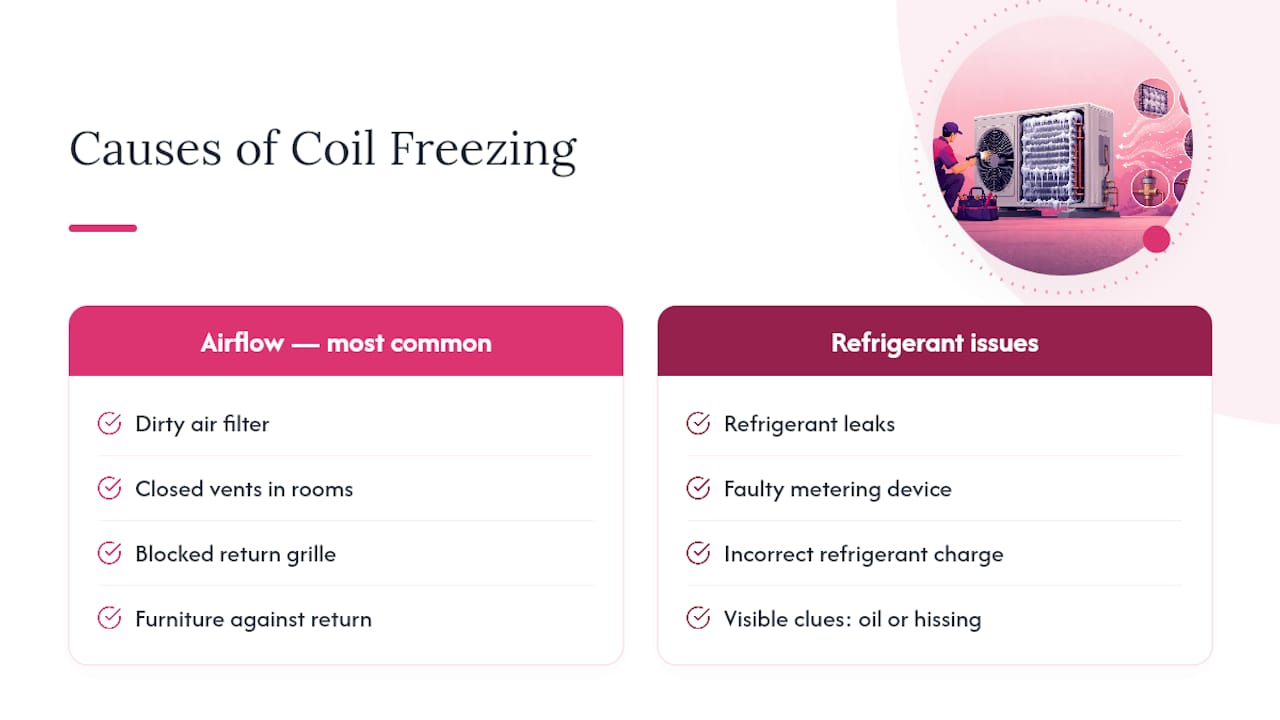
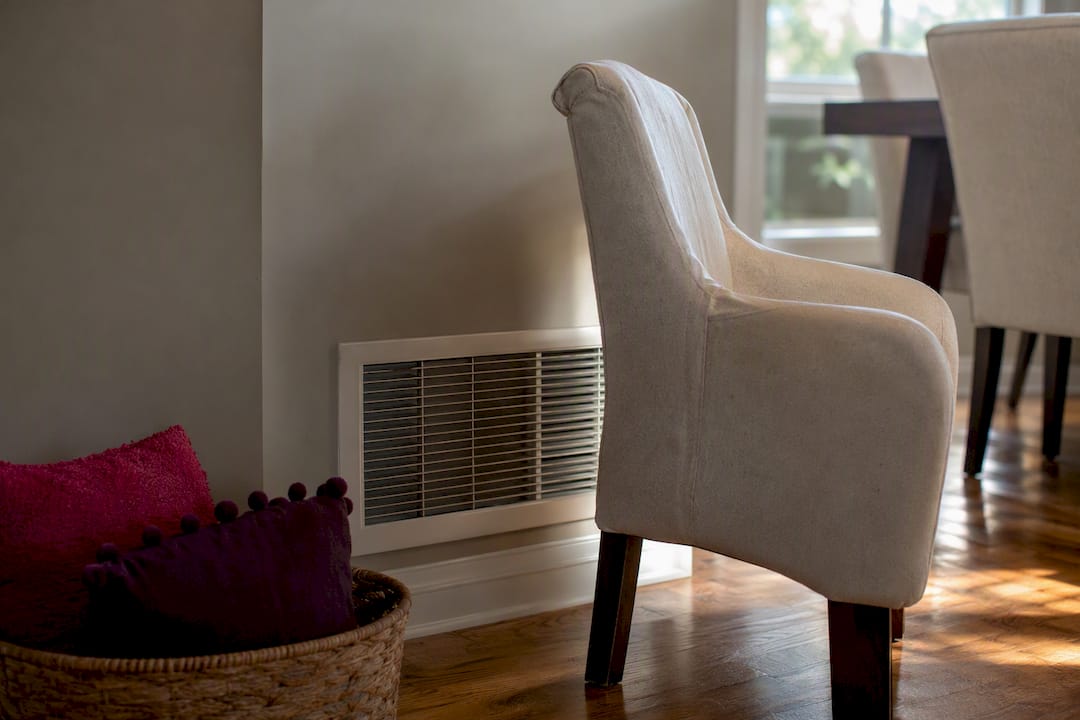
Airflow restriction is the most common cause by a wide margin. A dirty filter is the usual suspect, but closed vents in unused rooms cause the same effect. Closing vents to save energy actually backfires by building excess pressure in the ductwork and starving the coil of airflow. Blocked return grilles, furniture pushed against a return, or crushed flex duct behind a wall all choke off the same air supply.
A dirty evaporator coil works almost like a dirty filter, except you can’t see it or fix it yourself. Dust and grime coat the coil fins and act as insulation, blocking the heat transfer that’s supposed to happen there. Once buildup reaches that point, it usually needs a coil cleaning that goes past what a homeowner can safely reach.
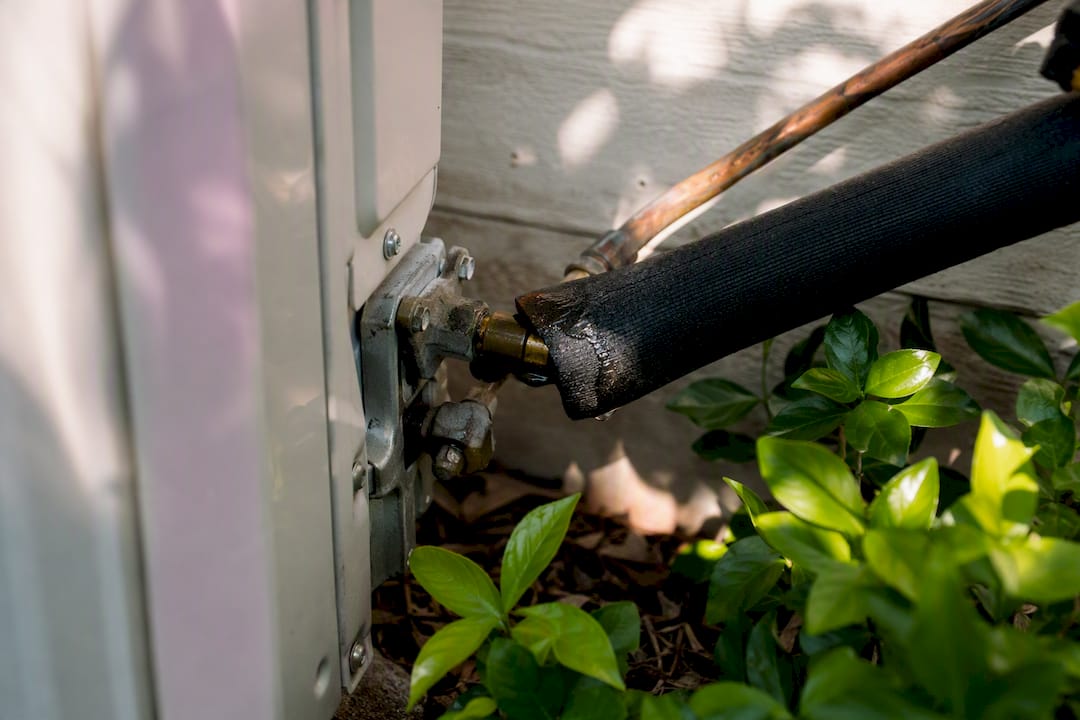
Refrigerant leaks or low charge are the cause you can’t fix with a filter change. Ice forms when refrigerant isn’t being metered correctly through the coil, whether that’s from a leak, a failing metering device, or the wrong charge from a previous service call. Oily residue near fittings or a hissing sound are the visible clues, but confirming and fixing a leak requires a certified technician with proper gauges.
Blower motors, capacitors, and electrical faults reduce airflow the same way a dirty filter does, just from the inside. A weak or failing blower moves less air across the coil even with a spotless filter and open vents. This is diagnostic territory for a technician, not a DIY project, since it involves testing electrical components under load.
If your system keeps cycling on and off without settling, that pattern often overlaps with the same root causes behind freezing.
When Does Freezing Mean You Need a Technician?
Some freeze-ups are a one-time fluke from a dirty filter. Others are a warning that something mechanical is failing. Here’s how to tell which one you’re dealing with.
Call for professional service if any of these apply:
- Ice comes back within a day or two of thawing, even after you’ve replaced the filter and opened every vent
- You see oily residue on refrigerant line fittings or hear hissing near the indoor or outdoor unit
- The outdoor fan isn’t spinning when the system calls for cooling
- Breakers keep tripping when the AC tries to start
- Refrigerant lines themselves feel frozen or heavily frosted, not just the coil
Most freeze-ups trace back to airflow, but repeat icing usually points to a refrigerant leak, and that kind of repair runs from a few hundred dollars up to well over a thousand depending on what’s leaking and how hard it is to reach.
Before you agree to any repair, ask the technician these questions:
- Are you EPA Section 608 certified to handle refrigerant?
- Will you run a leak search before adding any refrigerant?
- Can you show subcooling and superheat readings to confirm proper charge?
- Do you carry proof of insurance?
Be wary of anyone who offers to “top off” refrigerant without first finding the leak. A technician should locate and confirm proper charge with actual measurements, not guess. Adding refrigerant to a system with a blocked metering device can cause liquid slugging, which can wreck a compressor in one cycle.
Maintenance Habits That Stop Freezing Before It Starts
Prevention here isn’t complicated, but it does need to be consistent. Most of the freeze-ups technicians get called out for trace back to a step that got skipped for a season or two.
Check your filter monthly and replace it every 60 to 90 days, more often if you have pets, run the system constantly through an Arizona summer, or live somewhere dusty. A MERV 8 to 11 filter balances filtration with airflow, since anything much denser can actually restrict the air your system needs.
Book an annual spring tune-up before cooling season ramps up. A real tune-up covers coil inspection and cleaning, a refrigerant level check, blower inspection, and clearing the condensate drain, the same preventive maintenance the Department of Energy recommends for keeping a central AC running efficiently.
- Keep the outdoor unit clear of leaves, dirt, and at least two feet of shrubs or debris
- Watch indoor humidity, since very high humidity paired with a slightly undersized system raises freeze risk
- A smart thermostat that tracks runtime can flag unusually long cycles before you ever see ice
- If your system runs on R-22 refrigerant, ask about replacement options, since that refrigerant is being phased out and leaks get expensive to fix
Pro Tip: Set a phone reminder for filter changes tied to a date you’ll actually remember, like the first of the month, not “whenever it looks dirty.” Filters look fine on the surface days before they start restricting airflow enough to freeze a coil.
What Should a Real Service Visit Look Like?
Once a technician gets involved, the visit should go past “add refrigerant and leave.” Certified technicians typically run a digital leak search, inspect the blower wheel for buildup, and access the coil directly rather than guessing from readings alone. That level of digging is the difference between fixing the actual cause and buying yourself another freeze-up in a few weeks.
A trustworthy repair report should list what was tested, what was found, and why the recommended fix addresses that specific cause. Fair pricing usually reflects diagnostic time actually spent, not a flat “recharge fee” quoted before anyone has opened the unit. That standard is why NATE-certified technicians matter more than a business card that just says “HVAC repair.”
Freezing Usually Means Airflow First, Refrigerant Second
Most AC freeze-ups start as a simple airflow problem, but ignoring one turns it into an expensive refrigerant or compressor repair.
Conventional advice online tends to jump straight to “check your refrigerant,” which sends homeowners chasing the least likely cause first. Airflow problems, a dirty filter, closed vents, a blower losing strength, cause the overwhelming majority of freeze-ups technicians actually diagnose. Refrigerant issues are real, but they’re the second question, not the first.
What gets underrated is the vetting step. Plenty of freeze-ups get “fixed” with a refrigerant top-off that never addresses why the charge was low in the first place. That’s not a repair. It’s a delay until the same call happens again next summer, probably during the hottest week of the year.
If you take one thing from this: don’t let anyone touch your refrigerant charge without first hearing them explain how they’re finding the leak. That question alone filters out a lot of bad service calls before they start.
Get a Straight Answer From Tru Comfort Instead of a Guess
Trucomfortaz is the alternative to a guessing game when your AC keeps icing over. Instead of a quick refrigerant top-off that masks the real problem, our NATE-certified technicians run an actual leak search and check airflow, coil condition, and blower performance before recommending anything.

We serve homeowners in New River and the surrounding area, and we don’t work on commission, so there’s no incentive to sell you a part or a recharge you don’t need. If your system has frozen more than once this season, or you just want a proper diagnosis instead of a guess, schedule a service visit and get a technician who explains exactly what’s wrong before touching anything.
Sources
For deeper technical background, see Carrier, Trane, or Inspectapedia.
- Will a frozen AC fix itself? — Carrier
- What to do when your AC freezes up — HVACDatabase
- Cooling coil frost & ice formation — Inspectapedia
- Why does my AC keep freezing? — Bryant