
Are Inverter Air Conditioners Worth the Extra Cost?
Inverter air conditioners are typically the better choice for main living spaces because they cut energy use, run quieter, and hold temperature more steadily, though they cost more up front. The Department of Energy’s purchasing guidance confirms higher-efficiency units reduce energy use, and Consumer Reports has documented savings in the range of $18 to $21 a year in one comparison, modest annually but real over a 12 to 15 year lifespan. Here’s what the rest of this guide walks through:
- How the variable-speed compressor actually works
- Where the energy and comfort gains come from, in dollars and decibels
- The downsides nobody puts in the brochure
- A simple payback checklist before you buy
- What a proper install and maintenance plan should include
Compare SEER2 ratings side by side, ask for a Manual J load calculation, and get quotes from more than one licensed installer before deciding.
Key Takeaways
Inverter air conditioners earn back their higher price mainly in rooms run long hours daily, where lower energy use, quieter operation, and steadier temperatures outweigh the upfront premium.
| Point | Details |
|---|---|
| Core trade-off | Inverter units cost more upfront but cut energy use and run quieter than fixed-speed models. |
| Savings are real but modest | Consumer Reports cites roughly $18 to $21 in annual savings in one comparison, adding up over a decade-plus lifespan. |
| Runtime decides the payback | Rooms cooled 8+ hours daily recoup the premium fastest; occasional-use rooms may not. |
| Electronics need protection | Surge protection and a trained technician reduce the risk tied to sensitive inverter control boards. |
| Get sizing right first | Trucomfortaz technicians run a Manual J load calculation and check wiring before recommending an inverter or fixed-speed system. |
Table of Contents
- How Do Inverter ACs Differ From Standard AC Units?
- What Are the Real Benefits of an Inverter AC?
- What Are the Downsides of Inverter Air Conditioners?
- When Is an Inverter AC Actually Worth the Higher Price?
- What Should Installation and Maintenance Include?
- What Should You Confirm at Install Time?
- Is the Inverter Premium Actually the Right Question?
- Get an Inverter AC Installed the Right Way
- Sources
How Do Inverter ACs Differ From Standard AC Units?
A standard, fixed-speed air conditioner runs at one speed. It blasts cold air until the thermostat is satisfied, then shuts off completely, then kicks back on at full power once the room drifts a couple degrees warm. That on/off cycling is where a lot of wasted energy hides.
An inverter AC uses a variable-speed compressor that adjusts its output continuously, the same way a dimmer switch adjusts a light instead of just flipping it on or off. Instead of stopping, the compressor slows down once the room hits target temperature and holds a steady, low-level output to maintain it.
Three things make that matter:
- Startup draw disappears. Every time a fixed-speed compressor restarts, it pulls a spike of power to get moving again. An inverter compressor rarely fully stops, so it skips that repeated surge.
- Modulation replaces cycling. Manufacturer technical explainers show the compressor ramping between low and high output rather than slamming between off and full blast.
- Efficiency labels reflect it. SEER2 ratings, the current federal efficiency standard for cooling equipment, tend to run higher on inverter models precisely because they avoid those start-stop losses.
What Are the Real Benefits of an Inverter AC?
The efficiency gain is the headline, but it isn’t the only reason people upgrade. Consumer Reports testing found inverter compressors are generally quieter and more energy-efficient, and inverter units often land at the top of their comfort and performance ratings.
Pro Tip: If you’re comparing two units with similar SEER2 numbers, check the sound rating in decibels too, an inverter model that’s only slightly more efficient but ten decibels quieter is often the better buy for a bedroom.
The dollar math: Consumer Reports cites annual savings around $18 to $21 in one DOE-based comparison. That’s not life-changing in year one, but across a decade-plus lifespan on a unit that runs most of the day, it adds up. Industry comparisons go further, estimating energy reductions in the range of 30% to 50% in continuous-use scenarios, depending heavily on climate and how many hours the unit actually runs.
Here’s where the benefits show up in daily life:
- Steadier temperature. Because the compressor modulates instead of shutting off, rooms don’t swing a few degrees warm before the system kicks back in. You feel less temperature drift.
- Quieter operation. No full-power restart means no loud compressor kick. This matters most in bedrooms and home offices, where that startup noise is the thing that wakes you up or interrupts a call.
- Better dehumidification. Running longer at lower output pulls more moisture out of the air over time than short bursts at full blast, which is part of why humid climates see a comfort bump beyond just temperature.
- Gentler wear on the compressor. Fewer hard starts and stops generally means less mechanical stress, which can support a longer working life for the unit, though that benefit depends on maintenance too.
Falling prices help the math as well. Consumer Reports has noted that many top-rated window units in its test pool now use inverter compressors, meaning the price gap between inverter and non-inverter models keeps narrowing as the technology spreads.
What Are the Downsides of Inverter Air Conditioners?
None of this is free. Inverter systems carry real trade-offs that deserve equal attention before you sign a contract.
- Higher purchase price. The variable-speed compressor and control electronics cost more to manufacture, and that shows up on the sticker.
- Installation can cost more too. Some inverter systems need dedicated wiring or panel work that a straightforward fixed-speed swap wouldn’t require.
- Electronics are sensitive to power quality. Inverter control boards are more vulnerable to voltage spikes than a simple fixed-speed motor, and installer guidance recommends surge protection or a voltage check as part of the install.
- Repairs need trained hands. A fixed-speed compressor is mechanically simple enough that many general HVAC techs can service it. Inverter boards and variable-speed drives need someone who actually understands the electronics, and parts availability can lag on less common brands.
Pro Tip: Ask your installer directly whether they stock or can quickly source control boards for the brand you’re buying. A great unit with a three-week parts wait during a July heat wave is not a great experience.
An inverter isn’t the obvious pick everywhere. A guest room used four weekends a year, a poorly insulated garage, or a rental you’re leaving in eighteen months rarely earns back the price premium before you move on.
When Is an Inverter AC Actually Worth the Higher Price?
Run through this before you commit to either type:
- Check your daily runtime. Rooms cooled 8 or more hours a day are where inverter savings compound fastest. Manufacturer guidance points to that same 8-hour threshold as the rough line where the premium starts paying for itself.
- Think about how long you’ll own it. A system you’ll live with for 10+ years has more time to recoup a higher upfront cost than one you’ll replace or leave behind in three.
- Weigh noise sensitivity. Bedrooms, nurseries, and home offices benefit disproportionately from the quieter cycling.
- Factor in your climate. Hot, humid regions with long cooling seasons see more total runtime hours, which is exactly where efficiency gains matter most.
Rough payback math: Take your local electricity rate, your average daily runtime, and a conservative energy-savings estimate, say 20%, on your current cooling bill. If you’re paying $150 a month to cool a main living space through a five-month season, a 20% cut is roughly $150 saved annually. Against a $400 to $800 price premium for the inverter model, that’s a payback window of roughly three to five years, well inside a typical unit’s working life.
Before buying, compare SEER2 ratings side by side, check the warranty terms specifically on the electronic components (not just the compressor), and confirm your installer is licensed and experienced with inverter systems.
What Should Installation and Maintenance Include?
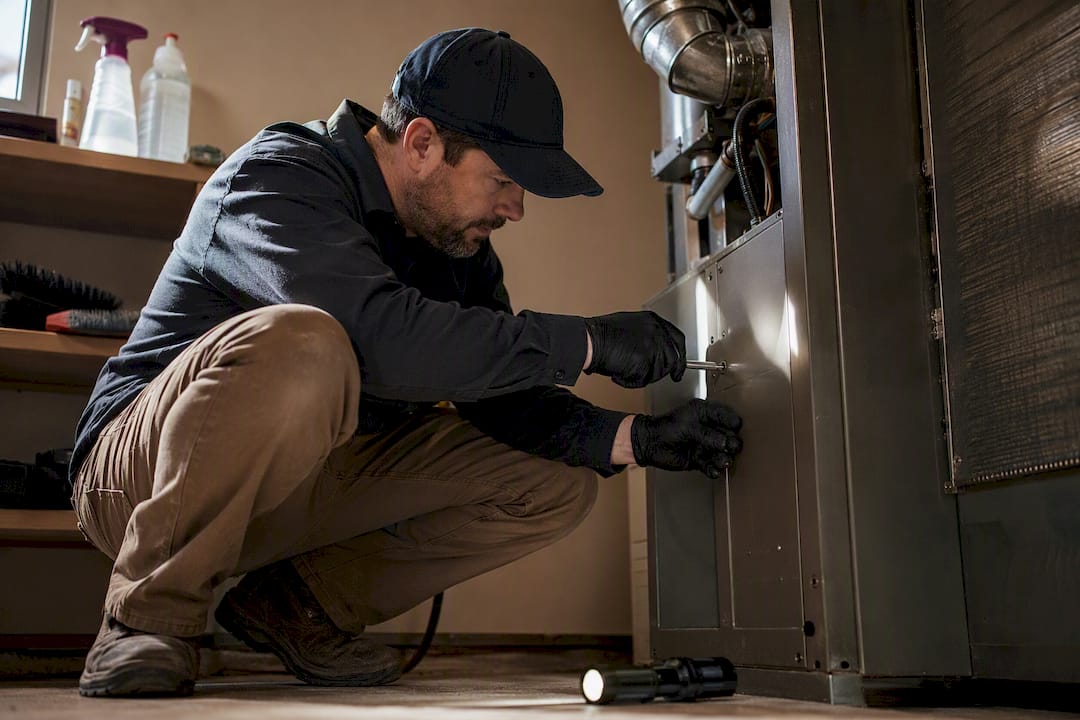
Getting the sizing right matters more with inverter systems than with fixed-speed units, because an undersized unit runs constantly rather than cycling, which erases the efficiency advantage you paid for. A proper Manual J load calculation before installation is not optional if you want the system to actually perform as advertised.
Beyond sizing, a solid install should include:
- An electrical panel check to confirm your home’s wiring supports the unit’s requirements
- Surge protection installed to shield the control board from voltage spikes
- Confirmation your installer is part of the manufacturer’s authorized service network, since some warranties require it
- A central air installation timeline discussion if you’re retrofitting existing ductwork
Routine maintenance runs on roughly the same schedule as any AC: filter changes, coil cleaning, and a seasonal check on refrigerant charge and electrical connections. Homeowners can handle filter swaps themselves, but electronics diagnostics and refrigerant work belong to a licensed technician.
What Should You Confirm at Install Time?
Before the installer leaves, walk through this list:
- Confirm the unit size matches your Manual J calculation, not just a rough estimate
- Verify surge protection is installed and the electrical panel was checked
- Get the warranty registered on the spot, including the electronics coverage terms
- Ask whether the technician is NATE-certified, since inverter electronics and warranty compliance both benefit from that level of training
Pro Tip: Schedule a pre-summer tune-up every spring and a quick winter check on electrical connections. Inverter control boards handle heat stress better when the system isn’t already straining before the hottest stretch hits.
Book your seasonal maintenance around both ends of Arizona’s temperature swings. A ten-point maintenance check before summer catches small issues before they become a mid-July emergency call.
Is the Inverter Premium Actually the Right Question?
Most buying guides frame this as a simple math problem: higher price versus annual savings, solve for payback years. That undersells what’s actually going on. The bigger issue isn’t whether you’ll save $20 a year, it’s whether the unit is sized and installed correctly in the first place. An inverter system installed without a proper load calculation will underperform a well-installed fixed-speed unit every time, premium price tag or not.
The conventional advice also glosses over electronics risk. Everyone mentions the higher purchase price; almost nobody tells buyers to ask about surge protection or confirm the installer actually stocks parts for their specific brand. That’s the gap between a system that lasts fifteen years and one limping through repairs by year six.
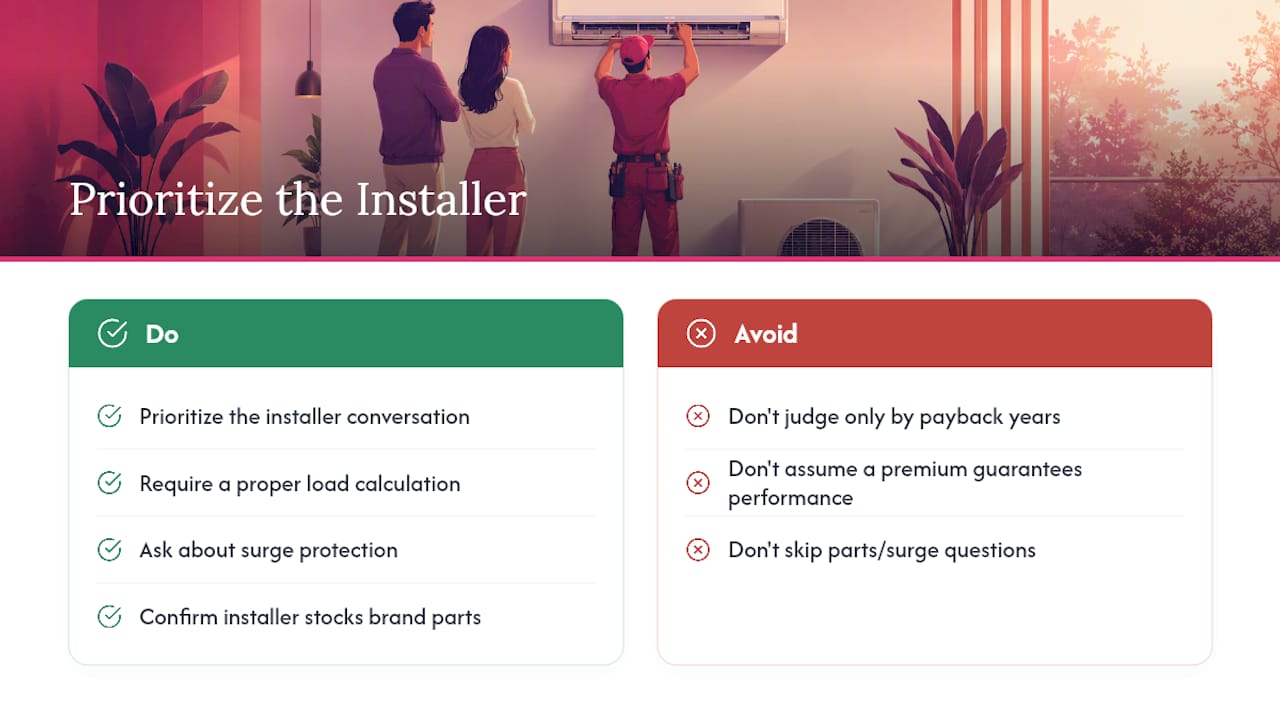
If you take one thing from this, prioritize the installer conversation over the spec sheet comparison. The best inverter unit on paper, installed poorly, loses to an average one installed right.
Get an Inverter AC Installed the Right Way
Trucomfortaz gives New River and Anthem homeowners something most inverter AC shoppers never get: a straight answer on whether the technology actually fits their home, before any money changes hands. As a family-owned HVAC provider, Trucomfortaz sends NATE-certified technicians who run a proper Manual J load calculation, check your electrical panel for surge protection needs, and give a non-commissioned recommendation, meaning the advice isn’t shaped by which unit pays the installer more.
Whether you’re weighing a full central air installation or just want a second opinion before buying, Trucomfortaz’s air conditioner services cover sizing, installation, and the ongoing maintenance an inverter system needs to actually deliver the savings on the spec sheet. Call to schedule a load calculation and get a written quote before you commit to either system type.
Sources
- U.S. Department of Energy — Purchasing energy-efficient room air conditioners
- Consumer Reports — How an inverter air conditioner can keep you cool, save you money, and maybe even help you sleep better
- HVACDatabase — Inverter AC vs Non-Inverter AC: Cost, Efficiency & Comfort Guide
- Hitachi — Fixed-speed vs inverter air conditioners: what’s the difference