
Homeowners: 8 AC Noises and What They Mean for Urgency and Cost
A buzzing AC with a fan that isn’t spinning usually points to a failing capacitor or an electrical fault, and that means shutting the system off now and calling a technician. Grinding, screeching, or repeated banging from the outdoor unit also warrants a shutdown and a professional visit. Rattling, whistling, or a single click at startup are typically safe to investigate yourself first: check the filter, look for loose panels, and note exactly where the sound comes from.
TL;DR:
- Continuous buzzing or humming typically indicates capacitor or electrical issues and requires immediate professional attention, especially if the fan isn’t spinning.
- Repeated clicking, screeching, or grinding sounds usually signal mechanical failures like worn bearings or compressor damage, necessitating quick diagnosis and repair.
- Troubleshooting should include checking for debris, loose panels, refrigerant frost, and listening at different points to identify the precise source of noise.
- DIY fixes are limited to cleaning or tightening parts; any work involving refrigerant, motors, or electrical components must be performed by licensed technicians due to safety and cost concerns.
- Regular maintenance, including filter changes and outdoor unit clearance, can prevent most common noises and extend the system’s lifespan.
Table of Contents
- What Your Noisy AC Unit Is Trying to Tell You
- When to Shut Off Your AC Immediately
- How Do You Diagnose a Noisy Air Conditioner Before Calling a Pro?
- Fixing Noisy AC Problems: What You Can Do and What Costs to Expect
- How to Stop AC Noise From Coming Back
- What a Technician Actually Listens For
- The Homeowner-First Take on AC Noise
- Book a Diagnostic Visit With Tru Comfort
- Sources
- FAQ
What Your Noisy AC Unit Is Trying to Tell You
Every sound your AC makes corresponds to a specific mechanical or electrical event, and matching the sound to the cause is the fastest way to know how worried to be. Modern outdoor units typically run around 50 to 75 decibels, so a sudden jump in volume, or a new sound layered on top of the normal hum, is usually the first sign something has changed.
- Buzzing or humming: Points to a capacitor, contactor, or other electrical component. High urgency if it’s continuous or the fan isn’t moving.
- Clicking: A single click at startup or shutdown is normal. Repeated or rapid clicking usually signals a failing relay or control board.
- Screeching or squealing: Almost always a motor bearing or belt issue. Moderate urgency, but it worsens fast if ignored.
- Grinding or metal-on-metal: Fan or motor damage. High urgency, stop the system.
- Banging or clanking: Loose parts, or, from the outdoor unit specifically, compressor damage. Worth an inspection right away.
- Hissing: A refrigerant leak. This needs a licensed technician, not a DIY fix.
- Whistling: Airflow restriction, often a closed vent or dirty filter. Low to moderate urgency.
- Rattling: Loose panels or debris in most cases. Usually the least urgent sound on this list.
Failing capacitors and contactors cause much of the buzzing homeowners report, while clanking and grinding correlate more with loose or worn internal parts. The pattern holds across most residential systems: electrical and refrigerant noises carry real urgency, while airflow and loose-part noises rarely do.
When to Shut Off Your AC Immediately
Some symptoms mean stop everything and cut power. Others just mean pay attention. Here’s how to tell the difference before you do anything else.
- Shut off the system immediately if you smell burning, see smoke or sparks, hear loud electrical buzzing, or the breaker keeps tripping.
- Cut power at the breaker before inspecting anything, and never touch a capacitor or refrigerant line yourself. Capacitors hold a lethal electrical charge and refrigerant work requires certified handling, so this step isn’t optional.
- If a quick reset seems reasonable for a plug-in or window unit, unplug it or flip the breaker, wait five minutes, then restart. If the noise returns right away, stop and call a professional.
If any of this sounds like what’s happening at your breaker panel, our guide on why your AC breaker keeps tripping walks through what repeated trips usually mean.
How Do You Diagnose a Noisy Air Conditioner Before Calling a Pro?
A short, methodical check gives your technician a head start and can save you a diagnostic visit if the fix turns out to be something simple.
- Note the exact sound, when it happens (startup, continuous, or shutdown), and whether cooling performance has dropped or lights dim when the unit kicks on.
- Stand near the indoor air handler, then the outdoor condenser, then listen at a few registers to narrow down where the sound originates.
- Look for a dirty filter, visible debris, loose panels, bent fan blades, or oil residue and frost on the refrigerant lines.
- Check the breaker and watch for dimming lights at startup, but leave any voltage testing to a licensed technician.
- Take photos or a short video and write down when the noise started and how it has changed.
This sequence mirrors what technicians actually do on a first visit: identify the sound, confirm its location, run a safe visual inspection, then decide whether it’s a DIY fix or a professional repair. Frost on the lines is worth flagging specifically. It’s one of the clearest visible signs of a refrigerant leak, and it’s easy to miss if you’re not looking for it.
Fixing Noisy AC Problems: What You Can Do and What Costs to Expect
Some fixes are safe for a homeowner with the power off. Others require a licensed technician and carry real cost, and knowing which is which saves you both money and risk.
Debris, loose panels, and dirty filters are the easiest wins. Clearing leaves and dirt from the outdoor unit, tightening visible screws, and swapping a clogged filter resolves most rattles and whistling without spending a dollar. That’s the extent of safe DIY work, though. Anything involving the capacitor, motor, refrigerant, or compressor belongs to a professional.
- Capacitor or contactor issues: A buzzing outdoor unit with a stalled fan often means the capacitor can’t kick the compressor into gear. Shut it off and don’t touch the part yourself.
- Fan motor or bearing wear: Squealing or grinding rarely gets better on its own. Power the unit off and photograph the unit for your technician rather than attempting a fix.
- Refrigerant leaks: Hissing paired with weaker cooling means refrigerant is escaping. This always needs professional leak detection and a recharge.
- Compressor damage: Loud banging or metallic grinding from the outdoor unit is often the most expensive noise on this list, and sometimes points toward full unit replacement rather than repair.
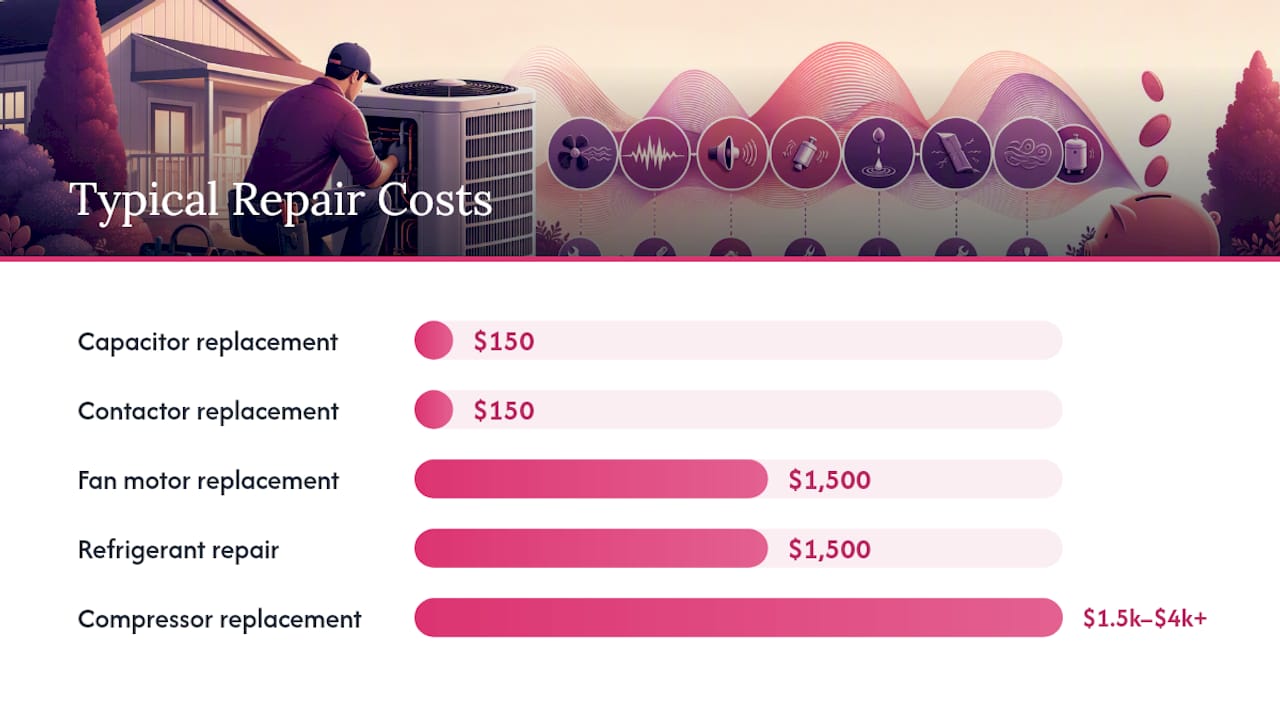
| Repair | Typical Cost Range | Urgency |
|---|---|---|
| Capacitor replacement | $150 | High if fan isn’t spinning |
| Contactor replacement | $150 | High if buzzing is continuous |
| Fan motor or bearing replacement | $1,500 | Moderate to high |
| Refrigerant leak repair and recharge | $1,500 | High, cooling loss involved |
| Compressor replacement | $1,500–$4,000+ | Urgent, often a replacement decision |
Capacitors and contactors are consistently the cheapest, most common repairs on this list, which is exactly why catching a buzz early is worth the effort. Wait too long, and a $150 contactor problem can become a compressor failure costing ten times as much. If the noise is coming from the fan specifically, our page on what it means when your AC fan won’t spin breaks down that failure mode in more detail. And if grinding or banging has you wondering whether repair still makes sense, see our breakdown of AC compressor failure signs.
How to Stop AC Noise From Coming Back
Most noise complaints trace back to neglected basics, and a short seasonal routine prevents the majority of them.
- Replace or clean your filter every 1 to 3 months, more often if you have pets or run the system constantly.
- Keep at least two feet of clearance around the outdoor unit and clear away leaves, grass clippings, and debris regularly.
- Confirm the outdoor pad is level. A tilted unit puts uneven stress on the compressor and fan motor over time.
- Schedule an annual professional tune-up that checks capacitors, contactors, refrigerant pressure, motor bearings, and mounting bolts.
Pro Tip: Write down what your system normally sounds like on a quiet day. That baseline makes it much easier to notice a new sound early, before it turns into a $1,500 repair.
A maintenance plan can provide professional seasonal inspections that catch problems before they get loud. Our AC maintenance checklist covers what such inspections include and their benefits.
What a Technician Actually Listens For
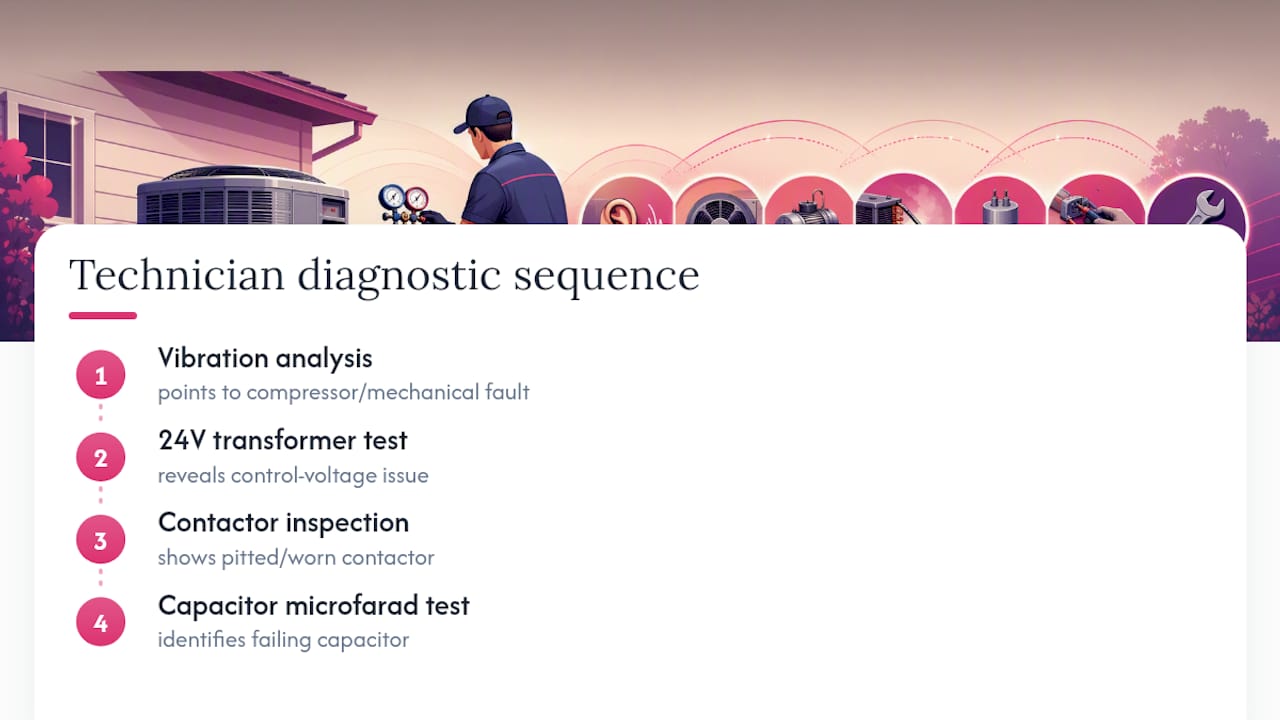
NATE-certified technicians don’t just listen, they measure. A thorough diagnostic process includes vibration analysis, checking the 24V control transformer voltage, inspecting contactor contacts for pitting, and testing the capacitor’s microfarad rating under load. That sequence isolates whether a buzz is a control-voltage issue, a worn contactor, a failing capacitor, or something deeper in the compressor.
The mistakes we see most often are homeowners trying to lubricate a sealed motor bearing, which can’t be re-lubricated reliably and usually just delays a replacement that was already needed, and running a unit that smells like burning electrical components because the noise “isn’t that bad yet.” Both turn a manageable repair into an emergency one.
The Homeowner-First Take on AC Noise
Most advice on noisy AC units walks through ten possible sounds before ever telling you what to actually do, which can leave homeowners running a failing system for another week because nobody told them plainly when to stop.
Here’s what the evidence actually supports: the sound itself is a better triage tool than most people realize. A changed sound, more than a loud one, is the real red flag, because it means something inside the system has shifted from normal wear to active failure. Conventional advice tends to treat every strange noise as equally worth a service call, which wastes money on trivial fixes and, worse, trains homeowners to tune out the sounds that matter.
Prioritize this way: rule out the loose panel and dirty filter first, because they’re free to check and common enough to matter. Then trust your ears on anything electrical or metallic. If a sound involves buzzing, grinding, or banging, the cost of waiting almost always exceeds the cost of calling someone now.
— Brett
Book a Diagnostic Visit With Tru Comfort
A noisy AC unit rarely gets quieter on its own, and guessing at the cause usually costs more than just having it checked. Professional technicians perform safety inspections, targeted electrical and refrigerant checks, and provide a written estimate before repairs start, so there is no surprise invoice.

Before your visit, jot down what the sound is, when it happens, and your unit’s model and age if you can find it on the nameplate. A few photos of the outdoor unit help too. If you’re weighing repair against replacement on an older system, our maintenance plans also give you priority scheduling and lower emergency rates, which pays off the next time something starts making noise at 9 PM in July. Ready to get it looked at? Schedule an AC diagnostic and get a straight answer instead of a guess.
Sources
- AC Making Loud Noise? Identify Sound + Cause + Fix | National HVAC Parts
- Is this normal? HVAC smells and sounds, explained – Trane
- AC Buzzing Noise When Starting? Causes, Fixes & Repair Costs
FAQ
How Do You Fix a Noisy Air Conditioner?
It depends on the sound. Loose panels, debris, and dirty filters are safe DIY fixes with the power off, but capacitor, motor, refrigerant, and compressor problems require a licensed HVAC technician.
Should I Turn Off My AC If It’s Making Noise?
Yes, if you hear grinding, repeated banging, loud electrical buzzing, or notice burning smells or sparks. Rattling or a faint whistle can usually wait for a scheduled inspection.
Why Is My AC Unit Suddenly So Loud?
A sudden increase in volume or a new sound usually means a component has started failing, most often a capacitor, contactor, or motor bearing. A changed sound is often the earliest warning sign of a developing problem.
What Does a Bad Compressor Sound Like on an AC?
A failing compressor typically produces loud banging, clanking, or metal-on-metal grinding from the outdoor unit. This is one of the higher-cost repairs, often running $1,500 to $4,000 or more, and sometimes points toward replacement rather than repair.