5 EPA-Safe Checks for Mold in Air Ducts for Homeowners: What Pros Do
If you smell a musty odor that gets stronger when the blower kicks on, or you spot dark staining around a supply register, stop running the system and inspect it before doing anything else. Check for visible growth, prioritize action if anyone in the house has asthma or allergies, and follow EPA testing and cleaning criteria rather than guessing. The checklists below cover exactly how to inspect safely and when it’s time to hire a professional.
TL;DR:
- Visible mold growth and a musty odor that intensifies when the system runs strongly indicate the presence of mold that requires professional inspection and treatment.
- Testing a small sample with a microbiology lab costs about $50, but visual inspection is usually enough to determine if cleaning or replacement is necessary.
- Routine duct cleaning is unnecessary unless there is significant mold, vermin infestation, or debris that blows into rooms, with porous liners often needing replacement instead of cleaning.
- Effective remediation involves system containment, thorough cleaning or replacement of affected components, and fixing the moisture source to prevent mold recurrence.
- Maintaining low indoor humidity, repairing water leaks, and regular HVAC inspections are essential to stopping mold from regrowing inside ductwork.
Table of Contents
- Signs Your Air Ducts Have a Mold Problem
- How Do You Safely Inspect Air Ducts for Mold?
- Should You Clean the Ducts or Replace Them?
- What Does Professional Duct Mold Remediation Actually Involve?
- How Do You Stop Mold From Coming Back?
- What Should You Budget for Duct Mold Removal?
- How Tru Comfort Approaches a Duct Mold Job
- Get Your Ducts Inspected Before Mold Spreads Further
- Sources
- FAQ
Signs Your Air Ducts Have a Mold Problem
A musty smell that fades when the system is off but returns within minutes of the blower running is one of the more reliable tells that contamination lives inside the ductwork, not just in a room. Visible clues tend to show up at the register grilles first: black, green, or grayish speckling on the metal, or a fuzzy texture on the insulation just inside the boot.
Hidden growth is trickier. It often colonizes the inside of flexible duct liner or the coil and drain pan, areas you can’t see without pulling a register or opening an access panel.
The stakes go beyond a bad smell. Exposure to damp, moldy air is linked to coughing, wheezing, and worsened asthma symptoms, particularly for people with mold allergies or existing respiratory conditions. Because ductwork pushes air into every room on a loop, a contaminated system doesn’t stay contained. It recirculates spores through the whole house every time the thermostat calls for heat or cool air.
Watch for these signals together, not in isolation:
- Musty odor that intensifies specifically when the system cycles on
- Visible dark or fuzzy staining at supply or return registers
- Recent water damage, a leaking drain pan, or a flooded basement near ductwork
- Unexplained allergy flare-ups or respiratory irritation that eases when you leave the house
How Do You Safely Inspect Air Ducts for Mold?
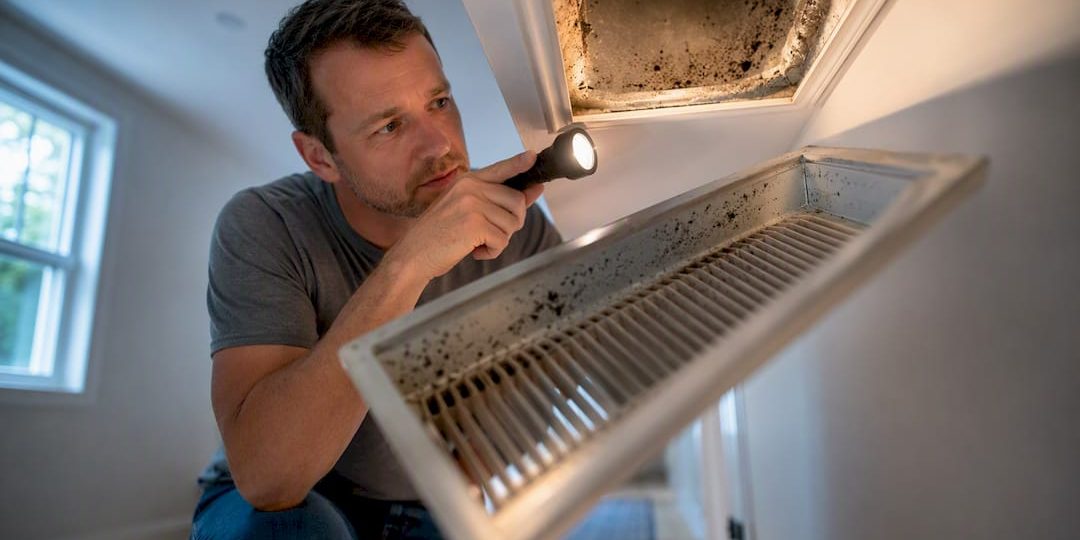
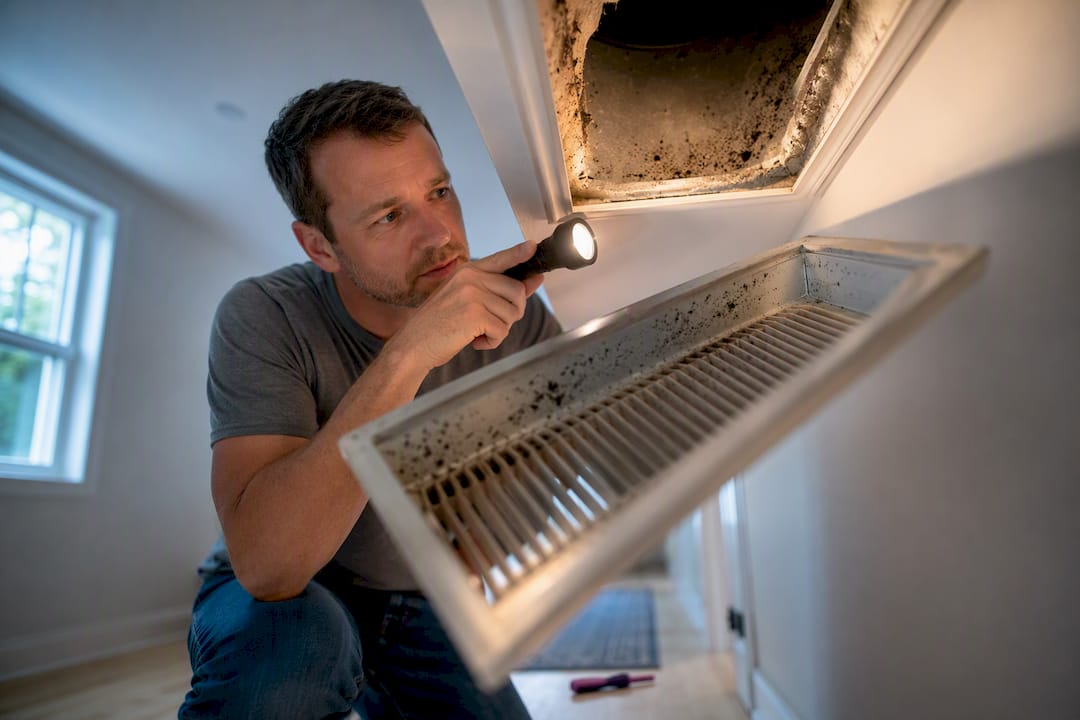
Start with the basics before you touch anything invasive. Pull a register cover, shine a bright flashlight into the boot, and look for staining, fuzzy growth, or standing moisture. Do this while the system is running so you can smell whether the odor strengthens.
- Remove two or three registers in different rooms, including one near the return, and inspect with a flashlight.
- Note any staining, texture, or odor, and check whether it lines up with the musty smell you noticed earlier.
- If you see light surface dust or minor discoloration, you can likely proceed to a light cleaning or call a contractor for an assessment.
- If you see heavy, fuzzy, or widespread growth, stop. Don’t probe further or vacuum it yourself. Disturbing dense colonies can aerosolize spores and spread them through the house.
- Close the register, limit system use, and call a qualified HVAC technician for a full inspection.
If you genuinely can’t tell whether a stain is mold, mildew, or just dirt, a tape-lift sample sent to a microbiology lab can confirm it for around $50. Keep in mind that lab testing has real limits. The CDC notes that sampling doesn’t reliably predict who will get sick, so it’s better used to confirm suspected mold than to decide whether symptoms are mold-related.
Pro Tip: If your gut reaction to what you see is “that looks like more than dust,” trust it. Homeowners rarely underestimate visible mold, but they often talk themselves out of calling for help too long.
Should You Clean the Ducts or Replace Them?
The EPA doesn’t recommend routine duct cleaning as a preventive habit. Its guidance sets specific triggers instead: clean when there’s substantial visible mold growth on hard surfaces inside the ducts, when vermin have infested the system, or when ducts are clogged with debris that’s visibly blowing into rooms. Short of one of those conditions, cleaning is often an unnecessary expense.
Material matters as much as the trigger. Sheet metal ductwork with light surface mold can usually be cleaned and disinfected. Porous insulated liner that’s absorbed moisture is a different story. Once fiberglass duct liner gets wet, it’s genuinely difficult to clean it thoroughly, and most contractors will recommend removing and replacing that section instead of scrubbing it.
Cleaning without fixing the underlying moisture problem is close to pointless. A leaky drain pan or high indoor humidity will regrow the same colony within weeks.
Before hiring anyone, ask:
- Will you show me the contamination before and after treatment, with photos?
- Do you clean the coil, drain pan, and fan housing, or just the ductwork itself?
- What’s causing the moisture, and how will you address that source?
- Do you use sealants or biocides, and if so, why?
What Does Professional Duct Mold Remediation Actually Involve?
A remediation job worth paying for follows a sequence, not a single visit with a shop vac. The typical order runs: stop the system to prevent further spread, assess the extent of contamination, contain the work area, remove or clean affected components, fix whatever is causing the moisture, then verify the results before calling it done.
That last step gets skipped more often than it should. EPA guidance is direct on this point: remediation should clean all system components, not just the visible duct sections, because leaving one contaminated part behind lets the whole system recontaminate itself within a season.
Porous materials get special treatment. Insulation, liner, or filter media that’s absorbed moisture generally can’t be scrubbed clean; it needs to come out and get replaced.
Reputable technicians typically rely on:
- HEPA-filtered vacuum equipment, not a standard shop vac that just redistributes fine particles
- Negative air pressure or containment barriers to keep spores from spreading to unaffected rooms
- Mechanical brushing and agitation on hard surfaces, not a superficial pass with a rag
- A final walkthrough that documents the cleaned components
Pro Tip: Ask for photos of the coil, drain pan, and duct interior before and after the work. A contractor confident in the job will already have this documented without you asking twice.
How Do You Stop Mold From Coming Back?
Cleaning solves the symptom. Moisture is the disease, and if you don’t fix the source, the mold comes back on a schedule you can practically set a calendar by.
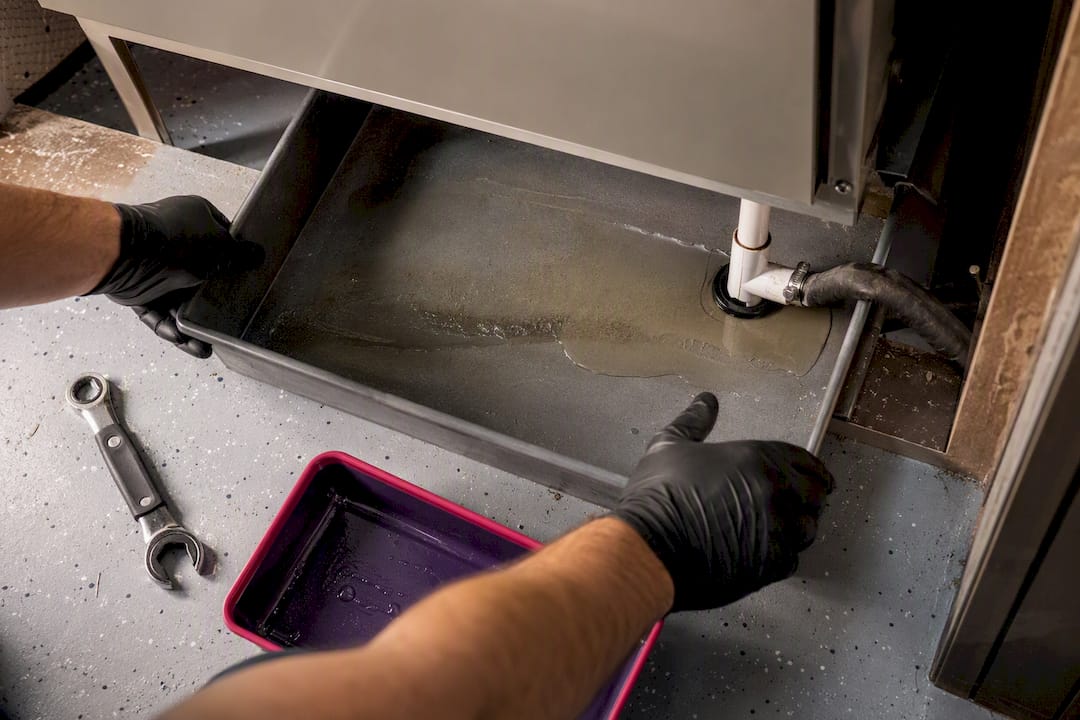
Start with the drain pan and condensate line. A clogged condensate drain backs water up into the pan, and a cracked or rusted pan lets it pool right where warm, humid air meets cool metal. Clear clogs at the first sign of slow draining and repair or replace a pan that’s holding standing water.
Humidity control matters just as much. Indoor relative humidity above 60% creates ideal conditions for condensation inside ductwork, and ASHRAE-aligned guidance recommends keeping it in the 30 to 50 percent range year-round. In humid climates or homes with persistent condensation issues, a dedicated dehumidifier tied into the HVAC system is often worth the investment.
Duct insulation choices help too. If liner has already gotten wet once, replace it rather than hoping it dries out completely, and insulate any duct runs passing through unconditioned attic or crawl space to prevent sweating ductwork from starting the cycle over again.
Ongoing maintenance closes the loop:
- Change filters every one to three months depending on usage and pets
- Have coils cleaned during routine tune-ups, since a dirty coil holds moisture longer
- Schedule a seasonal HVAC inspection to catch a failing drain pan before it becomes a mold problem
What Should You Budget for Duct Mold Removal?
A basic visual inspection typically runs a modest flat fee and covers a check of accessible registers, the coil, and the drain pan, usually completed within an hour or two. Lab confirmation through a tape-lift sample adds roughly $50 if you want it in writing before committing to a bigger job.
Cost from there depends heavily on scope. A straightforward cleaning of accessible metal ductwork costs less than replacing sections of contaminated insulated liner, and a full duct replacement after severe, long-term contamination costs the most of the three. Access difficulty, the length of duct run affected, and how deeply moisture penetrated the insulation all move the price.
Timeline follows the same pattern: cleaning jobs often wrap in a single day, partial liner replacement runs one to three days, and a full duct system replacement can take the better part of a week.
- Inspection: usually completed same day, often within an hour
- Cleaning: typically 1 to 3 days depending on system size
- Partial or full replacement: several days to about a week
The smartest budgeting move is spending on the moisture fix first. Skipping that step to save money on a drain pan repair almost guarantees you’ll pay for cleaning twice.
How Tru Comfort Approaches a Duct Mold Job
Our process starts with the same inspection sequence outlined above: check registers, trace the odor, confirm the moisture source before touching a single duct. We repair the underlying cause first, clean or replace affected components second, and verify the fix before we consider the job finished.
Every technician on a mold-related call carries NATE certification and works without commission incentives, so the recommendation you get reflects what your ductwork actually needs, not what pads a invoice.
— Brett
Get Your Ducts Inspected Before Mold Spreads Further
Trying to guess whether that stain at the register is mold, and whether cleaning or replacement fixes it, leaves most homeowners stuck between doing nothing and overpaying for work they don’t need. Technicians who inspect first and recommend based on what they actually find in your ductwork, not a flat-rate cleaning package sold to everyone who calls.

If you’ve already spotted staining or a persistent musty smell, Air Duct Installation Services covers replacing contaminated liner or sections that cleaning won’t fix. For ongoing prevention once the immediate problem is resolved, the Tru Comfort Advantage maintenance plans build coil cleaning and drain pan checks into a regular schedule, so the moisture source gets caught before it becomes a mold source again. Call for an inspection or check emergency HVAC availability if the smell showed up suddenly and you want it assessed today.
This article is general information, not a substitute for advice from a qualified doctor. Consult a qualified healthcare professional about your own circumstances before acting on anything here.
Sources
FAQ
How Do You Get Rid of Mold in Air Ducts?
Confirm the contamination with a visual inspection or a tape-lift sample, fix the moisture source causing it, then either clean hard duct surfaces or replace porous liner that stayed wet, followed by a verification check of every system component.
How Much Does It Cost to Get Rid of Mold in Air Ducts?
Cost depends on scope: a basic inspection is inexpensive and quick, cleaning accessible ductwork costs less than replacing contaminated insulated liner, and a full duct replacement after severe contamination costs the most. Current pricing for duct work is listed on the air duct installation page.
What Are the Symptoms of Mold Exposure From Ducts?
Common symptoms include coughing, wheezing, and nasal or throat irritation, with worsened symptoms in people who already have asthma or mold allergies.
Can I Clean Mold Out of Air Ducts Myself?
Light surface dust on metal ductwork is fine to wipe down yourself, but heavy or fuzzy growth should not be disturbed without containment, since agitating it can aerosolize spores. Call a professional once growth looks widespread.
Does Air Duct Cleaning Actually Prevent Mold From Coming Back?
Cleaning alone rarely holds unless the moisture source, like a clogged condensate drain or high indoor humidity, gets fixed at the same time; otherwise the same conditions that grew the mold the first time will grow it again.