Homeowner Savings: Duct Sealing Cost, 3 Real Quotes + Rebate Tips
Duct sealing typically runs $300 to $1,000 for DIY materials, $400 to $1,900 for professional manual sealing, and $1,200 to $3,500 for Aeroseal’s aerosol-based method. Aeroseal earns its premium when leaks hide inside walls, attics, or crawl spaces that manual sealing can’t reach; manual sealing works fine for visible, accessible seams. Either way, start with a leakage test, not a guess.
TL;DR:
- Manual sealing typically costs between $450 and $2,600 depending on home size, duct accessibility, and whether diagnostic testing or repairs are needed.
- Aeroseal offers more comprehensive sealing for difficult-to-reach leaks, with prices usually ranging from $1,200 to $4,200, especially for complex, multi-zone systems.
- Sealing can reduce duct leakage by 40% to 90%, translating into potential energy savings of several hundred dollars annually in homes with 20% to 30% conditioned air loss.
- Accurate quotes should include leakage test results before and after, detailed itemization, and specify if repairs or prep work are included, to avoid vague estimates.
- Proper sealing lasts when ducts are structurally sound, but severely damaged or deteriorated ducts may require repairs or replacement before sealing efforts to ensure long-term effectiveness.
Table of Contents
- How Much Does Duct Sealing Cost by Method and Unit?
- What Do Real Duct Sealing Quotes Look Like?
- What Drives Duct Sealing Prices Up or Down?
- Is Aeroseal Worth the Extra Cost Over Manual Sealing?
- How Much Can Duct Sealing Save on Energy Bills?
- How Do You Get a Reliable Duct Sealing Quote?
- How Long Does a Duct Sealing Job Actually Take?
- A Straight Answer on Pricing, from a Family-Owned HVAC Shop
- Get an Itemized Duct Sealing Estimate from a Local Team
- Where These Numbers Come From
- Sources
- FAQ
How Much Does Duct Sealing Cost by Method and Unit?
Contractors price duct sealing jobs in a few different ways, and knowing which unit you’re being quoted helps you compare bids that otherwise look nothing alike.
DIY sealing with mastic and UL-rated foil tape costs the least, mostly because you’re only paying for materials and your own time. Professional manual sealing brings in labor and diagnostic equipment, which is why professional duct-sealing projects commonly range from $500 to $2,500 for accessible systems. Aeroseal jobs sit higher on the scale, generally landing between $1,200 and $3,500, though some contractors now quote residential Aeroseal jobs as high as $4,000 depending on baseline leakage and how hard the ductwork is to access.
Pricing units vary by contractor:
- Per square foot of conditioned space: roughly $1 to $3, common for whole-home Aeroseal quotes.
- Per linear foot of ductwork: used more by manual-sealing crews billing labor and materials separately.
- Per register or supply point: a flat rate per vent, common on smaller, targeted jobs.
- Flat job pricing: one number covering the whole system, typical when a contractor has already run diagnostics.
House size, duct accessibility, and your local labor market all push these numbers up or down. A single-story home with an accessible crawl space costs noticeably less to seal than a two-story house with ductwork buried in finished ceilings.
What Do Real Duct Sealing Quotes Look Like?
Numbers on a page mean more once you see them applied to an actual house. Here’s how three different projects typically shake out.
- Small bungalow (1,200 sq ft, single system): Manual sealing at the plenum and three accessible boots, plus a pre/post leakage test. Total: roughly $450 to $700.
- Mid-size home (2,200 sq ft, single system, some attic ductwork): Aeroseal treatment for hard-to-reach attic trunk lines, with diagnostic testing before and after. Total: roughly $1,800 to $2,600.
- Premium/complex home (3,500+ sq ft, multiple zones): Aeroseal across two zones, plus repair of a collapsed flex run and a disconnected takeoff discovered during diagnostics. Total: roughly $3,000 to $4,200, since prep and repair work commonly adds $75 to $1,200 to the base price.
What Drives Duct Sealing Prices Up or Down?
A quote isn’t just “sealing.” It’s a bundle of variables, and each one moves the price independently.
- Accessibility: Ducts in an open crawl space or unfinished basement cost less to seal than ones buried behind drywall or under insulation.
- Duct material and age: Older flex duct or metal with rusted seams often needs repair work before sealing can even start.
- Number of zones: Multi-zone systems mean more supply runs, more registers, and more testing time. If your home runs multiple HVAC zones, expect the sealing quote to scale with that complexity.
- Pre-repair needs: Collapsed flex duct, disconnected takeoffs, and crushed boots are the most common surprise costs on any job.
- Testing and verification: A contractor who runs a proper CFM25 or CFM50 leakage test before and after the job is measuring actual results, not just estimating.
- Labor rates: Regional labor costs shift the final number more than most homeowners expect.
Pro Tip: Ask for the leakage number in CFM before and after the job, not just a percentage. A contractor quoting “we’ll fix most of it” without a number isn’t actually measuring anything.
Is Aeroseal Worth the Extra Cost Over Manual Sealing?
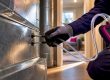
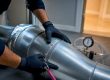
Aeroseal works by pressurizing the ductwork and injecting an aerosolized sealant that finds and plugs leaks from the inside, including ones you’d never spot by eye. Manual sealing means a technician physically applies mastic or foil tape to every visible seam, joint, and connection they can reach by hand.
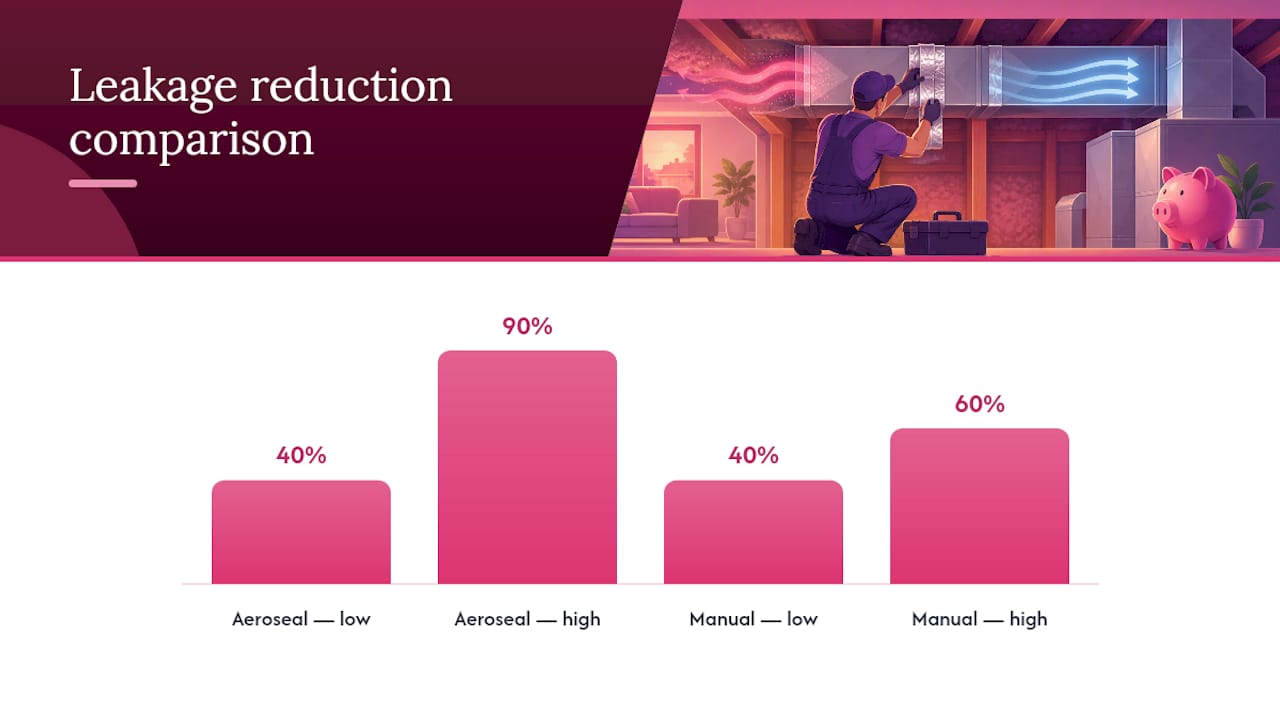
The performance difference is real. Aeroseal often cuts duct leakage by 40% to 90% on structurally sound duct systems, while manual sealing typically achieves 40% to 60% reduction, mostly limited by what the technician can physically reach.
Aeroseal makes the most sense when:
- Ductwork runs through walls, attics, or ceilings with no access panels
- A previous inspection showed high leakage that manual sealing couldn’t fully address
- You want documented before-and-after numbers for a rebate application
Manual sealing remains a solid, lower-cost option for visible seams and register boots, and it’s often all a straightforward, accessible system needs.
Pro Tip: Get the expected leakage reduction percentage in writing before you agree to an Aeroseal job. A vague promise of “big improvement” isn’t the same as a documented target.
How Much Can Duct Sealing Save on Energy Bills?
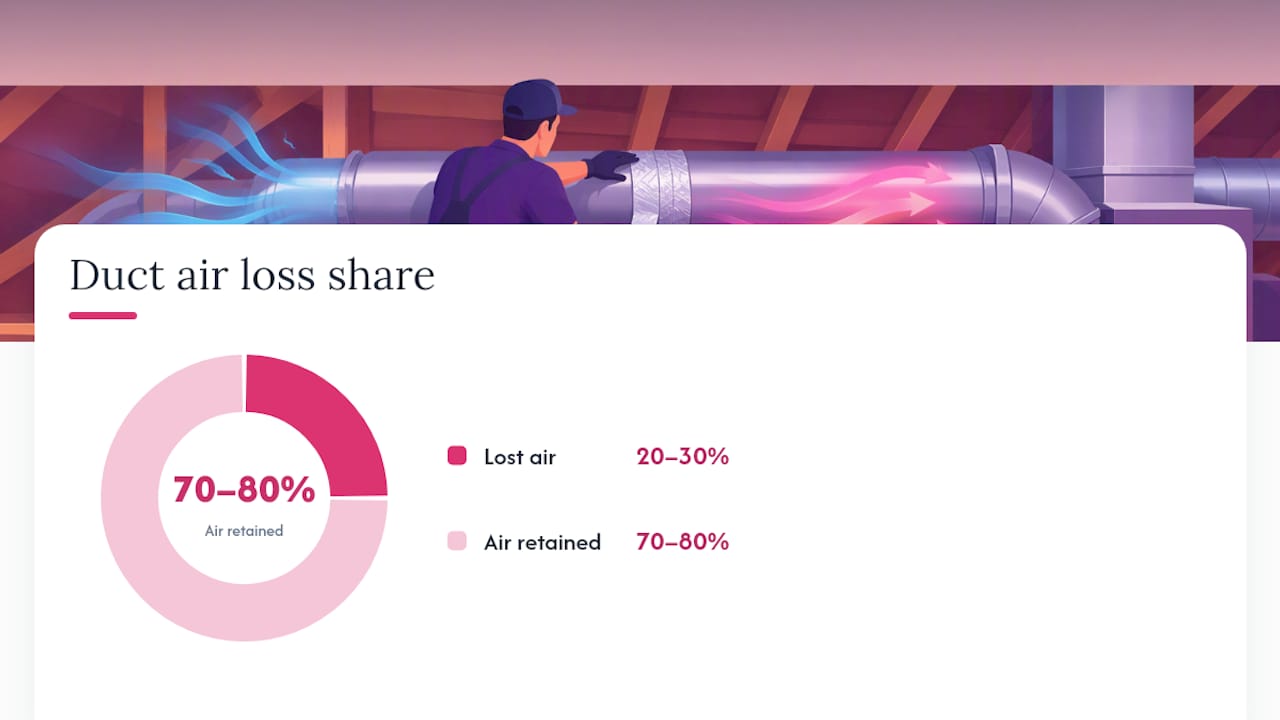
Homes lose 20% to 30% of conditioned air through duct leaks, so sealing that gap translates directly into lower heating and cooling bills. A household spending $2,000 a year on heating and cooling could plausibly cut that by several hundred dollars annually, which puts payback on a $1,500 Aeroseal job somewhere in the two-to-four-year range depending on climate and system size.
Before you book anything, check what’s available locally:
- Certain rebate and tax-credit programs cover duct sealing, though most require documented pre and post leakage testing plus a combustion-safety check.
- Utility-specific programs, like SRP rebates in Arizona, often have their own paperwork requirements that need to be filed before, not after, the work is done.
- Ask your contractor directly whether their invoice format satisfies your utility’s documentation rules.
How Do You Get a Reliable Duct Sealing Quote?
A trustworthy quote reads like an itemized bill, not a round number scribbled on a business card. It should show labor hours, materials, diagnostic testing costs, and a warranty period in writing.
Before hiring anyone, ask:
- What’s my current leakage percentage, and what’s the target after sealing?
- Is prep or repair work included, or billed separately if something’s found mid-job?
- What warranty covers the sealant or workmanship?
- Will you provide the pre and post leakage test results in writing?
Red flags worth walking away from:
- No leakage testing offered at all, before or after
- A flat, vague number with no line-item breakdown
- Pressure to replace entire duct runs when sealing would likely solve the problem
How Long Does a Duct Sealing Job Actually Take?
Most residential jobs finish in a few hours to one full day, depending on home size and how much prep work turns up.
- Diagnostic leakage test to establish a baseline
- Prep work and any needed repairs (collapsed flex, loose boots)
- Sealing, whether manual application or Aeroseal injection
- Post-sealing leakage test to confirm results
Homeowners generally just need to clear access to the attic, crawl space, or mechanical closet beforehand.
A Straight Answer on Pricing, from a Family-Owned HVAC Shop
Trucomfortaz built its process around one idea: a homeowner should never have to guess what a duct sealing job actually involves. That’s why every estimate starts with real diagnostic numbers, not a flat guess, and why the technicians running those tests are NATE-certified and non-commissioned, meaning they have no financial incentive to oversell you. If you’re not sure whether your home needs manual sealing or Aeroseal, that’s exactly the kind of question a proper leakage test answers before you spend a dollar.
Get an Itemized Duct Sealing Estimate from a Local Team
A reliable service provider offers a real, itemized quote before work starts, including pre and post leakage numbers, safety checks where relevant, and a line-item breakdown showing exactly what you’re paying for, rather than a flat number.

Trucomfortaz handles diagnostic testing, repair work, sealing, and follow-up maintenance for homes throughout New River, Arizona and the surrounding area. If your ductwork needs more than sealing, like a collapsed run or a full replacement section, the same team handles that too through its air duct installation and repair services. Homeowners who want ongoing peace of mind can also ask about the Tru Comfort Advantage maintenance plan, which builds in regular system checks between bigger projects.
Ready to find out what your actual leakage number looks like? Request an estimate and get the real figures before you commit to a method.
Where These Numbers Come From
- ENERGY STAR’s duct sealing guidance on typical leakage rates and sealing benefits
- The Department of Energy’s home upgrades resource on rebate and tax-credit documentation
- EPA guidance on duct cleaning versus sealing expectations
- Cost data from Current Cost and Pick Comfort
Sources
- ENERGY STAR — Duct sealing
- U.S. Department of Energy — Home upgrades pivot table
- Current Cost — Duct sealing cost guide for homeowners
- Aeroseal Duct Sealing — Aug 2026 field update (HVAC system guide)
- Pick Comfort — How much does Aeroseal cost for residential duct sealing?
FAQ
Is Duct Sealing Worth the Cost?
Yes, for most homes losing significant conditioned air through leaky ducts. Sealing addresses the 20% to 30% air loss common in typical duct systems, which usually pays back through lower energy bills within a few years.
How Long Does Duct Sealing Last?
Manual mastic and foil-tape seals are designed to be durable when applied correctly, and Aeroseal’s polymer sealant is similarly durable on structurally sound ductwork. Neither method fixes ducts that are physically deteriorating, so a home with old or damaged ductwork may need repair work first.
Can You Seal Air Ducts Yourself?
You can seal visible, accessible seams yourself using mastic or UL-rated foil tape, which typically costs $300 to $1,000 in materials. You can’t do Aeroseal yourself, since it requires specialized injection equipment and pressure-testing gear only professionals use.
How Much Does It Cost to Replace Ductwork in a 2,000 Sq Ft House?
Full ductwork replacement in a home that size typically costs several thousand dollars more than sealing, since it involves removing old ducts and installing new ones throughout the system. Get a linear-foot cost breakdown before deciding between repair, sealing, or full replacement, since sealing existing ducts is almost always the cheaper first option if the ductwork is structurally sound.
Does Trucomfortaz Offer Duct Sealing Services?
Trucomfortaz provides air duct installation and repair services for homeowners in New River, Arizona and the surrounding area, including diagnostic leakage testing. Current pricing for your specific project is available by requesting an estimate directly.