4 Quick EPA Backed Checks Homeowners Can Do When Dust Comes From Vents
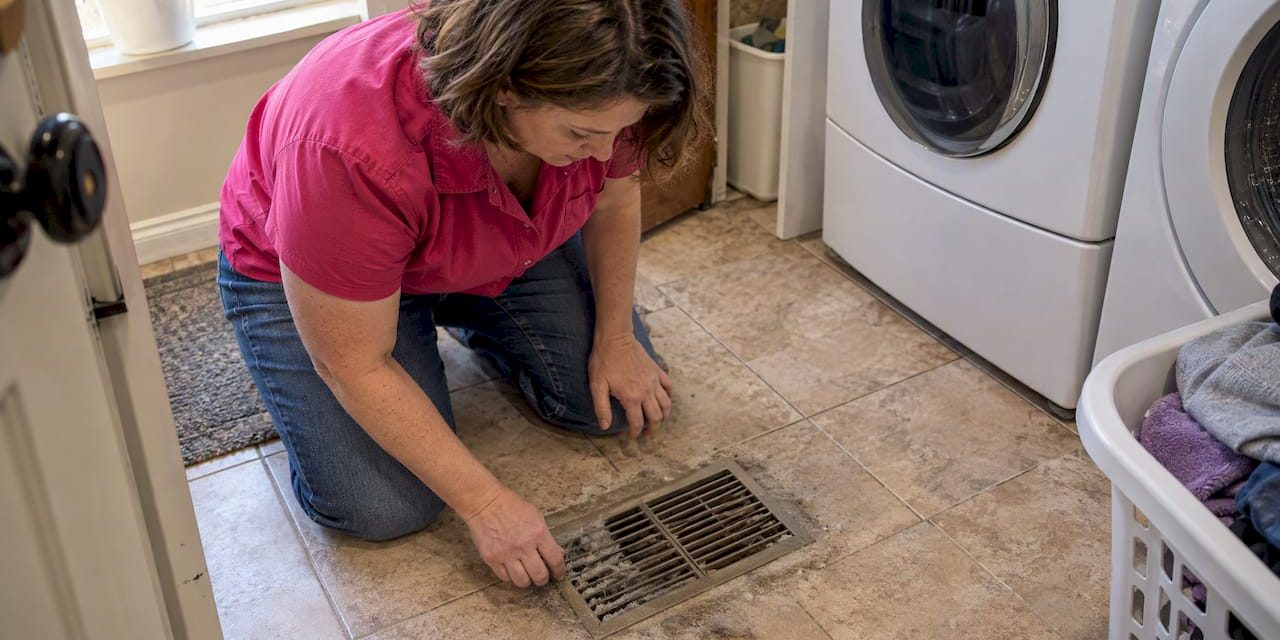
Light dust around your vents is usually normal: it is household dust (skin cells, fabric fibers, tracked-in dirt) drawn toward airflow, not a sign your system is failing. Heavy, sudden, or sooty dust is different. If you see a new, thick buildup, check your filter and registers first, and stop running the system if you suspect mold or heavy contamination.
TL;DR:
- Using an appropriately rated MERV 13 filter that fits correctly is essential because a poor fit or overdue replacement allows more dust to bypass filtration.
- Heavy or persistent dust buildup near vents may indicate duct leaks, a dirty blower housing, or recent construction debris, requiring professional inspection.
- Regularly checking airflow at supply vents and inspecting filters helps identify simple issues before considering duct cleaning or system repairs.
- Visible mold, dark soot, or signs of pests inside the ductwork demand immediate professional intervention to prevent health and safety risks.
- Most household dust at vents comes from indoor sources and only becomes a concern if accompanied by mold, pests, or moisture problems that require expert treatment.
Table of Contents
- Common Causes of Dust Showing Up at Vents
- Quick DIY Checks: Filter, Airflow, and Recent Activity
- How to Clean Vents and Registers Safely
- Filters and Filtration: Rating, Fit, and Backup Options
- When Dust Signals a Safety or Contamination Problem
- When to Call a Pro and What a Proper Inspection Covers
- A Technician’s Checklist for Dusty Vents
- Professional Help for Duct, Filter, and Airflow Issues
- FAQ
- Sources
Common Causes of Dust Showing Up at Vents
Most dust at your vents starts in your living space, not inside your ductwork. Skin cells, clothing fibers, pet hair, and dirt tracked in from outside circulate through your rooms and settle near supply vents where air moves fastest. That is normal and expected.
Mechanical issues cause the heavier, more persistent buildup. A filter with the wrong rating, a poor fit, or one that is overdue for replacement lets more particles pass through and settle near registers. Gaps around the filter frame let unfiltered air bypass it entirely.
A few other causes are worth ruling out:
- Duct leaks that pull dust from attics, crawl spaces, or wall cavities into the airflow.
- A dirty blower housing or coil that sheds particles every time the system runs.
- Recent construction or remodeling, which can send drywall dust and debris straight into your ducts.
- Moisture problems, which can point to mold rather than ordinary dust and need professional attention.
According to the EPA, light amounts of dust inside ductwork are normal, and duct cleaning has not been shown to prevent health problems unless there is visible contamination like mold, pests, or heavy deposits.
Quick DIY Checks: Filter, Airflow, and Recent Activity
Before assuming your ducts are dirty, run through a short sequence of checks. Most dust problems trace back to something simple and fixable.
- Identify supply versus return vents. Supply vents push conditioned air into a room and often feel the strongest airflow; return vents pull air back to the system and tend to collect more visible dust because air (and particles) are being drawn into them.
- Check your filter. Confirm it is the right size, seated without gaps, installed with the airflow arrow pointing toward the unit, and not overdue for replacement.
- Test airflow at a vent. Hold a tissue or a puff of incense smoke near a supply vent; weak or uneven movement suggests a blocked filter, a closed damper, or duct restriction.
- Think about recent activity. New construction, a fireplace, candles, or a new pet can all explain a sudden jump in dust.
Pro Tip: Keep a small flashlight by your thermostat so you can glance into the return grille each month. Catching a clogged filter early saves a service call later.
How to Clean Vents and Registers Safely
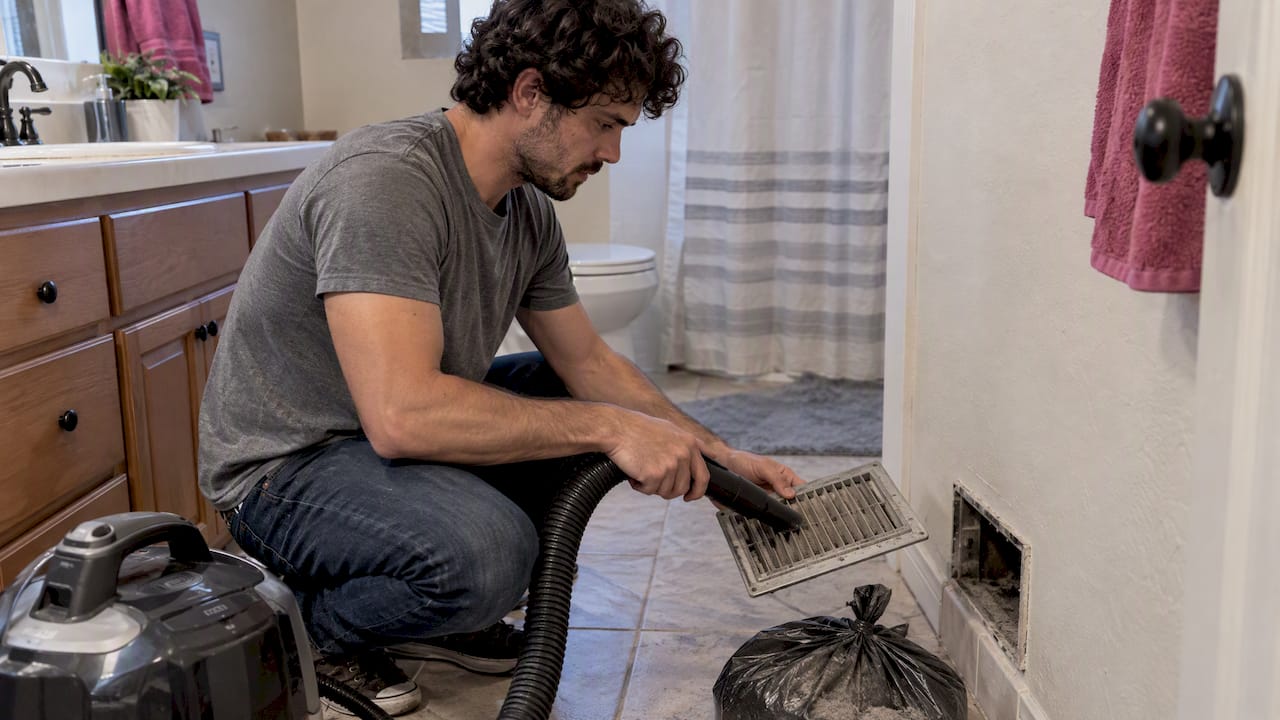
Cleaning registers yourself is safe and often enough to solve light dust problems, as long as you avoid pushing debris back into the system. Turn off your HVAC system first, both to protect the blower and to stop dust from being pulled around while you work. Use a vacuum with a HEPA filter, and wear an N95 mask if you see heavy buildup or suspect mold.
- Shut off the system at the thermostat or breaker, then remove the register cover with a screwdriver.
- Vacuum the interior and grille with a HEPA-equipped vacuum, reaching as far into the duct opening as you safely can.
- Damp-wipe the cover with a mild detergent solution, then let it dry fully before reinstalling.
- Reinstall the register and restore power, then check airflow at the vent to confirm nothing shifted.
Stop and call a professional if you see visible mold, heavy contamination deep in the duct, or signs of physical damage like crushed or disconnected sections. Our guide to cleaning ductwork walks through what a full-system cleaning should include when a register wipe-down is not enough.
Pro Tip: Seal the vacuum bag or canister contents in a trash bag immediately after cleaning so fine dust does not resettle in the room. The EPA notes that an inadequate vacuum collection system can release more contaminants than it removes, so a HEPA-rated unit matters here.
Filters and Filtration: Rating, Fit, and Backup Options
Your filter does more work than most homeowners realize, and getting it wrong is one of the most common reasons dust keeps reappearing at vents.
- Use the highest MERV rating your system can handle; the EPA recommends MERV 13 when the blower and filter slot can accommodate it.
- Fit matters as much as rating. A filter that is slightly undersized or installed backward lets air bypass the media entirely.
- Replace filters every one to three months, more often with pets, allergies, or heavy household traffic.
- If your system can’t accept a high-efficiency filter, a portable HEPA air cleaner is a practical supplement.
A filter only captures particles while the HVAC fan is running, so a high-rated filter paired with poor fan cycling still leaves gaps. The EPA’s guidance on filtration ties filter performance directly to proper installation and fan operation, not rating alone.
When Dust Signals a Safety or Contamination Problem
Not every dusty vent is harmless. Some signs mean you should stop running the system and bring in a professional rather than keep cleaning on your own.
- Visible mold or a musty smell near vents, especially with ongoing moisture, means the system should stay off until the source is addressed.
- New black soot or dark dust after using a fireplace or candles can point to a combustion venting problem and a possible carbon monoxide risk.
- Insulation fragments or concentrated deposits around seams usually mean a duct leak or, in some cases, pest activity inside the ductwork.
- Health symptoms that worsen alongside heavy dust, like persistent coughing or allergy flare-ups, are worth raising with a doctor alongside a professional inspection.
Mold growth inside HVAC systems needs moisture to take hold, and the EPA’s mold guidance advises against running a contaminated system because it can spread spores through the home. The same guidance recommends keeping indoor humidity between 30% and 50%.
When to Call a Pro and What a Proper Inspection Covers
Call a technician if you see visible mold, pest activity, a major duct leak, or dust that stays heavy even after you have checked the filter and cleaned the registers.
- A qualified visit should inspect and, where needed, clean registers, ducts, coils, drain pans, the blower, and the air handler, not just the parts you can see.
- Ask for credentials and a written scope of work before any cleaning begins.
- Be cautious of a provider pushing one-off spray sealants without a clear reason tied to your system’s condition.
- Follow-up work may include sealing leaks, repairing insulation, upgrading your filter, or setting up ongoing maintenance.
Our return air troubleshooting guide covers a few more checks worth trying before you book a visit.
A Technician’s Checklist for Dusty Vents
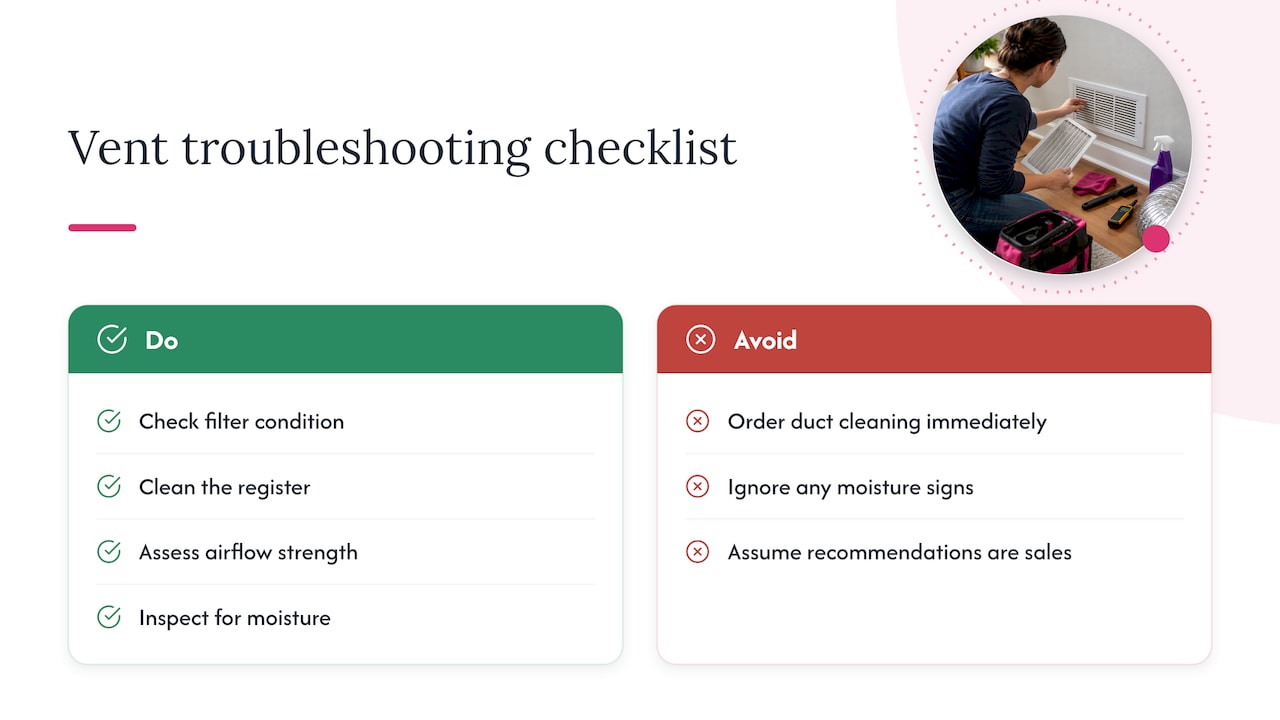
Most of the dusty-vent calls we would want a homeowner to try solving first come down to four checks: filter condition, a clean register, airflow strength, and any sign of moisture. If those four look fine, the dust you’re seeing is almost certainly ordinary household dust settling where air moves fastest, not a failing system.
Technicians are NATE-certified and work on a non-commissioned basis, so a recommendation to clean ducts or replace a filter reflects what your system actually needs. We would rather talk a homeowner out of an unnecessary duct cleaning than sell one, and we always prioritize fixing a moisture problem before anything else.
Professional Help for Duct, Filter, and Airflow Issues
If your checks turn up a leak, a filter your system can’t seat properly, or buildup that keeps coming back, that is where a direct visit pays off faster than repeated DIY attempts. We offer duct inspections, cleaning to proper standards, and filter and system maintenance through our Tru Comfort Advantage maintenance plan, and we handle duct repair and installation when leakage is the real source of your dust.

When you book, ask for a written scope and proof of certification, the same standard we hold ourselves to on every job. Reach out through our service scheduling page to get a visit on the calendar.
FAQ
How do I stop dust from coming through my vents?
Start with your filter: confirm it fits without gaps, is installed in the right direction, and isn’t overdue for replacement. Clean your registers with a HEPA vacuum and check for duct leaks or recent construction debris if dust keeps returning after that.
Are dusty vents a fire hazard?
Dust buildup around registers is rarely a fire hazard on its own, but heavy accumulation near a furnace’s combustion components or blower motor can contribute to overheating risk. A technician inspecting your system during routine maintenance will check these components directly.
Is it mold or dust in my vents?
Mold typically looks darker, clumped, or discolored and often comes with a musty smell, while ordinary dust is a loose, gray, fibrous buildup. If you suspect mold, the EPA advises against running the system until the moisture source is addressed.
Does running the AC help with dust?
Running your AC with a properly fitted, adequately rated filter can reduce airborne dust over time, since filtration only works while the fan is cycling air through it. It will not help, and can make things worse, if the filter is a poor fit or your ducts are leaking unfiltered air into the system.
Sources
For more detail on the guidance behind this article, see the EPA’s duct cleaning guidance, its filtration recommendations, and the EPA’s mold and moisture guide. Renovating soon? This low-dust door replacement guide explains how to limit dust during home projects.
- Should You Have the Air Ducts in Your Home Cleaned? | US EPA