Furnace Smells Like Gas? What Homeowners Should Do
If your furnace smells like gas and the odor is strong, persistent, or smells like rotten eggs, treat it as an emergency. Get everyone out of the house immediately.
30-second safety checklist:
- Leave now. Don’t stop to investigate, grab belongings, or open windows.
- Don’t touch any electrical switches, light switches, or appliances on your way out.
- Don’t use your phone until you’re outside and away from the building.
- Once you’re a safe distance away, call 911 and your gas utility’s emergency line.
- Don’t go back inside until emergency responders or the gas utility clears the home.
If you smell a strong rotten-egg or sulfur odor from your furnace, evacuate immediately and call 911 or your gas utility from outside. Do not re-enter until a professional declares it safe. Your gas utility’s emergency line operates 24/7. In the Phoenix metro area, Tru Comfort Heating & Cooling also offers emergency HVAC service for situations where a technician is needed after the utility clears the scene.
A faint smell during the very first furnace startup of the season is often normal and clears within minutes. Everything else warrants a call.
Table of Contents
- What causes a gas-like smell near your furnace?
- How can you tell a gas leak from a normal startup smell?
- What should you do right now if you smell gas?
- When is a furnace smell actually normal?
- How do you prevent gas smells and keep your furnace safe?
- Key Takeaways
- The smell most homeowners ignore too long
- Tru Comfort is ready when you need a safety inspection
What causes a gas-like smell near your furnace?
Not every gas odor near a furnace signals a leak. Several causes range from completely harmless to genuinely dangerous, and knowing the difference helps you respond proportionately.
Brief start-up gas purge. When a furnace fires for the first time in months, a small amount of gas may accumulate in the combustion chamber before ignition. That brief puff of unburned gas creates a faint mercaptan odor that usually clears within one or two cycles. Burning dust and accumulated mercaptan can create transient rotten-egg smells that travel through vents, but they dissipate quickly.
Burning dust. After sitting idle all summer, your heat exchanger and burners collect a layer of dust. When the burners ignite, that dust burns off and can smell faintly sulfurous for the first hour or so. This is the most common cause of a seasonal “gas smell” that isn’t actually a gas issue.
Pro Tip: The first cold snap of fall is when most homeowners call about furnace odors. If your furnace has been off since spring and you get a brief, faint smell on the first run, give it 20–30 minutes before escalating. If it’s still there after that, call a technician.
Exhaust or vent back-drift. A blocked or improperly pitched flue can push combustion exhaust back into your living space. This smells like gas or burning, but it’s actually combustion byproducts. It’s still dangerous because those byproducts include carbon monoxide, and it requires a professional fix.
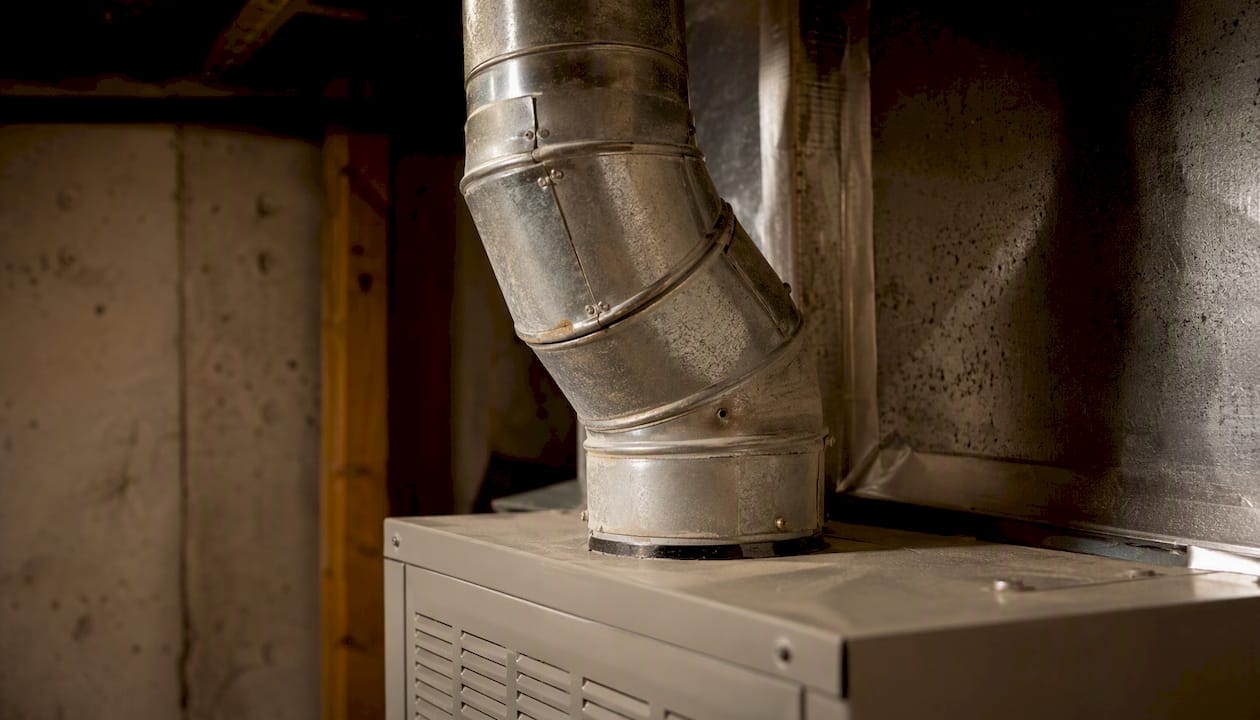
Loose fittings or a gas valve leak. A fitting that has vibrated loose over years of use, or a gas valve that’s beginning to fail, can release small amounts of natural gas near the furnace. This smell tends to be persistent rather than brief, and it doesn’t go away between heating cycles.
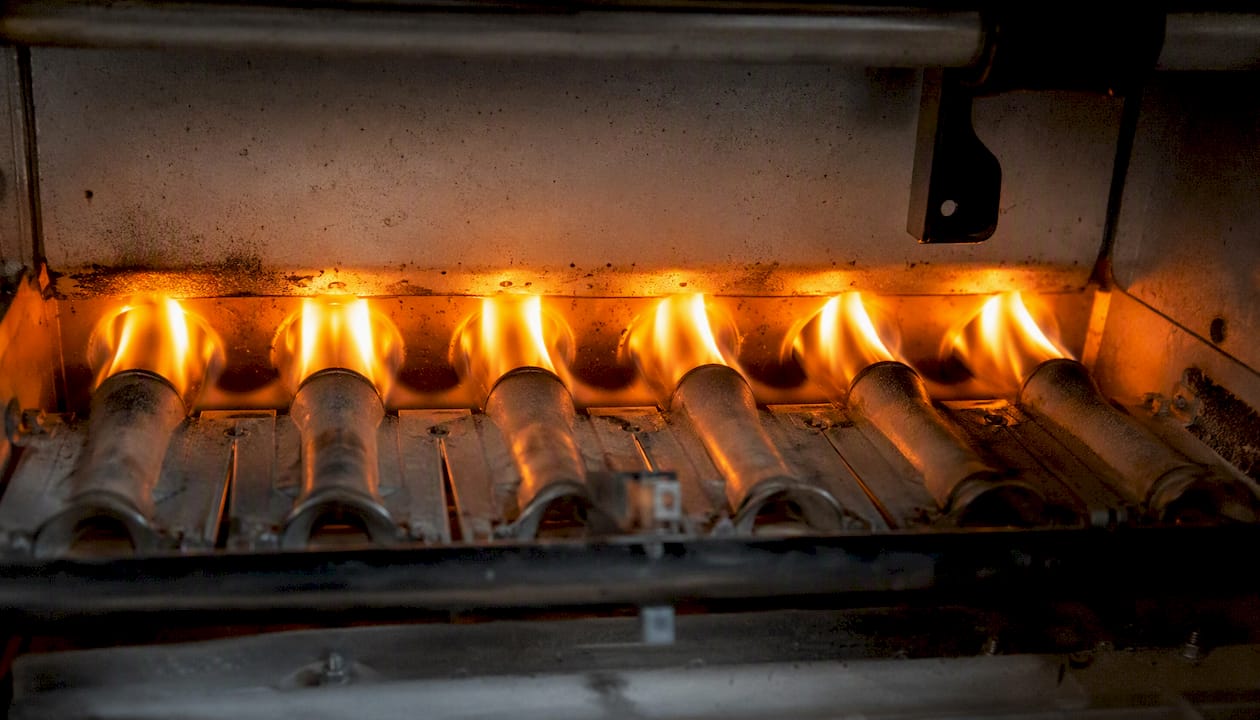
Cracked heat exchanger. A cracked heat exchanger is one of the more serious furnace problems. It allows combustion gases to mix with the air circulating through your home. The smell can be subtle at first, but it’s often accompanied by soot marks near the furnace or a yellow/orange burner flame instead of a clean blue one.
Non-gas sources that mimic mercaptan. Sewer gas from a dry floor drain near the furnace, decomposing organic matter in ductwork, or even a dead animal in the crawlspace can produce a sulfur smell that homeowners mistake for a gas leak. Home odors often get misattributed to gas, but the safe move is always to treat a sulfur smell as a potential leak until a professional rules it out.
Warning signs that require immediate action: a smell that persists beyond 30 minutes, a hissing or whistling sound near the furnace or gas line, a yellow or orange burner flame, soot deposits around the unit, or any physical symptoms like headache or dizziness.
How can you tell a gas leak from a normal startup smell?
The key distinction is persistence and intensity. A normal startup odor is faint, brief, and gone within a few heating cycles. A gas leak smells stronger over time, not weaker.
Red flags that point to a real leak:
- A rotten-egg or sulfur smell that doesn’t clear after 30 minutes or after the furnace completes a full cycle
- A hissing or whistling sound near the furnace, gas meter, or any gas line
- The smell appears even when the furnace isn’t running
- Multiple gas appliances in the home smell at the same time
- Dead or discolored vegetation in a patch of your yard above a buried gas line
- Bubbles appearing in standing water or soil near a gas line
- Physical symptoms: headache, dizziness, nausea, or eye irritation that improve when you leave the house
Utilities add mercaptan to natural gas so leaks can be detected, but there’s an important catch: odor fade. Mercaptan can bind to new steel pipe or be absorbed in certain conditions, which means the absence of smell does not guarantee the absence of gas. If you hear hissing or notice dead vegetation outside, take those signs seriously even without a strong odor.
What to do vs. what not to do during observation:
- Do note how long the smell has been present and whether it’s getting stronger or weaker.
- Do listen for hissing near the furnace, gas meter, and flexible connectors.
- Do check whether other gas appliances (stove, water heater) also smell.
- Don’t try to locate a leak with an open flame or lighter.
- Don’t operate any electrical switches or appliances inside the home.
- Don’t assume sniffing around the furnace is a reliable test.
CO detectors vs. gas detectors. Carbon monoxide is odorless and a separate danger from a natural gas leak. A CO detector will not alert you to a natural gas leak. You need both: a CO alarm and a separate combustible-gas detector. Place the gas detector low to the floor near the furnace (natural gas is lighter than air, but propane sinks, so placement depends on your fuel type). Test both devices monthly.
A cracked heat exchanger can release both unburned gas and CO into your living space simultaneously. Unexplained headaches or nausea that improve when you leave the house are a signal to treat as a CO emergency, not just a furnace odor.
What should you do right now if you smell gas?
Follow these steps in order. Speed matters more than thoroughness here.
- Stop what you’re doing and get everyone out. That includes pets. Don’t pause to grab your phone, wallet, or keys.
- Leave doors open as you exit if you can do so without delay. Don’t stop to open windows.
- Don’t operate any electrical switches, thermostats, or appliances on your way out. A spark from a light switch can ignite gas.
- Don’t use your cell phone until you’re outside and away from the building. Walk at least to the end of your driveway or across the street.
- Call 911 and your gas utility’s emergency line from that safe location. If you smell gas inside, evacuate and call 911 from outside the building. Your utility’s emergency line is separate from customer service and operates around the clock.
- If you know how to shut off the gas meter and it’s safe to do so on your way out, turn it off. If you’re not sure, skip it and let the utility handle it.
- Wait outside for emergency responders. Don’t re-enter until the fire department or gas utility clears the home.
- After the scene is cleared, call a NATE-certified HVAC technician to inspect the furnace before you restart it.
What NOT to do:
- Don’t smoke or light a match anywhere near the building.
- Don’t start your car if it’s parked in an attached garage.
- Don’t try to repair a gas fitting yourself.
- Don’t turn the gas back on yourself after the utility shuts it off.
What to tell 911 and the gas utility: your address, the location of the smell inside the home (near the furnace, throughout the house), how long you’ve noticed it, whether anyone has physical symptoms, and whether you’ve heard any hissing sounds.
When is a furnace smell actually normal?
A brief, faint gas odor during the first few furnace startups of the season can be normal as dust and small gas accumulations burn off. The smell is typically mild, not overwhelming, and clears within 20–30 minutes of the furnace running.
What “normal” smells like: slightly dusty or faintly sulfurous, not sharp or strong. It comes from the burners, not from vents throughout the house, and it fades as the furnace continues to run.
Shorten your tolerance if any of these are true:
- The smell spreads through multiple rooms via the vents.
- It’s still present after two or three full heating cycles.
- You notice soot or black marks near the furnace or registers.
- The burner flame is yellow or orange instead of blue.
- Someone in the house develops a headache or feels nauseous.
If the smell is gone within one heating cycle and no one feels unwell, monitor the furnace for the next few startups. If it returns each time, that’s a pattern worth having a technician look at before it becomes a bigger problem.
What to record for your technician: how long the smell lasted, which rooms were affected, whether the furnace made any unusual sounds, the color of the burner flame if you could see it, and whether the smell was present before the furnace fired or only after.
How do you prevent gas smells and keep your furnace safe?
Prevention comes down to two things: keeping the furnace clean and having a professional check what you can’t see.
Monthly homeowner tasks:
- Check and replace the air filter (a clogged filter forces the furnace to work harder and can cause overheating that mimics combustion odors). See Trucomfortaz’s guide on furnace cleaning and filter maintenance for specifics.
- Clear debris from outdoor intake and exhaust vents, especially after storms or heavy winds common in the New River area.
- Test your CO alarm and combustible-gas detector by pressing the test button.
Annual professional inspection checklist:
- Burner inspection and cleaning
- Heat exchanger integrity check (cracks are invisible to the naked eye without the right tools)
- Gas fitting and valve inspection
- Exhaust flue and venting integrity
- Combustion analysis (flame color, CO output)
- Gas line pressure test
Scheduling a yearly inspection for gas appliances is one of the most reliable ways to catch small leaks or venting issues before they become emergencies. Spring is a practical time to schedule it in Arizona, before the heating season begins. Trucomfortaz explains the timing case in detail for New River and Anthem homeowners.
Detector placement and testing:
- CO alarm: install on every level of the home, especially near sleeping areas.
- Combustible-gas detector: place near the furnace and any other gas appliances.
- Test both monthly; replace batteries annually and replace units per manufacturer guidance (typically every 5–7 years).
Typical maintenance cost ranges for the New River/Phoenix area:
| Service | Typical Cost Range | Notes |
|---|---|---|
| Annual furnace tune-up | See local pricing | Varies by system age and condition |
| Filter replacement (standard 1″) | $5–$30 per filter | Replace every 1–3 months |
| CO detector (per unit) | $20 | Test monthly; replace per manufacturer guidance |
| Combustible-gas detector | $25 | Place near furnace and gas appliances |
| Basic gas fitting repair | Varies by scope | Requires licensed technician |
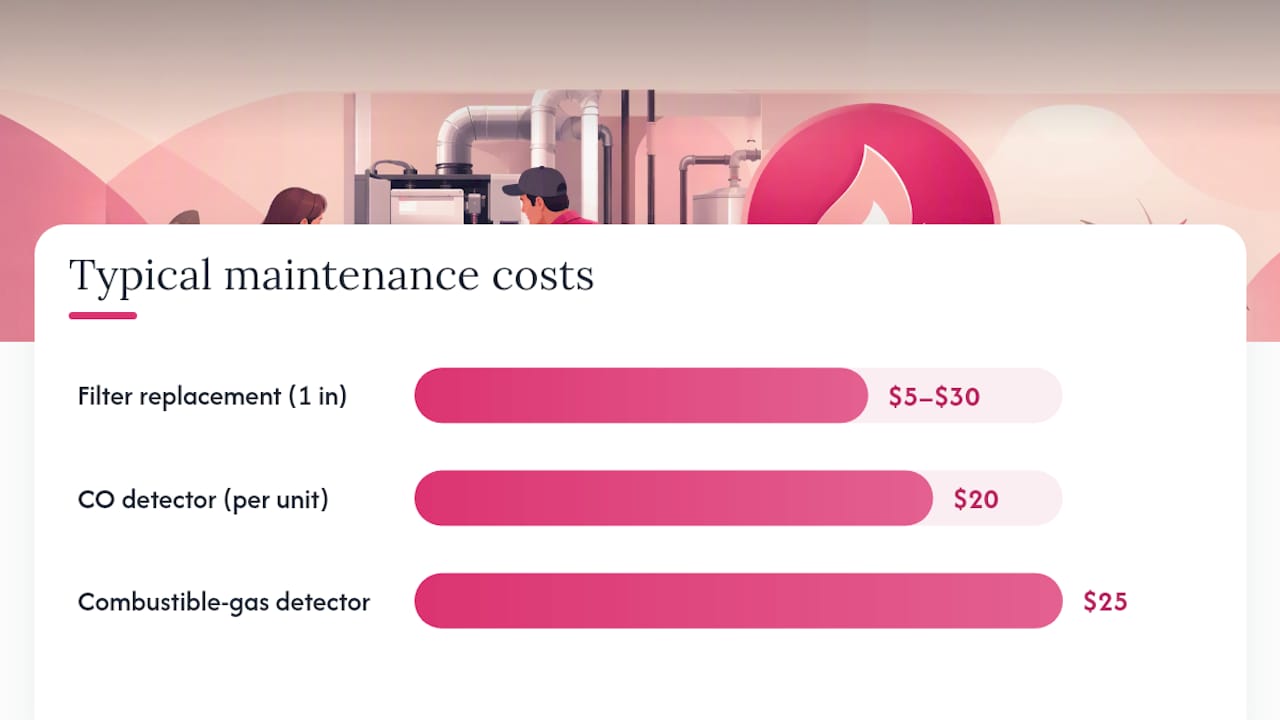
Costs vary based on system age, access, and scope of work. A furnace maintenance plan through Trucomfortaz bundles the annual inspection with priority scheduling and can reduce the cost of unexpected repairs.
Key Takeaways
A strong or persistent gas smell from your furnace is an emergency: evacuate immediately, call 911 and your gas utility from outside, and don’t re-enter until professionals clear the home.
| Point | Details |
|---|---|
| Evacuate for strong or persistent odor | A rotten-egg smell that doesn’t clear within 30 minutes requires immediate evacuation and a call to 911 and your gas utility. |
| Brief startup smell can be normal | A faint odor during the first seasonal run typically clears within 20–30 minutes; monitor for recurrence. |
| CO detectors don’t detect gas leaks | Install both a CO alarm and a separate combustible-gas detector near the furnace; test both monthly. |
| Annual inspection catches hidden leaks | A professional pressure test and heat exchanger inspection finds leaks too small to smell before they become emergencies. |
| Trucomfortaz for local emergency and maintenance | Trucomfortaz’s NATE-certified technicians in New River, AZ offer emergency service and annual maintenance plans for Phoenix-area homeowners. |
The smell most homeowners ignore too long
Gas odor calls are almost always one of two things: a homeowner who acted fast and got lucky, or a homeowner who waited because the smell “didn’t seem that bad.” The second group is the one that ends up with a real problem.
What I’ve seen repeatedly is that people apply a cost-benefit calculation to a safety situation. They think: if I call 911 and it turns out to be nothing, I’ll feel embarrassed. So they open a window, wait, and hope it clears. That logic makes sense for a lot of home problems. For a gas leak, it’s exactly backwards.
The other thing worth saying plainly: a brief startup smell in October is genuinely not a crisis. Dust burns off, a small gas purge clears, and the furnace runs fine all winter. The skill is knowing the difference between that and something that needs immediate action. Persistence is the tell. If the smell is still there 30 minutes later, or if it comes back every time the furnace runs, that’s the furnace telling you something is wrong. Don’t negotiate with it.
Tru Comfort’s approach at every service call is to check what the homeowner can’t check themselves, explain what the readings mean, and give an honest answer about what needs to happen next. No upsell, no alarm-raising for a problem that doesn’t exist. That’s what NATE certification and non-commissioned technicians actually look like in practice.
Tru Comfort is ready when you need a safety inspection
When you’ve cleared the home and the gas utility has given the all-clear, the next call is to a technician who can tell you why the smell happened and whether it’s safe to run the furnace again.

Trucomfortaz provides same-day emergency furnace inspections for New River, AZ and the surrounding Phoenix metro area. During an emergency call, a NATE-certified technician performs a full safety check: gas-line pressure test, heat exchanger inspection, combustion analysis, and a written summary of findings before any repair work begins. For homeowners who want to stay ahead of problems, the Tru Comfort Advantage maintenance plan includes annual tune-ups, priority scheduling, and repair discounts. To book an emergency visit or schedule a safety inspection, contact Trucomfortaz directly through trucomfortaz.com/furnace-repair-new-river-az.
This article provides general safety information, not professional advice. Confirm current emergency procedures with your local gas utility or a licensed HVAC professional.
Useful sources and where to learn more
- Gas Safety | PG&E
- Natural gas safety | San Diego Gas & Electric
- Keep yourself safe from a gas leak | PG&E Newsroom
- What to do if you smell gas | Mass.gov
- Gas Furnace Safety: CO, Flame Colors & Warnings | Jupitair HVAC
- Is It Normal To Smell Gas Near Furnace | White Mechanical, Inc
- Common Furnace Repairs in New River and Phoenix, AZ – Tru Comfort