Furnace Making Loud Noise? Here’s What It Means
A loud furnace usually points to one of a handful of specific problems: delayed ignition, worn blower bearings, a clogged filter, or loose ductwork. Some of these can wait for scheduled service. Others mean shutting the system off right now.
If you smell gas, hear a CO alarm, or catch a harsh grinding sound, turn the furnace off at the thermostat and shut the gas valve if you know how. Everything else on this list is worth checking safely before you call for help.
- Bang or boom at startup — usually delayed ignition, which can crack a heat exchanger over time.
- Grinding or metal scraping — a failing motor bearing, and it can seize the motor within hours.
- Whistling or high humming — most often just a dirty filter restricting airflow.
Pro Tip: Before you touch anything, listen for where the noise happens: at startup, mid-cycle, or right after shutdown. That timing alone often tells a technician half of what they need to know.
Key Takeaways
A loud furnace almost always signals a specific mechanical or combustion issue, and the right response depends entirely on which sound you hear.
| Point | Details |
|---|---|
| Bang at startup means delayed ignition | Repeated banging can crack a heat exchanger and needs prompt technician attention. |
| Grinding means shut down now | Metal-on-metal scraping signals bearing failure and risks destroying the motor. |
| Whistling is often just airflow | A clogged filter or closed vent is usually the cause and an easy DIY fix. |
| Rattling is typically loose hardware | Tightening panels and screws solves most rattling quickly. |
| Trucomfortaz offers safety-first diagnosis | NATE-certified technicians provide non-commissioned inspection and emergency furnace repair in New River, AZ. |
Table of Contents
- Furnace Making Loud Noise: What Each Sound Means
- How to Troubleshoot a Noisy Furnace Safely
- When to Shut Down the Furnace and Call a Technician
- Preventive Maintenance That Keeps a Furnace Quiet
- Get a Furnace Repair Quote From Tru Comfort
- Frequently Asked Questions
- Sources
Furnace Making Loud Noise: What Each Sound Means
Not every furnace sound means the same thing, and figuring out which is which starts with location and timing. A noise coming from the cabinet reads differently than one coming through the vents, and a sound at ignition means something different than the same sound mid-cycle.
Bang or boom noises right when the burners fire are almost always delayed ignition: gas builds up in the burner chamber for a beat too long before catching, then ignites all at once. It sounds dramatic because it is a small explosion, just a contained one. Do it once and you’re probably fine. Hear it every cycle and you’re looking at a cracked heat exchanger down the road, which is why this one gets flagged for prompt attention rather than a “wait and see.”
Squeals and screeches point to the blower assembly. On older belt-drive furnaces, that’s a slipping or frayed belt; on newer direct-drive units, it’s worn motor bearings losing lubrication. Either way, this is a same-week call, not an emergency, but ignoring it rarely goes well.
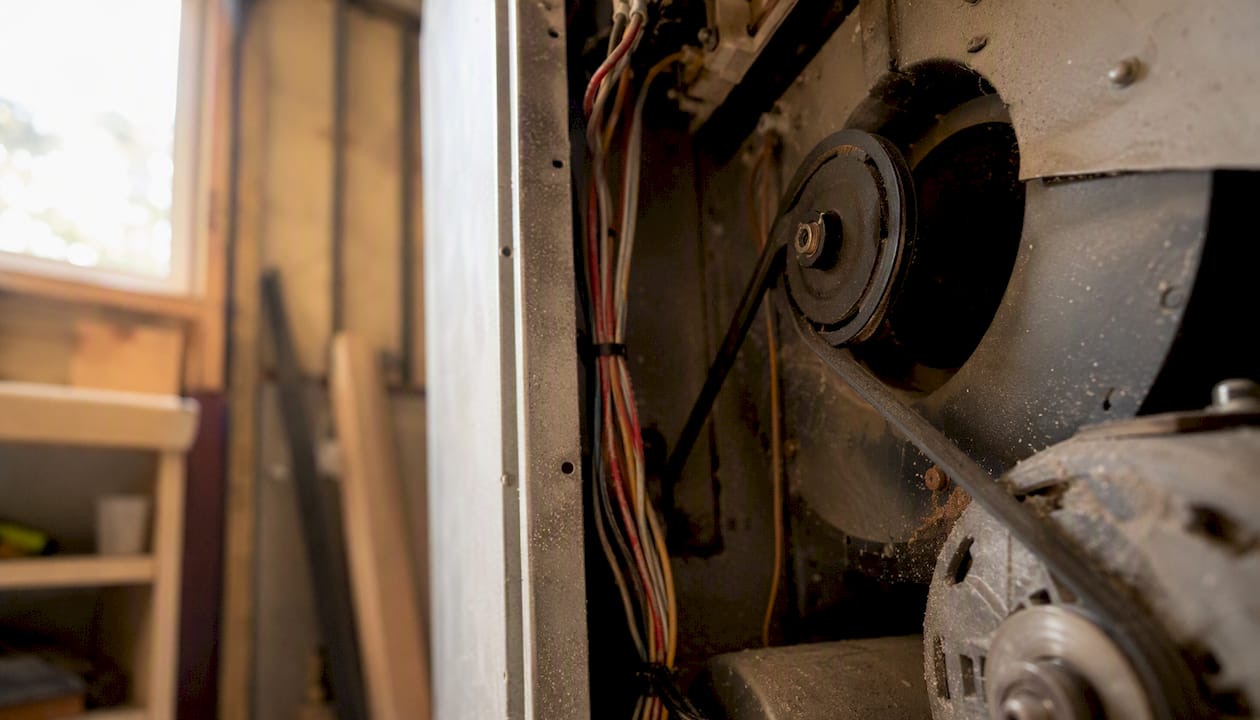
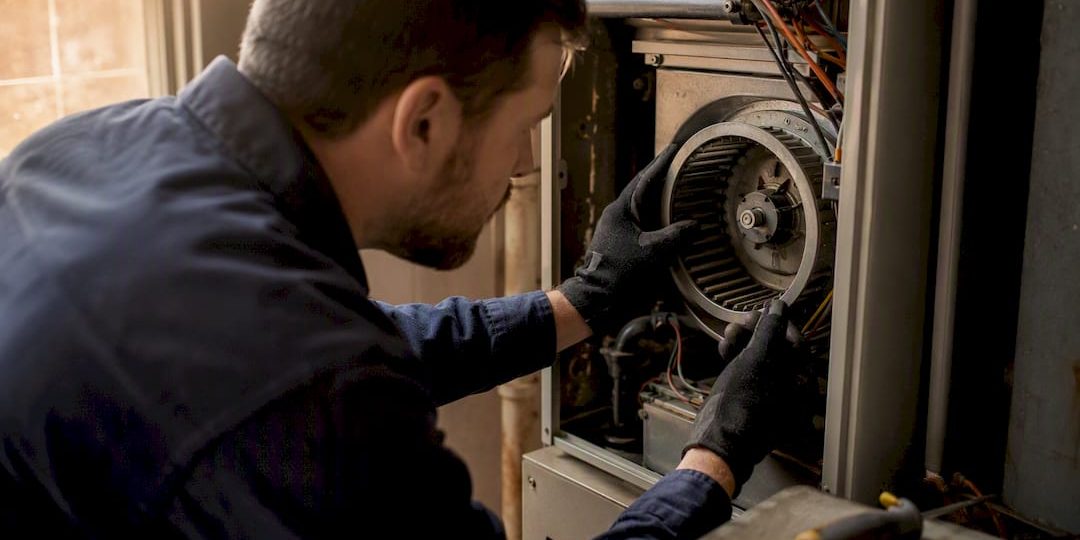
Grinding or harsh metal-on-metal scraping is the one sound that should make you shut the system down immediately. It typically means the blower motor bearings have failed or the blower wheel has come loose, and running it further risks destroying the motor entirely.
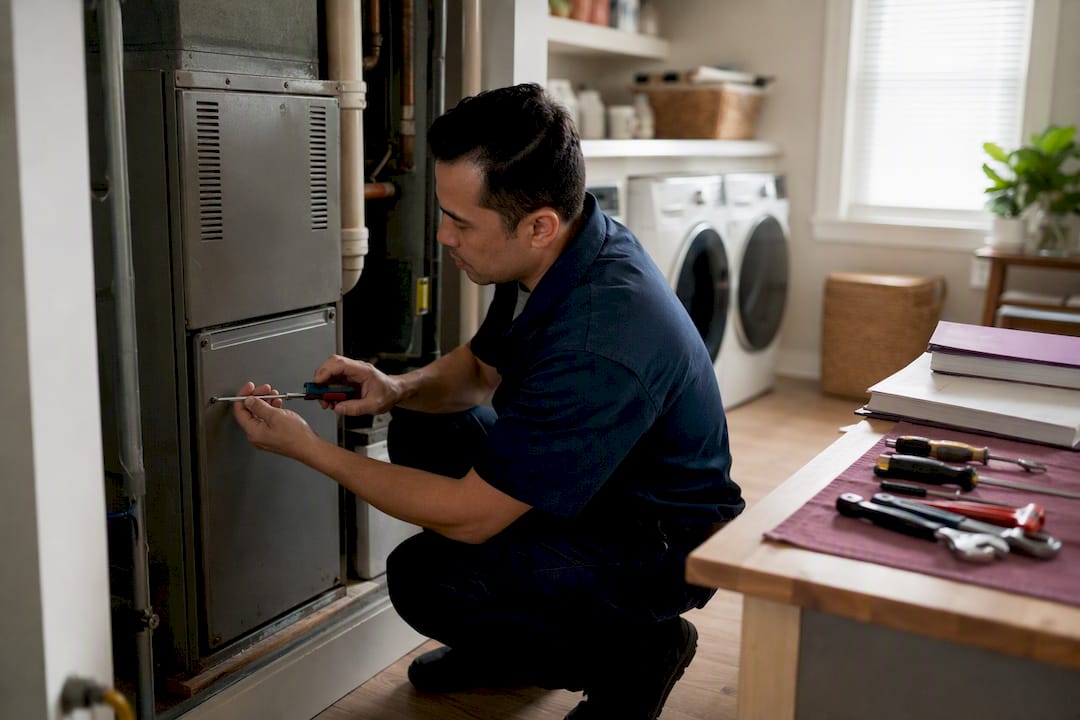
Rattling or vibrating, by contrast, is usually the least dangerous sound on this list. It’s most often loose access panels, screws, or ductwork shaking against the cabinet, and tightening those panels is a fifteen-minute fix many homeowners can do themselves.
Continuous clicking with no ignition following it can mean a bad flame sensor or ignitor. It’s not urgent in the sense of danger, but it means your furnace isn’t lighting reliably, which eventually means no heat at all.
Loud humming or buzzing often traces back to the transformer or a failing capacitor. Whistling, meanwhile, is almost always airflow-related: a clogged filter, a closed vent, or a duct leak restricting how air moves through the system.
Low rumbling that continues even after the burners shut off deserves attention. It often signals dirty burners or a pilot assembly problem, and because combustion irregularities can generate carbon monoxide, persistent rumbling is worth a technician visit even if nothing else seems wrong.
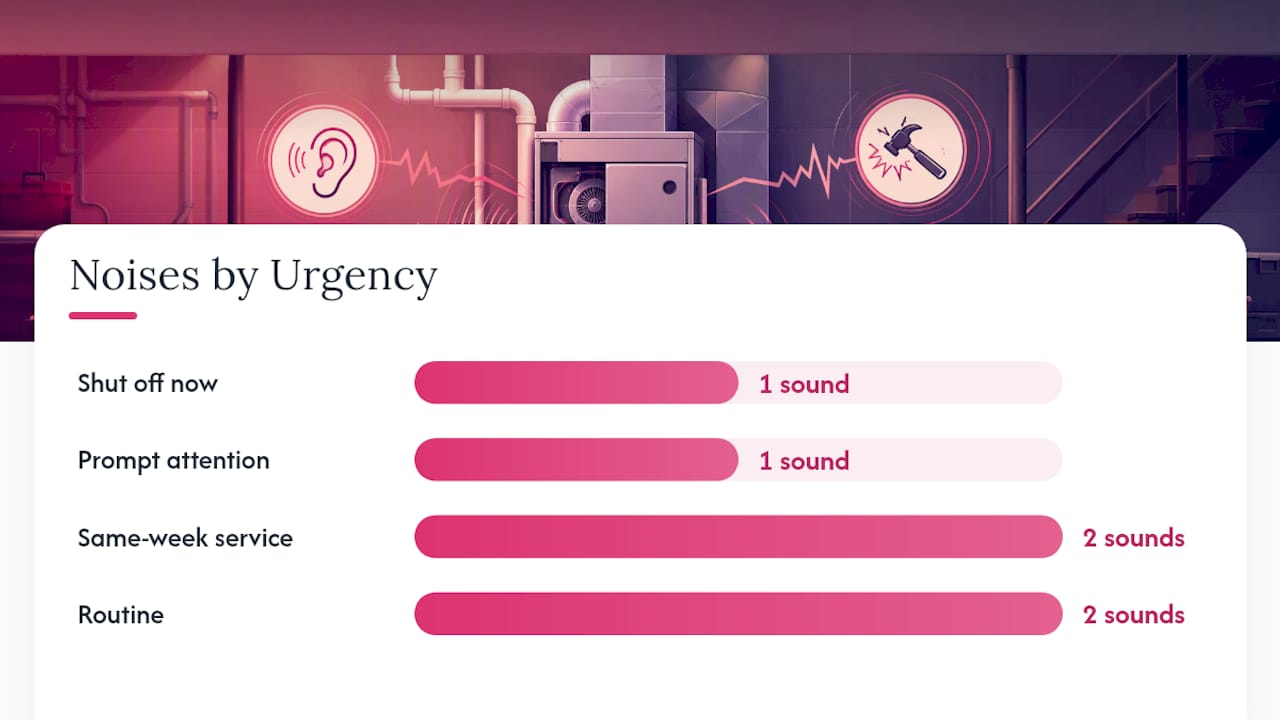
| Sound | Likely cause | Urgency |
|---|---|---|
| Bang/boom at startup | Delayed ignition | Prompt attention |
| Squeal/screech | Worn bearings or belt | Same-week service |
| Grinding, metal-on-metal | Blower motor/wheel failure | Shut off now |
| Rattling/vibrating | Loose panels or ductwork | Routine, DIY fixable |
| Clicking with no ignition | Bad flame sensor/ignitor | Routine service |
| Humming/buzzing | Transformer or capacitor | Same-week service |
| Whistling | Clogged filter, closed vent, duct leak | Routine, DIY fixable |
| Rumbling after shutdown | Dirty burners, pilot issue | Prompt attention |
One quick way to isolate the source: stand near the furnace cabinet versus near a supply vent in another room. If the sound is louder at the vent, you’re dealing with ductwork or airflow. If it’s loudest right at the unit, the problem lives inside the cabinet, which usually means motor, blower, or combustion components.
How to Troubleshoot a Noisy Furnace Safely
Before calling anyone, run through a short list of checks that don’t require opening anything dangerous. You’ll need a flashlight, a screwdriver, and your phone.
- Turn the thermostat off before touching any access panel.
- Pull the filter and check it against a light source; replace it if you can’t see through it.
- Walk the house and confirm vents and registers aren’t blocked by furniture or closed shut.
- Check accessible cabinet screws and panels for looseness and tighten what you can reach.
- Look inside return grills for anything rattling loose, like a dropped screw or debris.
A clogged filter is one of the most common causes of whistling or high humming, and replacing it costs far less than a service call. But there’s a hard line here: never open the burner compartment or touch internal wiring yourself. That’s not a DIY zone, full stop.
If at any point you smell gas, see smoke, or hear grinding metal, stop immediately and call a technician.
Pro Tip: Record ten seconds of the noise on your phone and note whether it happened at startup, mid-cycle, or shutdown. Technicians diagnose faster with a recording than with a verbal description alone.
When to Shut Down the Furnace and Call a Technician
Certain signs mean stop everything and call for emergency furnace repair, not schedule-it-for-next-week service:
- A loud bang at ignition that repeats every cycle
- Grinding or metal-on-metal scraping of any kind
- A hissing sound paired with a rotten-egg smell (natural gas has an added odor called mercaptan)
- Your carbon monoxide alarm going off
- Visible flame that looks yellow, flickering, or unusually large
- Smoke or a persistent rumble that changes pitch as the burners cycle
A licensed technician walking into a call like this checks the ignition sequence, inspects burners and combustion quality, examines the heat exchanger, and tests the blower motor, bearings, inducer motor, belts, and capacitors. Technicians confirm a cracked heat exchanger with a combustion analyzer and a visual check, since it’s not something you can diagnose by ear alone.
Costs vary with what’s actually wrong. Minor bearing lubrication or a small fix can run $150 to $250, while a full blower motor replacement climbs into several hundred dollars if the bearing wear went unaddressed too long. Have your filter-change history and that phone recording ready when the technician arrives.
Preventive Maintenance That Keeps a Furnace Quiet
Most noisy furnace calls trace back to something that was skipped, not something that broke out of nowhere.
- Replace the filter every one to three months, more often if you have pets.
- Book an annual tune-up that covers combustion checks, bearing lubrication, belt inspection, and venting.
- Schedule a mid-season check if you’ve noticed any new sound, even a quiet one.
Filter changes and open vents are jobs for you. Combustion checks, bearing service, and anything inside the cabinet belong to a NATE-certified technician.
Pro Tip: A soft squeal caught early might cost $150 to $250 to fix. Ignore it and the motor can seize, turning that into a $475 to $895 replacement.
A Note From Tru Comfort on Furnace Noise
Most homeowners wait too long on a soft squeal, hoping it fixes itself. It rarely does. Tru Comfort’s NATE-certified technicians push for early inspection because catching wear before it becomes a full motor failure saves real money, and we tell you the actual cost before any work starts. Emergency service exists for the sounds that can’t wait.
Get a Furnace Repair Quote From Tru Comfort
A loud furnace usually points to a fix you can afford now, not a system you need to replace, and the way to know for sure is a technician who checks bearings, combustion, and ductwork in one visit instead of guessing over the phone. Trucomfortaz sends NATE-certified technicians on non-commissioned visits, which means the diagnosis you get is the actual problem, not the most profitable one.

If your furnace is banging, grinding, or rumbling, the fastest way to get a straight answer is to schedule furnace repair in New River or the surrounding area. Bring your phone recording and filter history, and the visit moves faster. If the noise turns out to be a sign your system is closer to the end of its life than a simple repair, ask about furnace installation options while the technician is already there.
Frequently Asked Questions
Why is my furnace making a loud banging noise?
A bang at startup is usually delayed ignition, where gas builds briefly before catching. Occasional banging isn’t an emergency, but repeated banging every cycle can stress the heat exchanger and needs prompt service.
Is a grinding noise from my furnace dangerous?
Yes. Grinding almost always means the blower motor bearings have failed or a blower wheel has come loose. Shut the furnace off and call a technician before the motor seizes completely.
Can I fix a whistling furnace myself?
Often, yes. Whistling is commonly caused by a clogged filter, a closed vent, or a duct leak. Replacing the filter and checking that vents are open resolves it in many cases.
What furnace noise means I should call an emergency technician immediately?
Grinding metal, a gas smell, a triggered CO alarm, hissing paired with a rotten-egg odor, or visible flame irregularities all mean shut off the furnace and call for emergency service right away.
How much does it cost to fix a noisy furnace?
Minor fixes like bearing lubrication often run $150 to $250. A full blower motor replacement, which happens when a squeal goes unaddressed too long, can run several hundred dollars more.
Sources
- Furnace Making Noise? What Each Sound Means | HVACChecker
- How to Troubleshoot a Noisy Furnace Safely | Tamco Air
- Why Is My Furnace So Loud? | BobVila
- Why Is My Furnace So Loud? | The Spruce
- Is a Loud Furnace Dangerous? Causes, Risks, and When to Call a Technician | Pick Comfort